Clothing Sample Approval: Turn Comments into Decisions
A sample review should produce a decision the factory can act on. Comments such as make it better or fit approved leave too much open. Identify the sample, compare it with the current brief, and state what is accepted, what must change and what still needs to be demonstrated.
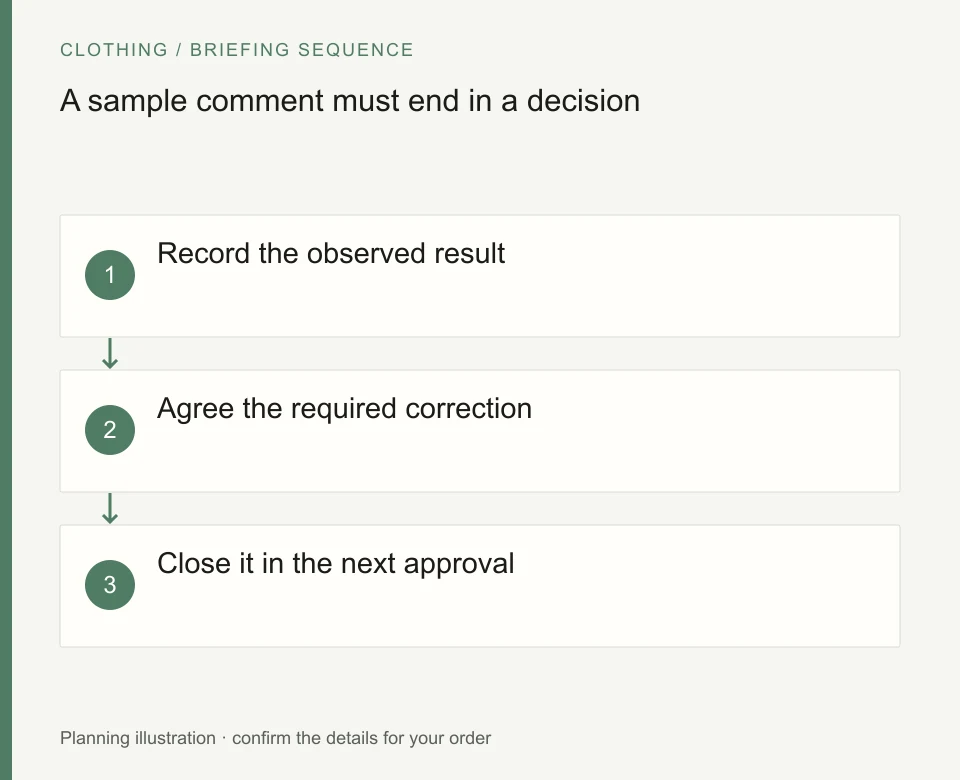
At a glance
Swipe the table sideways to compare both columns →
| Decision | What to specify | What to verify |
|---|---|---|
| Observed result | Record the actual measurement or visible issue. | Do not replace evidence with a general opinion. |
| Requested action | Name the feature and precise revision needed. | Avoid conflicting instructions across files. |
| Approval status | Accept, revise or leave pending with a reason. | Identify the next sample or release required. |
Establish the sample's purpose first
Record the style, sample number, size, date received and tech-pack version. Confirm whether this is a fit sample, decoration trial or complete pre-production reference. A substitute fabric can be useful for an early construction discussion, but its behavior may differ from the final material. Write down what this sample can and cannot prove before evaluating it.
Lay the garment flat and photograph front, back and important details under consistent conditions. Measure the specified points using the agreed method and compare actual figures with targets. Avoid stretching an opening to match a number unless that is the stated method. Keep observed measurements separate from the changes you want in the next version.
Turn observations into instructions
Group comments by fit, construction, material, decoration and trims. For a fit issue, identify the location and describe what happens on the body, then discuss the pattern response. Tight across the upper back is more useful than too small. Changing every nearby measurement at once makes it harder to learn which adjustment actually corrected the problem.
Use annotated photographs with matching comment numbers, but keep the written sheet as the decision record. For each item, state retain, revise or confirm. Resolve contradictory feedback internally before sending it. If the designer asks for a shorter body while the measurement sheet remains unchanged, the factory should not have to choose which instruction has priority.
Release only what has been checked
Review the finished garment after the intended production wash or other treatment, where relevant. If a care check is required, agree the procedure and compare the same measurement points before and after it. Do not treat an informal home wash as proof of every performance requirement. Label observations honestly and request additional testing when the intended product claim requires it.
End the review with an explicit next step: revised sample, specified detail confirmation or approval to the agreed next stage. Update the master specification with accepted changes and retain the reference sample. Bulk release should identify outstanding conditions, if any, and who must close them. A chat message saying looks good should not be the only surviving approval.
Send these details together
- Sample ID, size and governing tech-pack version
- Actual measurements with consistent point definitions
- Numbered photographs and consolidated comments
- Wash, decoration and trim exceptions still open
- Dated decision, updated specification and retained sample
Use this checklist to prepare your own order brief. Materials, processes, acceptance criteria and any applicable product requirements need order-specific confirmation; this guide is not a test report or availability guarantee.
Prepare a quote briefThe RFQ form prepares a WhatsApp message for you to review. For files, email sales@clothingmanufacturerchina.com.
Questions before sampling
What are your MOQ, sample time and bulk lead time?
MOQ is 100 pcs. Samples take 7 days. Bulk production lead time depends on order quantity.