Clothing Tech Pack Checklist for a First Factory Quote
A clothing tech pack translates a design into instructions that can be quoted, sampled and checked. It does not need elaborate graphics to be useful. It needs a single current version, measurable details and a clear distinction between confirmed specifications and decisions still open for development.
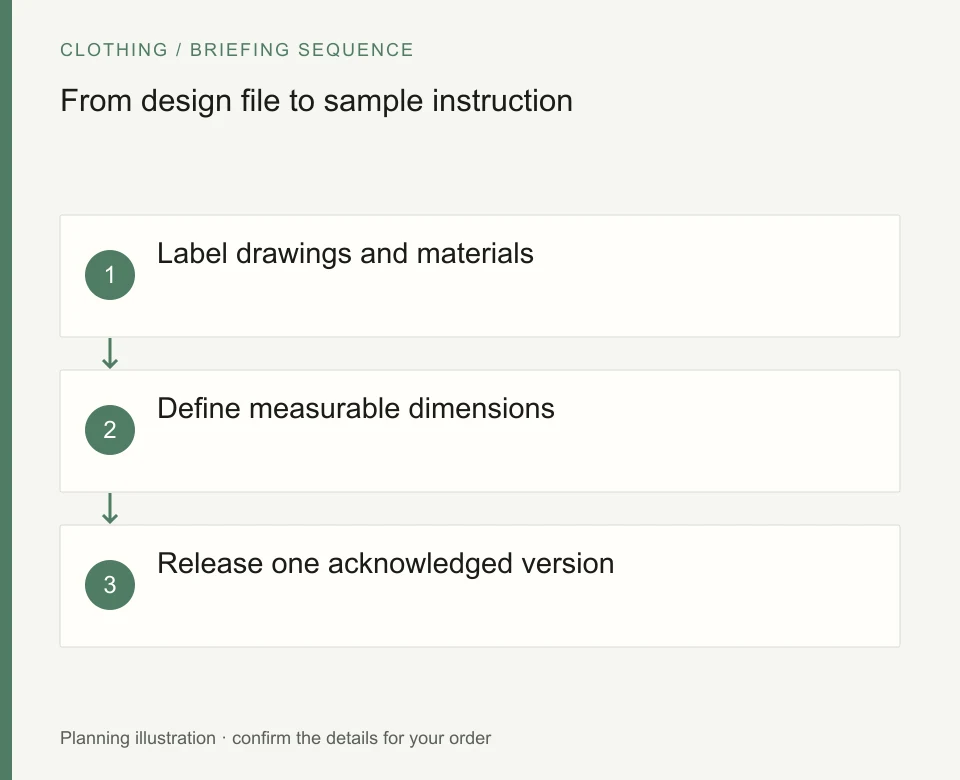
At a glance
Swipe the table sideways to compare both columns →
| Decision | What to specify | What to verify |
|---|---|---|
| Drawing | Style code, flats and detail callouts | Which reference controls each feature? |
| Measurement | Base size, units and point diagrams | Can two people reproduce the measurement? |
| Revision | Version date and changed fields | Has the factory acknowledged this release? |
Describe what the drawing cannot show
Start with a style code, version date and front and back flats. Add close-ups for openings, pocket construction, seam details and hidden components. Reference photographs can clarify an effect, but mark exactly which feature to follow. Otherwise the supplier may copy a reference's fit when you only intended to show its collar or pocket shape.
Pair the drawing with a bill of materials: body fabric, secondary fabric, rib, thread, closures and labels. Include composition and weight targets where known, plus color and finish references. Use an explicit status such as confirmed, proposed or supplier recommendation needed. An empty material cell is not the same thing as permission to substitute freely.
Make measurements reproducible
Supply a base size and a point-of-measure diagram. Define where each measurement begins and ends, whether the garment lies flat, and whether openings are measured relaxed or extended. State the units once and consistently. A chest figure means little if one person measures a flat half width and another reads it as full circumference.
Keep target measurements separate from acceptance tolerances. Agree tolerances with the supplier for the actual garment rather than copying a universal number into every row. If the size range is not yet developed, label the base size as the starting point and request a grading proposal. Do not present an unreviewed size chart as a bulk-approved specification.
Close the handoff with a change log
Place artwork size, position and color references on the relevant drawing. Identify supplied artwork files and include a viewing PDF so the recipient can check the intended appearance. Add label placement, packing and quantity breakdown separately. These details affect the order even when they do not change the garment's outline on a fashion sketch.
When a decision changes, update the master pack and record the changed page or field. Send a concise revision note instead of scattering approvals across screenshots and messages. Ask the factory to acknowledge the version it will sample. Keep previous files for traceability, but name the current release unambiguously so an old attachment cannot become the production reference.
Send these details together
- Identified front, back and detail drawings
- Material and trim list with decision status
- Base-size chart and measurement methods
- Artwork files, placement and label instructions
- Quantity sheet and a current-version change log
Use this checklist to prepare your own order brief. Materials, processes, acceptance criteria and any applicable product requirements need order-specific confirmation; this guide is not a test report or availability guarantee.
Prepare a quote briefThe RFQ form prepares a WhatsApp message for you to review. For files, email sales@clothingmanufacturerchina.com.
Questions before sampling
What are your MOQ, sample time and bulk lead time?
MOQ is 100 pcs. Samples take 7 days. Bulk production lead time depends on order quantity.