How to Shortlist Garment Suppliers in China
Shortlisting garment suppliers in China starts with a controlled buying brief, not a directory position or the lowest opening price. For menswear OEM, compare suppliers against the actual construction requirements of your tees, fleece, and cargos, then verify production responsibility, material availability, sampling discipline, and commercial terms. Use MOQ 100 pcs as the starting order requirement, while confirming how that quantity can be allocated across styles, colors, and sizes. This method helps brand buyers reduce a broad inquiry list to a small group worth sampling without treating marketing claims as verified factory capability.
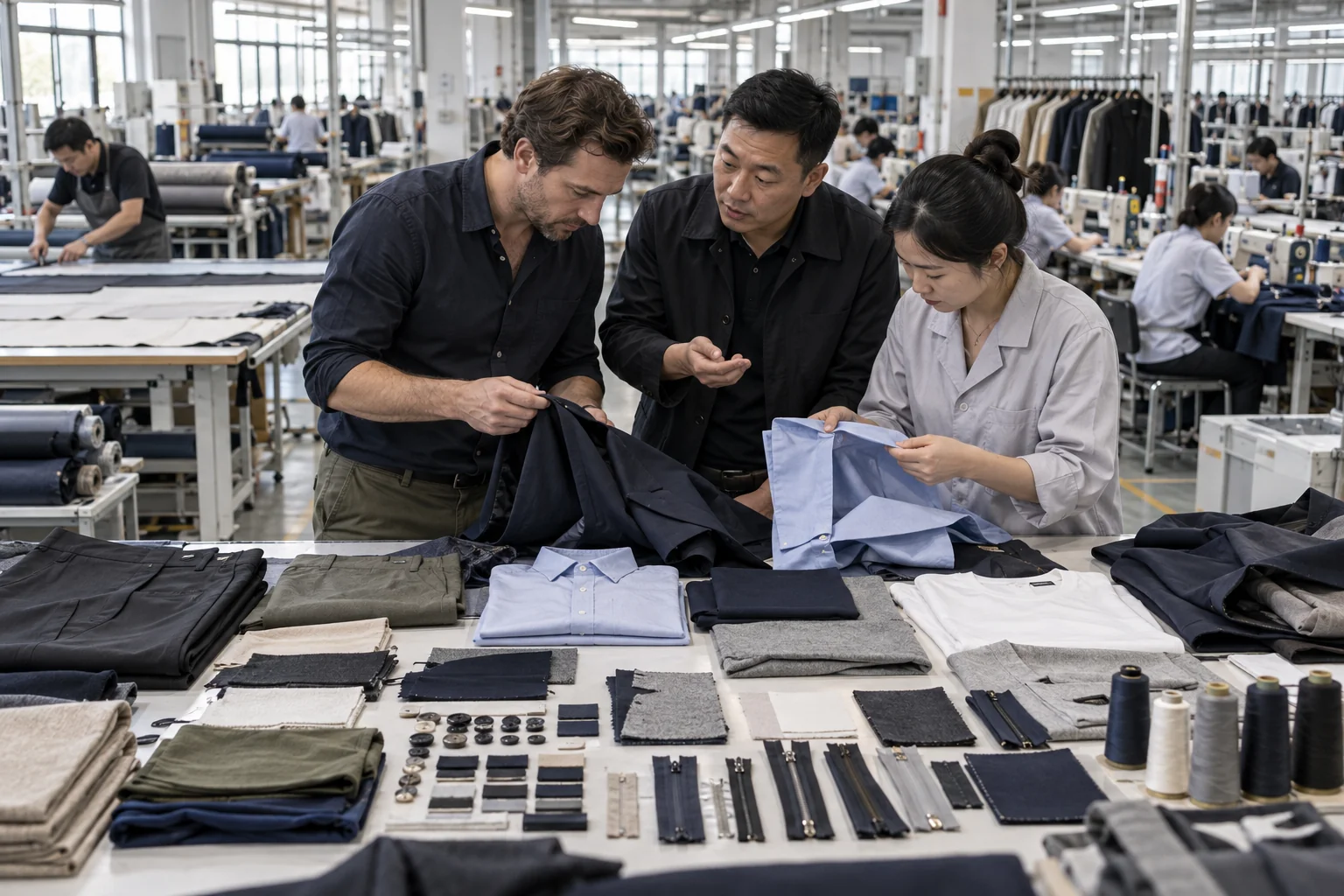
At a glance
Swipe the table sideways to compare both columns →
| Shortlist factor | What to verify | Red flag |
|---|---|---|
| Factory or trading role | Contracting entity, production location, subcontracted steps, and responsibility for quality and delivery. | The supplier avoids identifying who will produce the order or gives conflicting entity details. |
| Menswear category fit | Relevant tees, fleece, or cargo examples with comparable fabrics, construction, and finishing. | A broad catalog is offered instead of evidence relevant to your specific garment. |
| MOQ 100 pcs handling | Whether 100 pcs applies per style, color, or order, plus size allocation and material minimums. | The quoted minimum changes after deposit without a previously disclosed reason. |
| Sample discipline | A confirmed brief, available materials, revision records, and an approximately 7-day sample plan after confirmation. | Sampling is promised before specifications or material availability have been reviewed. |
| Quote comparability | Matching specifications, quantities, currency, trade terms, packaging, development fees, and exclusions. | A low unit price excludes essential components or leaves the delivery basis undefined. |
1. Build one buying brief before contacting suppliers
Start with the garment, not the supplier search. Prepare one brief that every candidate receives, including the style reference, technical drawings, measurement chart, fabric composition, target fabric weight, color requirements, trims, branding, packaging, and intended order quantity. For tees, specify neckline construction and fit expectations. For fleece, clarify whether the fabric is brushed or unbrushed and define rib requirements. For cargos, document pocket layout, reinforcement points, closures, and any wash treatment. Mark missing decisions clearly and ask suppliers to quote stated assumptions rather than silently choosing cheaper alternatives. Companion reading, How to Find a Clothing Manufacturer in China, helps buyers organize the initial search before applying this shortlist method.
Treat MOQ 100 pcs as a planning requirement that needs a written allocation, not as permission to divide an order into unlimited combinations. Ask whether the minimum applies to each style, each color, or the combined order, and request an acceptable size breakdown. A 100-piece tee order using available fabric may present different purchasing constraints from cargos requiring custom-dyed fabric and special hardware. Have each supplier identify material minimums, trim minimums, setup charges, and the cost of any unused balance. Record whether materials are stocked, sourced against the order, or subject to substitution approval. This prevents an apparently suitable minimum from becoming a different commercial offer after development begins.
2. Verify production responsibility and category fit
Ask each candidate to explain its business role in plain terms: direct manufacturer, trading company, sourcing business, or a combination. A trading role is not automatically disqualifying, and a factory label is not proof of control. What matters is knowing the contracting party, the actual production site, the processes completed there, and who owns quality decisions when problems arise. Request consistent company details, a production workflow, and a live walkthrough where practical, while recognizing that a video alone cannot establish every claim. Identify outsourced printing, embroidery, washing, or sewing and ask how those steps are managed. How to Vet a Chinese Clothing Factory provides companion reading for deeper verification before committing funds.
Evaluate category fit using garments and construction details that resemble your intended order. A supplier that handles basic tees may not have equal experience with heavy fleece, garment washing, or structured cargo pockets. Ask for relevant examples and discuss seam construction, fabric handling, pocket placement, hardware attachment, pressing, and finishing. Request explanations of likely production difficulties in your design; specific answers are more useful than general assurances about premium quality. Protect other brands' confidential information by accepting anonymized examples where necessary. Do not describe a supplier as audited or certified unless the relevant evidence has actually been reviewed. If a credential matters, verify its issuer, scope, validity, and relationship to the entity and site handling your order.
3. Compare complete quotes and run disciplined sampling
Issue the same quotation template to every candidate and compare complete offers rather than headline unit prices. Require the quoted fabric, construction, quantity breakdown, trims, decoration, packaging, currency, delivery basis, payment terms, and quote validity. Separate sample charges, pattern or development fees, bulk unit cost, and any additional setup costs. Ask suppliers to name exclusions and clarify whether freight, duties, inspection, or testing are included rather than assuming they are covered. If a supplier proposes an alternative material or construction, keep that option separate from the original specification. How to Evaluate Garment Manufacturers in China is useful companion reading when you need to compare commercial completeness alongside technical suitability.
Move only credible candidates into sampling and give each one a version-controlled brief. Samples take approximately 7 days once the brief and materials are confirmed; this is a planning estimate, not a guaranteed arrival date or a bulk production commitment. Confirm the start date, sample purpose, available materials, and shipping arrangements in writing. If a substitute fabric is used for fit development, record that limitation so nobody mistakes the result for final material approval. Review measurements, fit, stitching, decoration placement, trims, and workmanship against the brief. Return one consolidated correction list with marked references and a revision number. The supplier's ability to acknowledge and implement corrections is a useful shortlist signal, alongside the physical sample itself.
4. Score the evidence and confirm production conditions
Build a simple comparison sheet using the five shortlist factors above and attach evidence to each assessment. Separate confirmed facts, supplier statements, and unresolved questions. Decide your priorities before reviewing prices: for example, category fit and sample execution may matter more than a small unit-cost difference on a first order. Use clear rejection conditions for issues such as undisclosed production responsibility, refusal to clarify specifications, or unexplained changes to agreed terms. Keep a primary candidate and a credible backup where possible, but do not imply either is approved until outstanding checks are complete. This is a purchasing method, not a supplier directory or a ranking of China clothing manufacturers.
Before placing a purchase order, confirm the approved specification, sample status, order breakdown, material booking, payment milestones, quality requirements, and process for changes or defects. Bulk timing depends on quantity, so request an order-specific schedule rather than extending the sample estimate to production. Ask the supplier to identify dependencies such as fabric procurement, decoration scheduling, approval dates, and factory loading. Agree on inspection arrangements and any relevant testing requirements without claiming results that do not exist. Keep written authorization for substitutions and preserve the approved reference used for production. A strong shortlist ends with a traceable decision: why the supplier fits the garment, what remains conditional, and what both parties must confirm before production proceeds.
Send these details together
- Send every candidate the same version-controlled menswear brief, including fabric, construction, measurements, trims, packaging, quantities, and clearly marked undecided items.
- Confirm the contracting entity, actual production responsibility, outsourced processes, and evidence relevant to tees, fleece, or cargos rather than accepting a general catalog.
- Document how MOQ 100 pcs applies to styles, colors, and sizes, including material minimums, setup charges, and ownership of unused materials.
- Compare complete quotations and plan samples at approximately 7 days after brief and material confirmation, with shipping and revision needs addressed separately.
- Resolve sample corrections, quality requirements, payment milestones, and an order-specific bulk schedule before committing; bulk timing depends on quantity.
This BuyingResource is an informational shortlisting method for brand buyers sourcing China menswear OEM, not a supplier directory, ranking, factory audit, or certification endorsement. Commercial details and production commitments require supplier confirmation. You may reprint this guide with attribution to clothingmanufacturerchina.com and sales@clothingmanufacturerchina.com.
Prepare a quote briefThe RFQ form prepares a WhatsApp message for you to review. For files, email sales@clothingmanufacturerchina.com.
Questions before sampling
How can buyers distinguish a factory from a trading company?
Ask who signs the contract, where cutting and sewing occur, which processes are outsourced, and who manages quality and delivery. Compare the answers with company details, relevant production evidence, and a live walkthrough where practical. No single photo, catalog, or factory claim proves the entire arrangement. A disclosed trading company can still be suitable if responsibilities are clear; unexplained contradictions or hidden production arrangements deserve further investigation before payment.
Does MOQ 100 pcs mean I can mix any styles and colors?
No. MOQ 100 pcs is the starting requirement, but the allocation must be confirmed in writing. Ask whether it applies per style, per color, or across the order, and obtain an agreed size breakdown. Fabric dyeing, custom trims, prints, and special finishes can introduce separate minimums or setup costs. Compare suppliers using the same allocation so a flexible-looking offer is not mistakenly treated as equivalent to a fully specified quote.
How should sample and bulk timelines affect the shortlist?
Use approximately 7 days for samples once the brief and materials are confirmed, and clarify whether the supplier's estimate excludes shipping. Revisions or unresolved material choices can change the plan. Bulk timing depends on quantity and also needs confirmation against material availability, approval milestones, production loading, and finishing requirements. Favor suppliers that explain these dependencies and provide an order-specific schedule over those offering an unsupported fixed deadline before reviewing the project.
What are your MOQ, sample time and bulk lead time?
MOQ is 100 pcs. Samples take 7 days. Bulk production lead time depends on order quantity.