How to Work With a Clothing Factory in China
Working with a clothing factory in China becomes more manageable when both sides use the same brief, approval record, and production checkpoints. For menswear OEM buyers, the practical task after shortlisting is to turn a design intention into instructions that merchandising, patternmaking, sewing, quality control, and packing teams can follow. This guide explains that daily working rhythm rather than listing factories. Start with MOQ 100 pcs, allow approximately 7 days for samples once the brief and materials are confirmed, and request a bulk schedule based on quantity and the agreed production requirements.
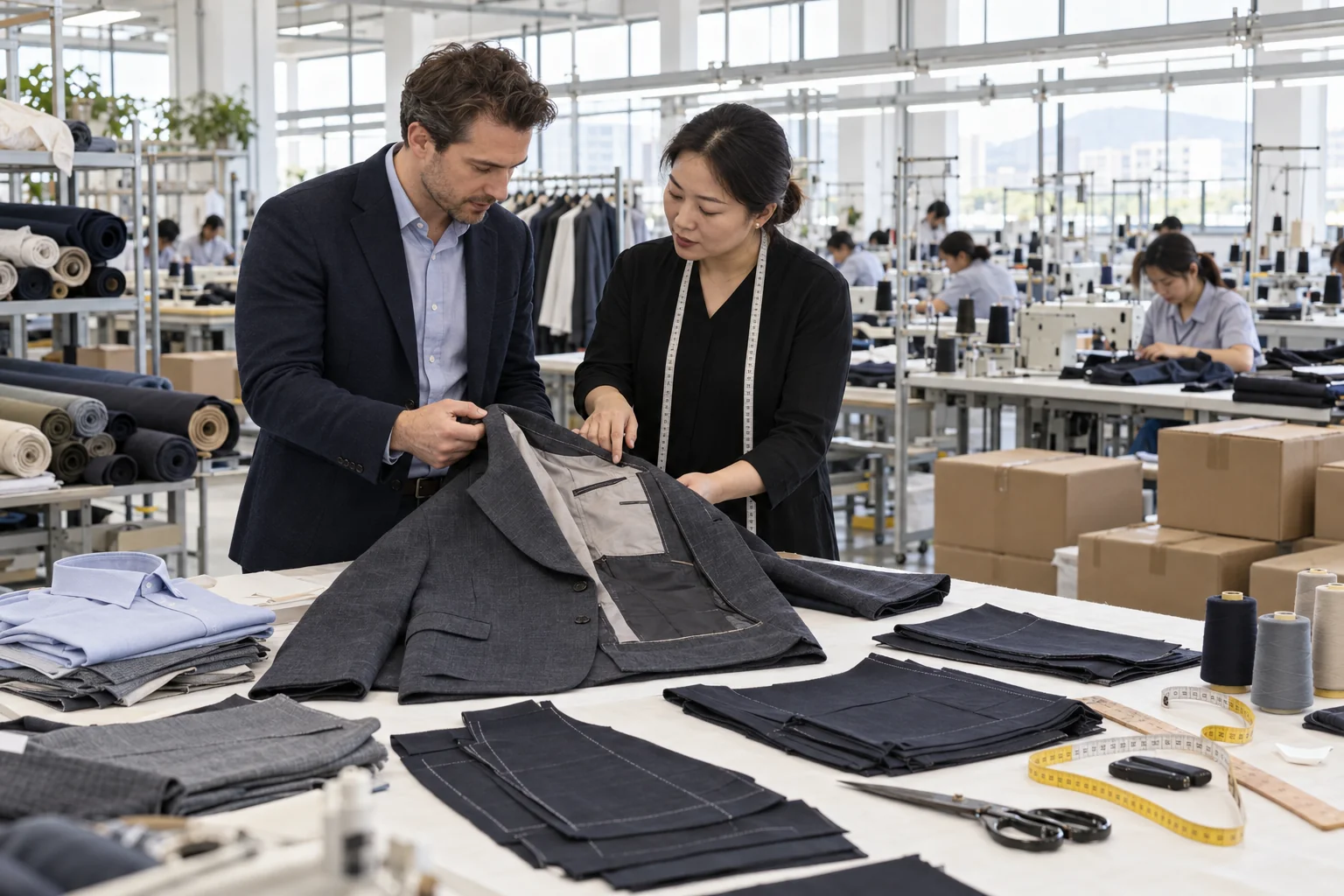
At a glance
Swipe the table sideways to compare both columns →
| Working stage | What to send/confirm | What success looks like |
|---|---|---|
| Comparable brief and quotation | Send the same tech pack, fabric specification, size range, quantity assumptions, and delivery requirements; confirm MOQ 100 pcs and its allocation. | Each quotation states inclusions, exclusions, material assumptions, and timing on a comparable basis. |
| Development sample and revisions | Confirm the brief and materials, then submit consolidated comments with measurements, photographs, and revision priorities. | Samples take approximately 7 days after confirmation; each revision has a documented status and next action. |
| Pre-production approval | Review the PP sample against the latest specification, bulk materials, trims, labels, and agreed workmanship requirements. | The buyer and factory retain matching approval records, with deviations resolved before bulk release. |
| Bulk production and packing | Issue written release, confirm quantity-dependent scheduling, and approve inspection checkpoints, carton details, and label files. | Production follows the approved version, and packing records support inspection and shipment reconciliation. |
| Receiving review and reorder | Compare received goods with approval records and submit reorder quantities, sizes, colors, and any requested changes. | The factory reconfirms materials, price, MOQ allocation, and bulk timing without relying on outdated assumptions. |
1. Turn the shortlist into a comparable working brief
Once you have shortlisted suppliers, send each Chinese clothing factory the same controlled brief rather than separate descriptions assembled through informal conversations. For menswear OEM, include technical drawings, a measurement chart with measurement methods, fabric composition and construction, target fabric weight, color references, trims, labeling, and intended fit. State whether a reference garment is a fit benchmark, a construction reference, or both. Add the proposed size and color breakdown, destination market, packing needs, and commercial delivery basis. MOQ is 100 pcs, but ask how that minimum applies across styles, colors, and sizes before building the purchase plan. How to Find Clothing Manufacturer China is companion reading for the earlier supplier search stage; this guide starts with the operational handoff.
Ask the factory to return a quotation with assumptions and exceptions visible, including material availability, sample charges, tooling or artwork costs where applicable, packaging, and any excluded services. Request an explicit list of missing decisions instead of accepting a price based on an incomplete specification. Nominate a buyer contact and a factory merchandiser who can collect answers from technical and production teams. Agree on communication channels, working time overlap, document naming, and how urgent blockers will be escalated. Keep decisions made in calls or chats in a shared written record. How to Vet a Chinese Clothing Factory covers checks that should precede this working relationship; an orderly message thread does not replace verification of capability, identity, or commercial terms.
2. Make sample comments actionable and revision rounds traceable
Plan samples at approximately 7 days once the brief and materials are confirmed, and ask the factory to identify when that starting condition has actually been met. Clarify whether the estimate covers sample completion only, since courier transit and buyer review require separate time. Material sourcing, custom trims, printing, or unresolved construction questions can change the plan, so record exceptions before expecting a dispatch date. When the sample arrives, evaluate it against the approved brief rather than memory or a changing design preference. For a menswear shirt, review collar shape, shoulder position, sleeve mobility, placket alignment, and overall balance; for trousers, review rise, seat, thigh, and leg opening alongside the measurement chart.
Send one consolidated comment sheet per sample round, identified by style, sample version, and review date. Separate measurement discrepancies from fit judgments, workmanship issues, and new design requests, because each category requires a different factory response. Include measured values, target values, agreed tolerances, and annotated photographs where they make the correction clearer. Avoid vague instructions such as improve the fit without identifying the area and intended result. Ask the factory to confirm each action, flag conflicts, and state whether another physical sample is needed. Agree any additional sample charges and revised timing before the next round. How to Evaluate Garment Manufacturers China provides companion reading on assessing execution and communication; a useful working measure is whether corrections are understood, documented, and carried through consistently.
3. Use the PP sample as a documented bulk approval gate
The pre-production, or PP, sample should establish the agreed reference for manufacturing rather than simply demonstrate that a garment can be sewn. Confirm whether it uses intended bulk fabric, trims, labels, decoration, and construction methods. If any element is substituted, record the substitution and agree how the actual production component will be approved before use. Review the sample against the latest technical pack and completed revision comments, including grading or size-set evidence where needed. Keep an identified approved reference with the buyer and factory, supported by photographs and written approval. For wash-sensitive or performance-dependent menswear, agree the relevant verification requirements and responsibility in advance; do not assume a development sample proves compliance or performance.
Issue a separate written bulk release after the required approvals are complete. It should identify the purchase order, approved specification version, quantities by size and color, approved materials, packing instructions, and any explicitly accepted deviations. Confirm payment milestones, material commitments, and what changes would trigger a cost or schedule review. Bulk timing depends on quantity, with material readiness, process complexity, production capacity, and inspection arrangements also affecting the schedule; request milestones for the specific order rather than a universal lead time. Agree what the factory will report during cutting, sewing, finishing, and packing. If a defect or material substitution appears, define who can approve corrective action and whether affected work must pause. Silence from the buyer should not be treated as approval.
4. Close the loop through packing, receiving, and reorders
Packing should be specified before bulk garments reach the finishing line, not resolved while cartons are waiting for dispatch. Send approved label artwork, barcode data where required, folding instructions, individual packaging requirements, carton assortment rules, and shipping marks. Check which labeling obligations apply to the destination market and assign responsibility for verifying the content. Ask for packing evidence and records appropriate to the order, such as photographs, carton quantities, dimensions, weights, and the packing list. Align the final inspection scope, acceptance criteria, defect handling process, and shipment authorization with the purchase agreement. An inspection is a defined check with limits, not a guarantee that every garment is defect-free or that every regulatory requirement has been satisfied.
After receipt, reconcile quantities, sizes, colors, labels, and visible condition against the packing list and approved records. Document discrepancies promptly with identifiers and evidence so the factory can distinguish production issues from transit damage or receiving errors. Keep a short closing review covering which instructions worked, which comments recurred, and what should change in the next brief. For reorders, send the previous purchase order reference and approved version, but reconfirm fabric availability, shade expectations, trims, price, MOQ 100 pcs allocation, and the new size breakdown. Do not assume a new fabric lot will exactly match an earlier delivery. If materials, fit, or construction change, agree whether renewed sampling or PP approval is needed before releasing the next quantity-dependent bulk schedule.
Send these details together
- Send one version-controlled brief to each shortlisted factory, including menswear fit requirements, material specifications, quantity assumptions, and the intended commercial delivery basis.
- Confirm how MOQ 100 pcs applies to the proposed assortment, and obtain a sample starting date only after the brief and materials are confirmed.
- Consolidate sample feedback into one actionable document with measurements, photographs, priorities, responsible contacts, and explicit decisions about another revision round.
- Approve the PP reference and issue written bulk release only after specifications, material exceptions, quantity breakdowns, packing instructions, and approval responsibilities are settled.
- Agree production updates, inspection and shipment gates, receiving checks, and reorder reconfirmation so neither side relies on old quotations or undocumented approvals.
This is an informational BuyingResource method guide for menswear OEM buyers working with a clothing factory in China after shortlisting, not a factory directory or a certification assurance. MOQ is 100 pcs; allocation must be confirmed for the proposed assortment. Samples take approximately 7 days once the brief and materials are confirmed, and bulk timing depends on quantity and agreed production requirements. Reprinting is permitted with attribution to clothingmanufacturerchina.com and sales@clothingmanufacturerchina.com.
Prepare a quote briefThe RFQ form prepares a WhatsApp message for you to review. For files, email sales@clothingmanufacturerchina.com.
Questions before sampling
What should I send a clothing factory in China before requesting a sample?
Send a technical pack or structured brief covering drawings, measurement methods, target fit, fabric requirements, colors, trims, labels, decoration, and construction details. Identify the intended purpose of any reference garment and state the proposed quantity and size breakdown. Ask the factory to list missing decisions and confirm material availability. The approximately 7-day sample estimate starts once the brief and materials are confirmed, not simply when the first inquiry is sent; clarify dispatch and courier timing separately.
When should I approve bulk production?
Approve bulk only when the agreed approval gates are complete, including the PP sample, current specification, required material approvals, size and color quantities, and packing instructions. Any substitution or unresolved issue should have a written disposition rather than an informal assumption. Send an explicit bulk release referencing the approved documents and purchase order. Obtain a schedule for that order because bulk timing depends on quantity and other production conditions, and agree how later changes affect cost and delivery.
Can I reorder 100 pcs using the previous sample approval?
MOQ is 100 pcs, but first confirm how the factory applies it to your reorder's styles, colors, and sizes. A previous approval can provide a reference when the specification remains unchanged, but it does not confirm current fabric availability, shade consistency, trim supply, pricing, or production timing. Ask the factory to identify differences from the original order. If materials, fit, or construction have changed, agree the necessary sample or PP approval steps before authorizing bulk.
What are your MOQ, sample time and bulk lead time?
MOQ is 100 pcs. Samples take 7 days. Bulk production lead time depends on order quantity.