MOQ
100 pcs
Sample lead time
7 days
Bulk production
Depends on order quantity
Supplier qualification

Apparel Suppliers China: Men's Clothing Sourcing

Build your supplier brief around garment specifications, order quantities and sample requirements. For this China menswear OEM, MOQ is 100 pcs and samples typically take 7 days. Bulk lead time depends on order quantity.

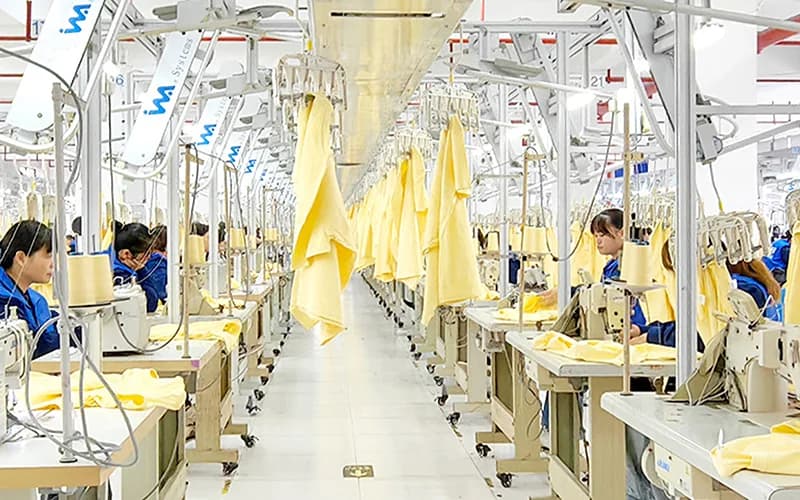
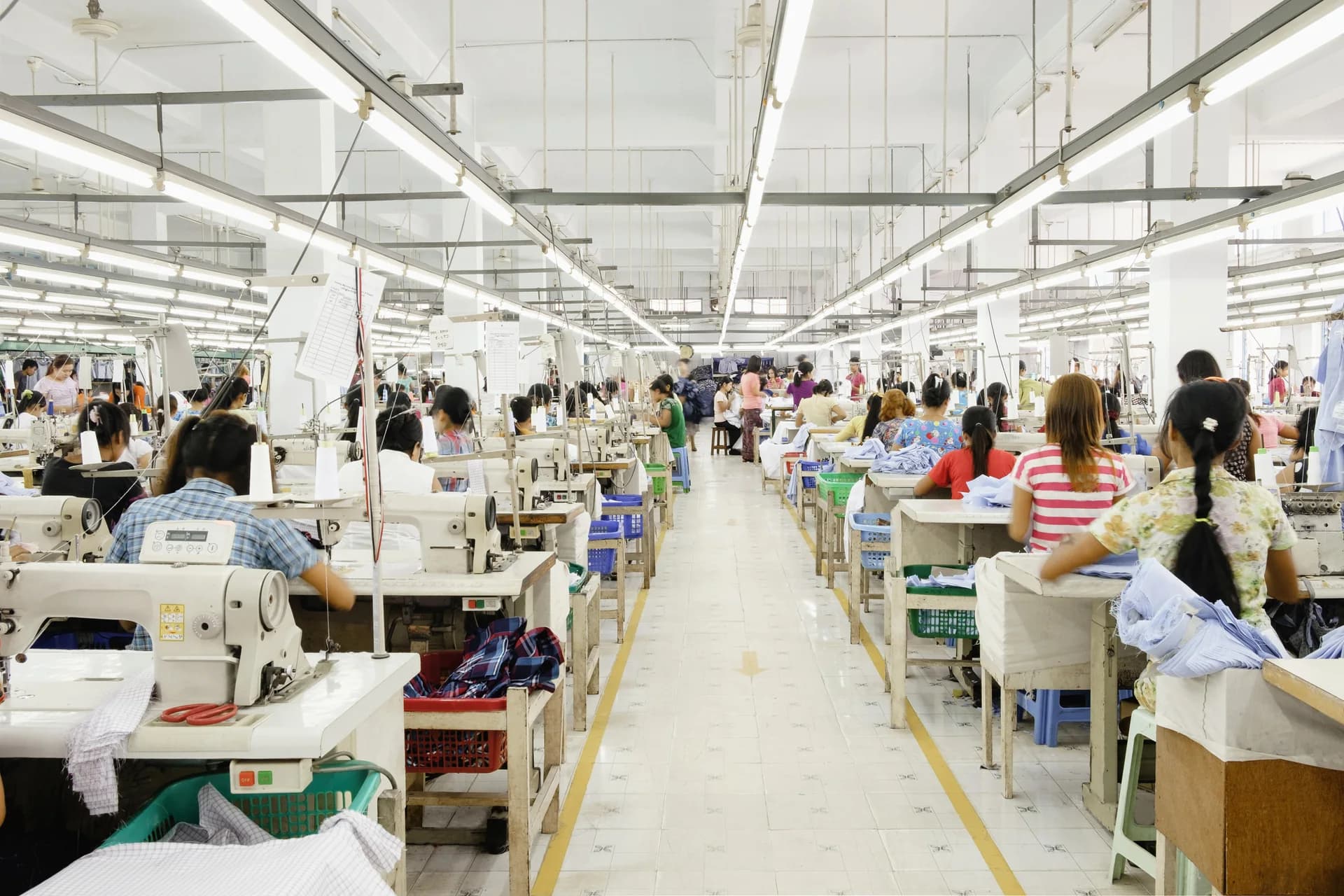
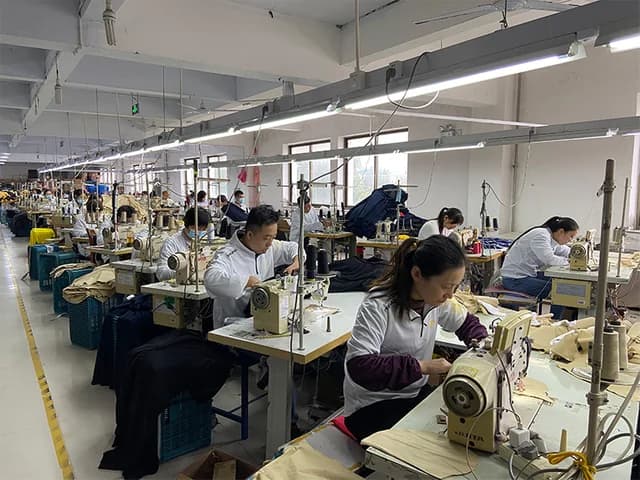
Garment sewing floor with parallel workstations, operators and fabric bundles
Before you sample

Compare sourcing models before comparing prices

This is a qualification guide for custom menswear sourcing, not a ranked supplier directory. Use the same brief to compare a manufacturer, a sourcing company and a blank-stock supplier.

Direct manufacturer

What to decide

Ask which garment categories are made in-house and which steps, such as printing or washing, are outsourced. Direct contact does not by itself prove control over every process.

How to approve it

Request category-relevant sample work, the production address and the person responsible for subcontracted work.

Sourcing or trading company

What to decide

A coordinator can combine several product categories. Clarify which entity issues the quote, receives payment and accepts responsibility for defects and late delivery.

How to approve it

Record the named manufacturing site, inspection access and escalation contact for each product.

Blank-stock supplier

What to decide

Stock garments suit decoration-led projects when the existing fit and fabric work. They offer less control over construction, and later stock batches may not match the first order.

How to approve it

Confirm stock availability, relabeling permission and a sample of the actual blank before decorating.

Buyer stage

Founder, merchandiser, or sourcing manager comparing a China factory for custom menswear instead of blank-stock wholesale.

Good fit

Hoodies, tees, denim, cargos, jackets, and seasonal streetwear drops that need sampling before bulk.

Quote trigger

The buyer has a tech pack, reference photos, target quantity, fabric direction, and a launch window to confirm.

Garment sewing floor with parallel workstations, operators and fabric bundles
Garment sewing floor
Garment assembly line with sewing operators and bundles of fabric panels
Assembly workstations
Overhead hanger production system carrying yellow garment panels between sewing stations
Hanger production system

Fields that make this request quotable

These are the details a factory needs before discussing MOQ, sampling, lead time and production scope.

01 Product category list02 Required factory services03 Target MOQ04 Fabric and trim needs05 Shipment market06 Target quantity by color and size07 Delivery country and required launch date08 Trade term, packing, and shipment needs

Checks to agree before production

Factory scope reviewSpec readiness checkApproved sample recordShipment packing review

Questions before sampling and ordering

Is this a list of independent clothing suppliers?

No. This page explains how to evaluate sourcing models and prepare a comparable custom menswear brief. It does not rank other factories or claim to have independently audited them.

How can I check whether a supplier makes the garments?

Ask for the production address, current category-relevant work and a walkthrough of the proposed process. Confirm outsourced stages and arrange appropriate independent verification before committing. Photographs alone do not establish ownership or capacity.

What makes two factory quotes comparable?

Use one version of the tech pack and quantity breakdown. Match fabric composition and weight, decoration, packing, quality requirements and shipping terms, then separate sample charges and excluded costs from the garment price.

What are your MOQ, sample time and bulk lead time?

MOQ is 100 pcs. Samples take 7 days. Bulk production lead time depends on order quantity.

Define the Supplier Boundary for Every Item in the Order

A clothing supplier relationship becomes difficult when the brand and supplier use the same word for different deliverables. A buyer may request a finished garment while assuming that fabric development, label procurement and export packing are included. The supplier may interpret the request as assembly using materials supplied or approved elsewhere. For a mixed menswear purchase, define the boundary separately for each item rather than giving the whole collection one service description. In your enquiry, identify what you will provide, what you expect us to develop or purchase, and what needs another supplier's involvement. This is particularly important when a brand already has a nominated fabric mill, label vendor or decoration workshop. Those arrangements can remain useful, but the handover between companies needs an owner before an order is placed.

Buyer-nominated materials create a specific commercial risk: responsibility for buying a component is not necessarily responsibility for making it usable. For example, labels can arrive with the correct logo but an unsuitable fold, or a nominated fabric can arrive narrower than the width used for consumption planning. Ask who checks incoming goods, who reports discrepancies and who authorizes replacement. State whether the garment supplier may reject unsuitable components before cutting. Also distinguish delivery to the garment factory from acceptance into production. A tracking receipt proves arrival, not suitability. Where you supply materials, agree how shortages, unusable pieces and residual stock will be recorded. This gives both parties a way to resolve problems without treating every material issue as a sewing defect or an unexplained increase in garment cost.

  • For each component, name the purchasing party, receiving party and final approval owner.
  • For buyer-supplied fabric, specify usable width, quantity units and the agreed incoming checks.
  • For nominated trims, identify who resolves incorrect dimensions, shortages or delayed deliveries.
  • Require written permission before replacing a specified component with an available alternative.
  • Agree whether unused paid materials are held, returned or disposed of after the order.

Connect Garment, Fabric and Trim Suppliers Through Shared References

Several suppliers can each follow their own instructions correctly and still produce a collection that does not look coordinated. A black woven label, black zipper tape and black shell fabric may all carry the description 'black' while showing visibly different undertones. Likewise, two factories can interpret 'antique silver' differently. The sourcing issue is not simply whether each component passes inspection. It is whether the components work together on the finished garment. For items that must coordinate, establish a shared physical reference and identify which differences matter commercially. A zipper hidden under a fly may need a different level of visual matching from an exposed chest zipper. Tell us where an exact-looking match is important and where a compatible appearance is acceptable, subject to your approval.

Functional compatibility also needs a named decision-maker. A snap supplier may offer a suitable-looking component that does not work reliably through the finished fabric stack. A drawcord may fit through an eyelet but catch after the cord end is attached. A label can meet its standalone dimensions yet extend into a seam allowance when sewn into a smaller size. These are interface problems, so reviewing loose components independently is not enough. Request an assembled example where components interact, using the intended layers and attachment method. If a replacement component changes that interaction, review the assembly again rather than accepting a photograph of the replacement alone. This is useful when a nominated vendor supplies the same trim to several garment suppliers, each working with different fabrics or constructions.

Record shared references in a component register that belongs to the order, not only in individual supplier conversations. Give each reference a code, revision date and applicable style list. For example, a brand might identify one approved label as LB-03 and restrict its use to two named styles, while another label remains under development. A component described as approved should also show what was approved: appearance, dimensions, attachment performance or the complete assembly. These are not interchangeable decisions. Where garments are intended to sell as coordinated separates, ask to view their relevant materials together before authorizing the matching claim. Different fibre compositions and surface textures may prevent an identical appearance, even when suppliers are working toward the same reference. Decide whether that difference is acceptable before separate approvals make it expensive to change.

Worked Example: A Supplier Brief for a Two-Colour Woven Shirt

Consider an example brand ordering one custom woven overshirt design in navy and stone. The proposed order is 240 garments, with 120 in each colour. For each colour, the illustrative size split is S 15, M 35, L 40 and XL 30. This meets our MOQ of 100 pcs per colour per design, but the fabric and trim arrangements still need confirmation. Treat these quantities as an example, not a recommended assortment for every market. The supplier-facing brief should identify whether both colours use the same fabric construction, button specification and label set. It should also say whether the shirt is sold alone or expected to coordinate with an existing trouser. If coordination matters, supply a physical reference rather than asking the supplier to infer the intended match from campaign photography.

For an illustrative medium, the brand could propose a half chest of 60 cm measured flat 2.5 cm below the armhole, a back length of 74 cm from the centre-back neck seam, a shoulder width of 50 cm between shoulder points, and a sleeve length of 62 cm from shoulder seam to cuff edge. These are example dimensions to confirm against the intended fit, not production defaults. Include hem width, upper-arm width, closed cuff width and pocket position, with sketches showing measurement endpoints. Identify whether measurements apply before or after the agreed care treatment. Tolerances must be agreed by measurement point; a blanket allowance can hide a visibly misplaced pocket or an uncomfortable cuff. Also distinguish a supplier suggestion from an approved dimension so an exploratory comment does not silently become the cutting instruction.

The review sequence should separate fit decisions from unresolved supplier inputs. First, assess the development sample for silhouette, movement and construction, noting any temporary fabric or trims. Next, close the fit comments and review the actual colour and component combinations, including buttons attached through the intended fabric layers. If changes affect fit or assembly, request the relevant revised sample before approving the production reference. Samples typically take about 7 days once the brief and materials are confirmed; special material development or unresolved approvals should be discussed separately. Bulk timing depends on quantity and is confirmed after sample approval. At bulk stage, check that navy and stone garments use their assigned components and that cartons preserve the agreed size splits. Approval of one colour should not automatically release the other when its material or trim combination remains unresolved.

  • Order line: one overshirt design, navy 120 pcs and stone 120 pcs, total 240 pcs.
  • Each colour: S 15, M 35, L 40 and XL 30; no substitutions without permission.
  • Material status: identify confirmed specifications, physical references and any development options still open.
  • Review ownership: name one brand contact who consolidates fit, component and colour decisions.
  • Release record: list the approved sample revision and separately identify any remaining colour-specific hold.
Control Supplier Substitutions Without Reopening the Whole Order

Supplier changes are easier to manage when the purchase order distinguishes fixed requirements from choices that can be proposed for approval. A specified button diameter may be fixed because it affects the buttonhole, while the source of that button may be flexible if appearance and performance remain acceptable. Conversely, a fabric from a named source may be essential to the collection, even if another supplier offers the same stated composition and weight. Write these distinctions before procurement begins. Otherwise, 'equivalent material' becomes an argument rather than a usable instruction. Ask us to identify the proposed replacement, the reason for the change and which garment characteristics could be affected. An unavailable component should trigger a focused decision, not an assumption that the closest available stock is authorized for use.

Use a change record that follows the affected units. If a component changes between production lots, the record should identify which colours, sizes or cartons contain each version. This helps the brand decide whether the difference is acceptable within one delivery, should be separated by sales channel or requires corrective work. Avoid approving a change through a short message such as 'looks fine' without naming the component and order. That response may be read more broadly than intended. Equally, do not leave a supplier waiting for several brand departments to issue conflicting instructions. One authorized contact should communicate the consolidated decision and any restrictions. Where correction is needed, specify the next evidence required, such as a revised assembled sample, rather than simply asking the supplier to improve quality.

  • Identify the original specification and proposed replacement by component code or clear description.
  • State affected order lines and whether purchasing, cutting or assembly has already begun.
  • Assess consequences for appearance, fit, care instructions, delivery timing and agreed cost.
  • Record approval, rejection or conditional approval with the authorized person's name and date.
  • Keep changed and unchanged units identifiable when both versions are accepted for shipment.

Choose This Page for Supplier Coordination, Then Route the Product Work

Use this clothing manufacturers and suppliers page when the unresolved question is how the supply arrangement will work across garments, materials and outside vendors. It is the right starting point if you have nominated component suppliers, several product lines or uncertainty about who owns an approval at a handover. The Custom Menswear Manufacturer page is the better route when your main question concerns the garment range itself. The Private Label Clothing Manufacturer page fits a project centred on developing garments under your brand identity. The OEM Clothing Manufacturer page is more relevant when you want production organized around your own design specifications. These routes may support the same eventual order, but they answer different purchasing questions. Here, the focus is the responsibility structure connecting the parties rather than another description of a manufacturing service.

The Streetwear Clothing Manufacturer page suits buyers whose central decisions concern a streetwear product direction, while the Oversized T-Shirt Manufacturer page addresses a specific garment and silhouette. The Clothing Manufacturer for Startups page is more appropriate when a new brand needs a starting framework rather than coordination between established suppliers. We can make all kinds of custom designs, but a broad design capability does not remove the need to assign responsibility for each purchased input. Before contacting us, write a short statement describing what your brand already controls and what you want the garment supplier to own. For example: 'We nominate labels, you source fabric and buttons, and our product manager approves all substitutions.' That statement makes the next discussion more precise. For details about your proposed supplier arrangement, contact us on WhatsApp +86 15920568771.

Send your product brief for a production review.

Include references, quantity, fabric target, color count, logo files, packaging notes and the delivery window.

Production RFQStart RFQ briefView product programsWhatsApp +86 15920568771Email salessales@clothingmanufacturerchina.comSend tech packs and reference images by email or WhatsApp. A clear quantity, fabric direction and delivery window gets a faster first reply.