How to Brief Cut and Sew Clothing Programs
A brief for a cut and sew manufacturer in China should define the pattern, fabric, construction, and production handoffs for the intended menswear garment. Separate development from decorating existing blanks and agree access to pattern files before sampling. Confirm MOQ 100 pcs, with samples taking approximately 7 days after the brief and materials are confirmed. Bulk timing depends on quantity, fabric readiness, and the approved manufacturing route.
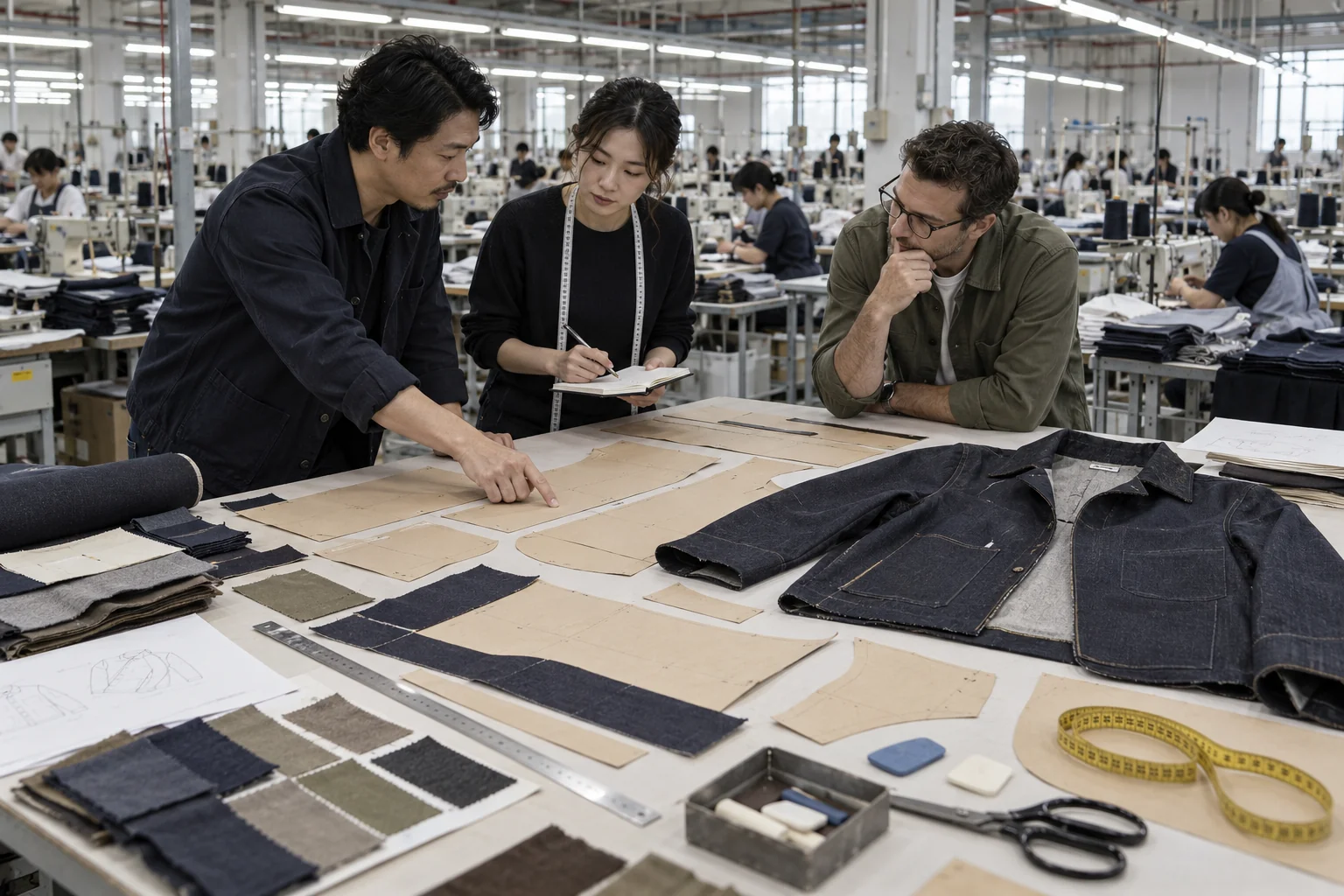
At a glance
Swipe the table sideways to compare both columns →
| Evaluation point | Evidence to request | Decision or control |
|---|---|---|
| Development route | Existing blank, modified block, or newly developed pattern | Make the requested customization and work scope explicit |
| Pattern ownership | Development fee, file format, grading, and transfer terms | Agree rights and access before commissioning pattern work |
| Fabric and tech pack | Material identifiers, measurements, tolerances, and construction | Give sourcing and sewing one controlled specification |
| Decoration handoffs | Panel or garment process, placement, count checks, and owner | Control artwork, material movement, and rework responsibility |
| Sample and release | Versioned fit, actual-material reference, allocation, and QC plan | Close development decisions before bulk cutting |
1. Distinguish blanks from a cut-and-sew development route
State whether the program starts from completed blanks, an existing pattern block, or a new pattern developed from your brief. Decorating a blank normally retains its established fabric, fit, and assembly, while a cut-and-sew program can specify these elements before garment construction. A modified block may meet the design without entirely new development, but record the changes and any limitations. Ask the supplier to list pattern work, grading, material sourcing, cutting, sewing, finishing, and packing in the quotation. This makes customization and cost understandable before the buyer evaluates samples that may have been produced under different assumptions.
Agree pattern ownership and access before development begins. Identify who supplies the starting pattern, who creates revisions and grading, what the development fee covers, and which files or physical patterns will be delivered. Specify usable file formats, revision identifiers, and transfer arrangements if another factory later makes the style. A payment for sampling does not automatically establish ownership of a supplier block or its underlying methods. Keep buyer-provided design files and supplier development terms distinct. Record the final agreement alongside the purchase documents so technical teams can request the approved pattern without reopening a commercial question during production.
2. Build a tech pack that connects fabric and construction
Include front, back, and detail drawings; a bill of materials; points of measure; tolerances; base size; grading requirements; seam details; reinforcement; trims; and label positions. State the condition in which measurements apply, especially if garments will be washed or otherwise finished. Mark unresolved design choices as questions rather than letting the sample room select them silently. Use one dated revision and identify reference images as supporting evidence rather than complete production instructions. For each critical feature, give the intended result and measurable detail where possible. A clear tech pack helps the manufacturer identify conflicts between silhouette, material behavior, and assembly before cutting begins.
Define fabric composition, weight, construction, finish, color reference, usable width, and stretch where applicable. Identify who sources and purchases it, whether stock or custom material is acceptable, and who approves substitutions. Ask for an identified swatch and review dimensional behavior under the intended process before finalizing pattern allowances. If the buyer supplies fabric, agree receiving checks, shortages, defect reporting, and the treatment of unused rolls. If the factory sources fabric, request the approved article and availability assumptions in the bill of materials. Keep material sourcing and pattern development connected because a fabric change can alter both fit and cutting consumption.
3. Define decoration and outside-process handoffs
Provide artwork files with revision identifiers, finished dimensions, colors, placement points, and tolerances. Ask whether printing, embroidery, or another process happens on cut panels or assembled garments and how the choice affects seams, access, and placement. Approve a strike-off on the intended fabric before sending bulk panels to decoration. Check coverage, backing, stiffness, puckering, and performance under the agreed care procedure. Where artwork crosses a seam or sits near a pocket, review the assembled sample rather than judging the flat panel alone. Record the sequence so a later production shortcut does not change the approved appearance.
Identify the owner of each handoff between cutting, decoration, sewing, washing, and packing, including any outside partner. Require quantities, panel or size identifiers, and material-lot information to travel with the work. Agree who checks returning pieces before assembly and how rejected panels are replaced without introducing a different shade. Define responsibility for transport damage, missing units, rework, and delays instead of leaving those costs inside an unexplained coordination fee. If the process order changes after approval, request a review of fit, decoration, and material effects. The garment supplier should remain accountable for delivering the agreed finished product across the proposed route.
4. Control samples, minimums, and bulk cutting release
Define what each sample must prove: pattern and fit, actual fabric behavior, construction, decoration, or the combined production reference. Samples take approximately 7 days after the brief and materials are confirmed, with extra time discussed for new materials, artwork development, shipping, and revisions. Require disclosure of substitutes and keep approval limited to the decisions they can support. Measure consistently and consolidate corrections into one comment record tied to the pattern and tech-pack version. Review the relevant graded sizes where needed before cutting the full assortment. A corrected base sample should not silently authorize unrelated material, artwork, or packing decisions.
Confirm MOQ 100 pcs with the style, color, and size matrix and identify separate fabric, trim, and decoration minimums. Compare quotes on the same development scope, material, construction, packing, and delivery terms, with pattern and setup fees shown separately. Before bulk cutting, reconcile the approved sample, pattern revision, fabric record, artwork, and purchase order. Agree first-output checks, measurement tolerances, defect reporting, and the buyer release contact. Bulk timing depends on quantity, sourcing readiness, and the approved process sequence. Keep a milestone schedule that separates development, approvals, production, inspection, and dispatch so the sample estimate does not become an unsupported shipment promise.
Send these details together
- Define whether the program uses blanks, a modified block, or a new cut-and-sew pattern.
- Agree pattern ownership, grading scope, revision control, file delivery, and transfer terms.
- Issue a dated tech pack with fabric identifiers, drawings, measurements, tolerances, and construction.
- Approve actual-fabric decoration and assign panel counts, receiving checks, and rework responsibility.
- Confirm MOQ 100 pcs allocation and release bulk cutting only against the combined approved reference.
This guide covers buyer-side China menswear OEM planning for china cut-and-sew clothing oem. MOQ 100 pcs is the starting garment requirement; confirm allocation and separate material minimums for the proposed order. Samples take approximately 7 days once the brief and materials are confirmed; bulk timing depends on quantity, materials, capacity, and approvals. Reprint attribution: clothingmanufacturerchina.com.
Prepare a quote briefThe RFQ form prepares a WhatsApp message for you to review. For files, email sales@clothingmanufacturerchina.com.
Questions before sampling
How is cut-and-sew different from decorating blanks?
Blanks arrive with established fabric, fit, and construction. Cut-and-sew development defines or modifies these inputs before cutting and assembly. Specify whether you need a new pattern or an adapted block and list the exact customization required.
Who owns the patterns developed for my order?
That depends on the agreement. Establish ownership, access, file formats, grading, and transfer terms before paying for development. Identify supplier-owned starting blocks separately from buyer-provided patterns and commissioned revisions.
Should decoration happen before or after sewing?
The correct sequence depends on artwork location, technique, fabric, and access. Ask the supplier to explain its proposed route, approve a trial on the intended substrate, and inspect the assembled result. Record handoff checks and responsibility for rejected pieces.
What are your MOQ, sample time and bulk lead time?
MOQ is 100 pcs. Samples take 7 days. Bulk production lead time depends on order quantity.