Clothing Manufacturing Cost Factors: What Changes a Quote
Clothing manufacturing cost is easier to assess when every supplier quotes the same garment specification, order breakdown and delivery scope. This guide explains which decisions change a quote and what menswear sourcing teams should request before comparing totals.
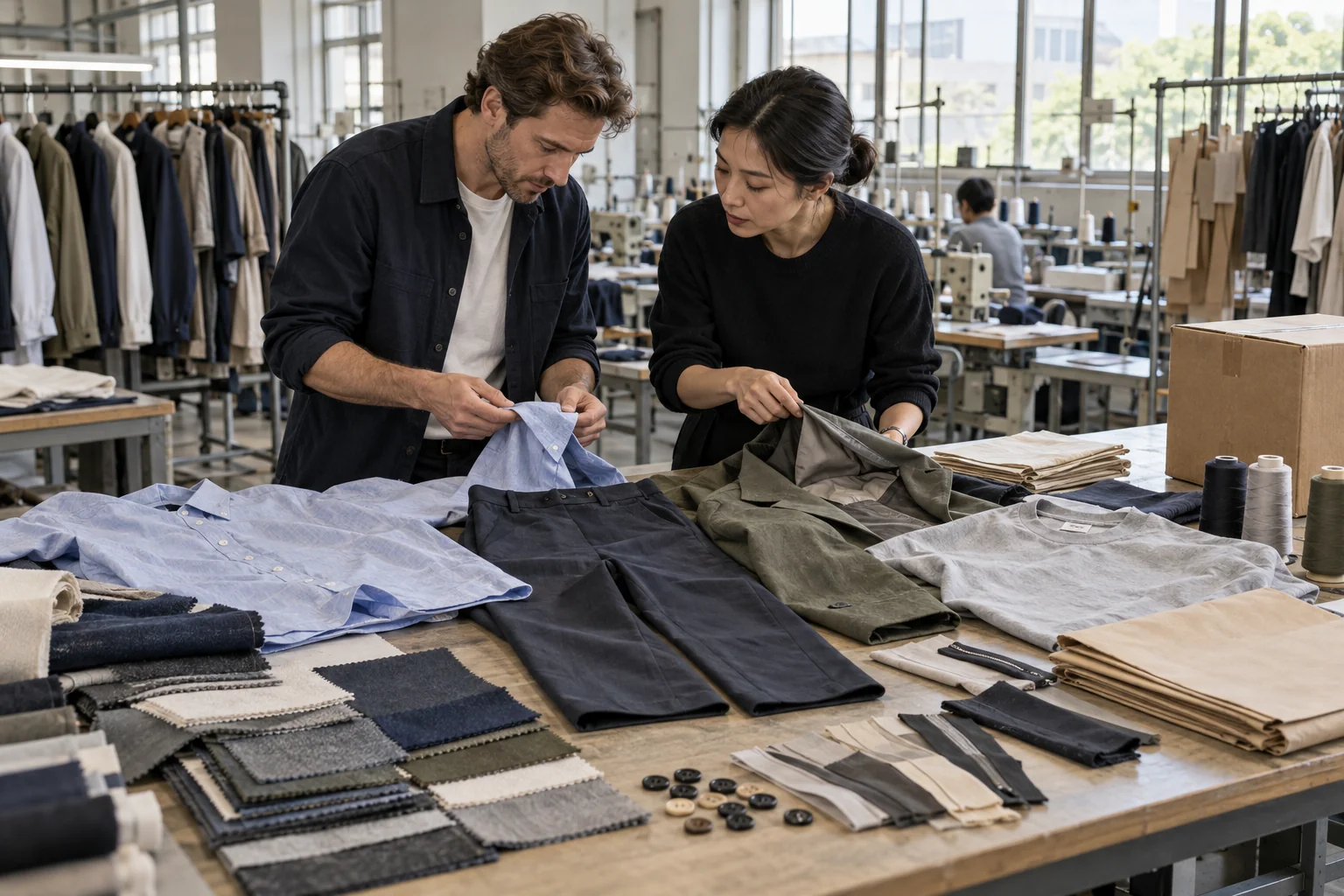
At a glance
Swipe the table sideways to compare both columns →
| Cost line | What changes it | What to request in the quote |
|---|---|---|
| Fabric and trims | Material specification, usable width, garment consumption, color allocation, buttons, zips and labels. | Quoted fabric specification, consumption basis, trim details and any separately charged material commitments. |
| Cutting, sewing and finishing | Pattern complexity, seam construction, pocket details, size breakdown, pressing and finishing requirements. | Construction reference, included finishing steps and clearly listed exclusions or optional operations. |
| Decoration | Application method, artwork dimensions, placement, number of applications and approval requirements. | Decoration specification, setup charges, approval scope and whether application costs are included in the garment unit cost. |
| Sampling and development | Pattern work, material sourcing, sample scope and changes requested between versions. | Separate development and sample charges, included revisions and terms for any proposed credit against production. |
| Packing and freight | Folding, packaging components, carton requirements, shipment dimensions, destination and delivery terms. | Packing inclusions, freight assumptions, named delivery term and place, and responsibility for duties, taxes and destination charges. |
Establish the Quote Basis Before Comparing Suppliers
A clothing manufacturing cost comparison starts with a common brief, not a request for the lowest quoted shirt or trouser. Specify the garment type, reference images, measurement chart, construction details, fabric requirements, trims, decoration and intended packing. Include the order quantity and its split by style, color and size, rather than giving only a combined total. Ask each supplier to identify assumptions wherever the brief leaves a decision open. A lower quotation may reflect a different fabric, fewer operations or a narrower delivery scope rather than a better offer for the same product. Keep the brief dated and versioned so later changes can be connected to the correct quote instead of being mistaken for unexplained cost increases. For the China menswear OEM/private-label manufacturing offer covered here, MOQ is 100 pcs; confirm how the proposed style and color breakdown fits that requirement before using it in a budget. Do not assume that a minimum order statement answers every allocation question.
Request the currency, quotation validity, payment terms and quantity basis alongside the quoted amount. Ask whether the figure applies to each garment or to the complete order, and whether any separate charges sit outside it. If you are comparing alternative quantities, keep the garment specification unchanged so the differences remain interpretable. Bulk lead time depends on quantity, so request a production schedule for the actual order rather than treating an early estimate as a confirmed delivery commitment.
Separate Material Choices from Construction and Decoration
Fabric should be described precisely enough that two quotes refer to a comparable material. Record the requested composition, weight, structure, finish and color reference, then ask the supplier to confirm what has actually been costed. For garments with directional surfaces, checks or stripes, ask whether the consumption estimate accounts for the required cutting and matching approach. Avoid treating fabric cost as a standalone number disconnected from garment dimensions and pattern layout. A revised fit or length can change the material requirement even when the selected fabric remains unchanged. Trims deserve the same discipline: identify the intended buttons, zips, drawcords, interlinings and labels, and request disclosure of substitutions before approving a quotation for development or bulk production. Construction and decoration need their own specification because a reference photograph rarely explains every operation. Identify pocket construction, seam details, lining areas, reinforcement points and visible finishing requirements that matter to the design. For print or embroidery, provide artwork dimensions, placement and the proposed application method rather than asking for a generic logo allowance.
Request separate visibility of setup and application charges where relevant, without assuming either is included or excluded. When a quote exceeds your budget, ask for alternatives tied to named changes, such as simplifying a pocket or reducing decoration placements. Review what those changes would do to function and appearance before accepting them; a cheaper specification is useful only if it still meets the product brief.
Budget for Sampling and Control Specification Changes
Treat sampling as a defined development stage rather than an unspecified extra attached to a unit quote. Samples typically take around 7 days once the brief and materials are confirmed; clarify what must be approved before that timing begins and whether dispatch is handled separately. Ask what the sample charge covers, including any pattern development, material sourcing, decoration trials or shipping that may be relevant to your request. Do not assume that a sample payment includes unlimited revisions or will automatically be credited against production. Request those terms in writing. A useful sampling brief also states what the team is evaluating, such as fit, construction or artwork placement, so feedback addresses the intended approval decisions. Once a sample has been reviewed, consolidate comments into one controlled revision rather than sending disconnected instructions across messages. Separate corrections needed to match the original brief from new design requests that change it. Ask the supplier to identify the cost and schedule implications before implementing a changed fabric, revised pocket, new trim or different decoration method.
Maintain a simple approval record linking the latest specification, sample comments and quotation version. Before placing the production order, request confirmation that the quote reflects the approved garment rather than an earlier concept. This process makes commercial discussions more precise: both teams can see whether an amount changed because of a revised requirement, a corrected assumption or an additional service requested by the buyer.
Compare the Full Order Cost and Delivery Scope
Packing should be specified as part of the purchase brief, even when it seems secondary to garment development. Describe the fold, individual packaging, size identification, label placement, carton assortment and any destination-specific handling instructions your operation requires. Ask which components and packing tasks are included in the garment quote and which are separate. If you have not finalized the packaging design, request a clearly labeled assumption rather than allowing an unspecified allowance to disappear inside the total. Check whether presentation changes would also change carton dimensions or shipment weight. The purpose is not to prescribe elaborate packaging, but to ensure the quoted packing matches what your warehouse, retail channel or fulfillment partner will actually receive and process. Freight comparisons require a named delivery term and place, an intended shipping method and a clear division of responsibilities. Ask which transport stages are covered, what shipment dimensions and weight underpin the estimate, and who handles insurance, customs clearance, duties, taxes and destination charges.
Keep estimated delivery expenses separate from confirmed manufacturing charges in your working budget. Where information is missing, mark it as unresolved instead of entering zero. Build the order comparison from garment production, one-time development, decoration setup, packing and delivery items, taking care not to count an included charge twice. Before approval, reconcile the complete order total with the purchase terms and record which amounts may still change, what would trigger that change and who must authorize it.
Send these details together
- Send one version-controlled brief covering measurements, materials, construction, decoration and packing to every supplier being compared.
- Confirm the order breakdown by style, color and size, and ask the supplier to document any allocation assumptions.
- Separate garment unit costs from development, sampling, setup and other order-level charges.
- Check that the final quote matches the approved specification and records the effect of any requested changes.
- Confirm delivery terms, freight assumptions, exclusions and responsibility for destination charges before approving the order budget.
This resource is a quote-planning guide, not a price list or a binding manufacturing offer. Request an order-specific quotation for the confirmed specification, quantity, packing and delivery scope; sampling, production scheduling and shipping arrangements should be confirmed separately.
Prepare a quote briefThe RFQ form prepares a WhatsApp message for you to review. For files, email sales@clothingmanufacturerchina.com.
Questions before sampling
Why can two quotes for the same menswear design differ?
Suppliers may have interpreted the fabric, construction, decoration, packing or delivery scope differently. Compare the written specifications and exclusions first, then ask each supplier to resolve any missing assumptions. A shared reference image alone is not enough to establish that both quotes cover the same garment.
How can I reduce clothing manufacturing cost without making blind compromises?
Ask for costed alternatives linked to specific changes, such as a different material specification, simplified construction or fewer decoration placements. Keep the rest of the brief unchanged when reviewing each option. Assess the effect on fit, appearance and intended use before approving a saving.
Should I use the quoted unit cost as my complete purchasing budget?
Only if the quote explicitly includes every expense you intend that budget to cover. Check for separate sampling, development, setup, packaging, freight and destination charges. Build an order-level total, identify unresolved estimates and avoid adding a charge twice when it is already included in the unit cost.
What are your MOQ, sample time and bulk lead time?
MOQ is 100 pcs. Samples take 7 days. Bulk production lead time depends on order quantity.