What belongs in a custom jacket manufacturer RFQ?
Start with Shell fabric, Lining construction, Zipper and hardware, Pocket layout. Add the quantity by color and size, destination country and required date.
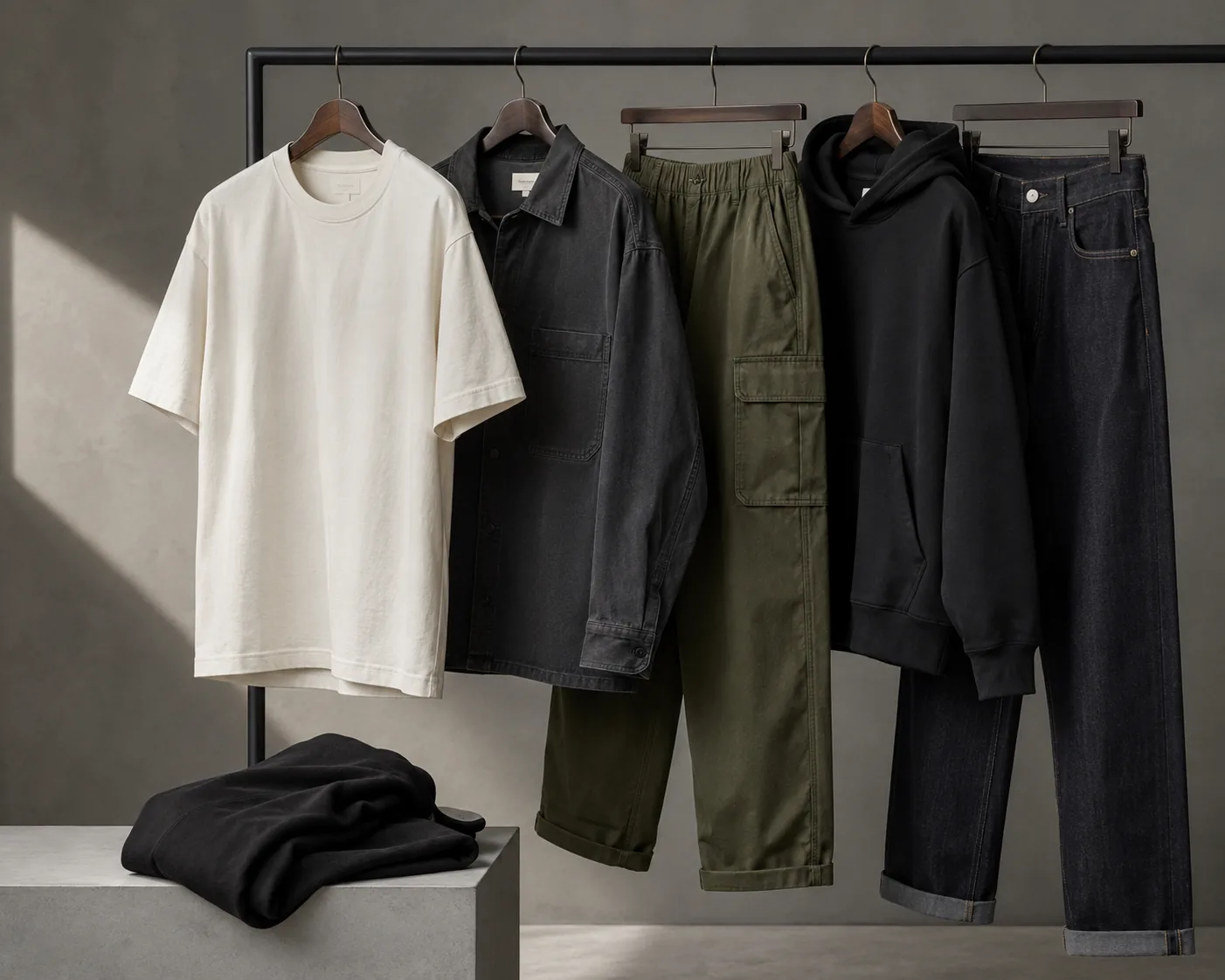
Jacket production requires more planning than basics because fabric, lining, zippers, pockets, hardware and fit all affect cost and lead time.
Clarify shell fabric, lining, pocket construction, zipper quality, hardware, labels and fit before sampling.
Denim and twill
Jeans, jackets, carpenter pants and hardware trims.Sample first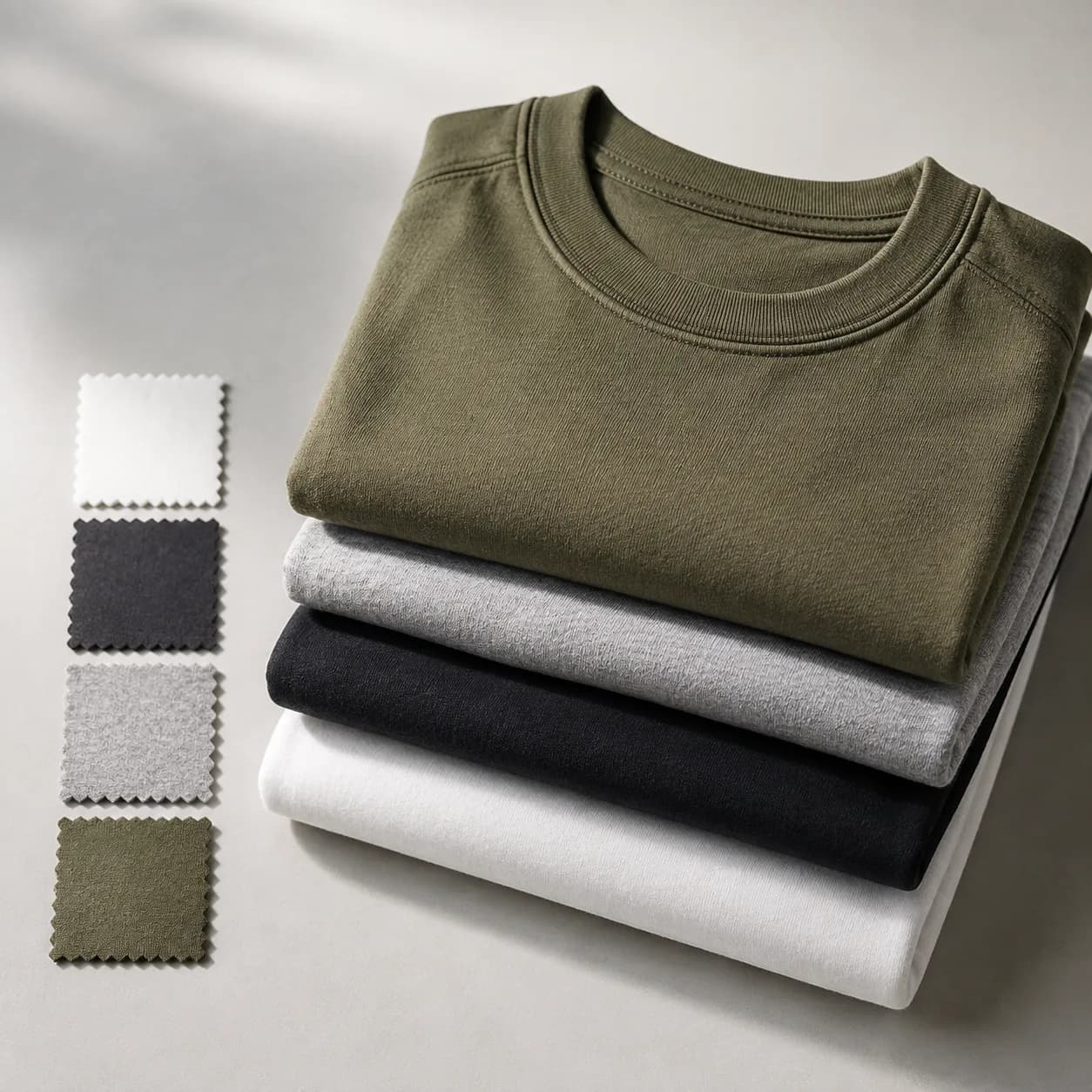
220-280 GSM jersey
Oversized fit, neck rib, print and label package.Quote by tech pack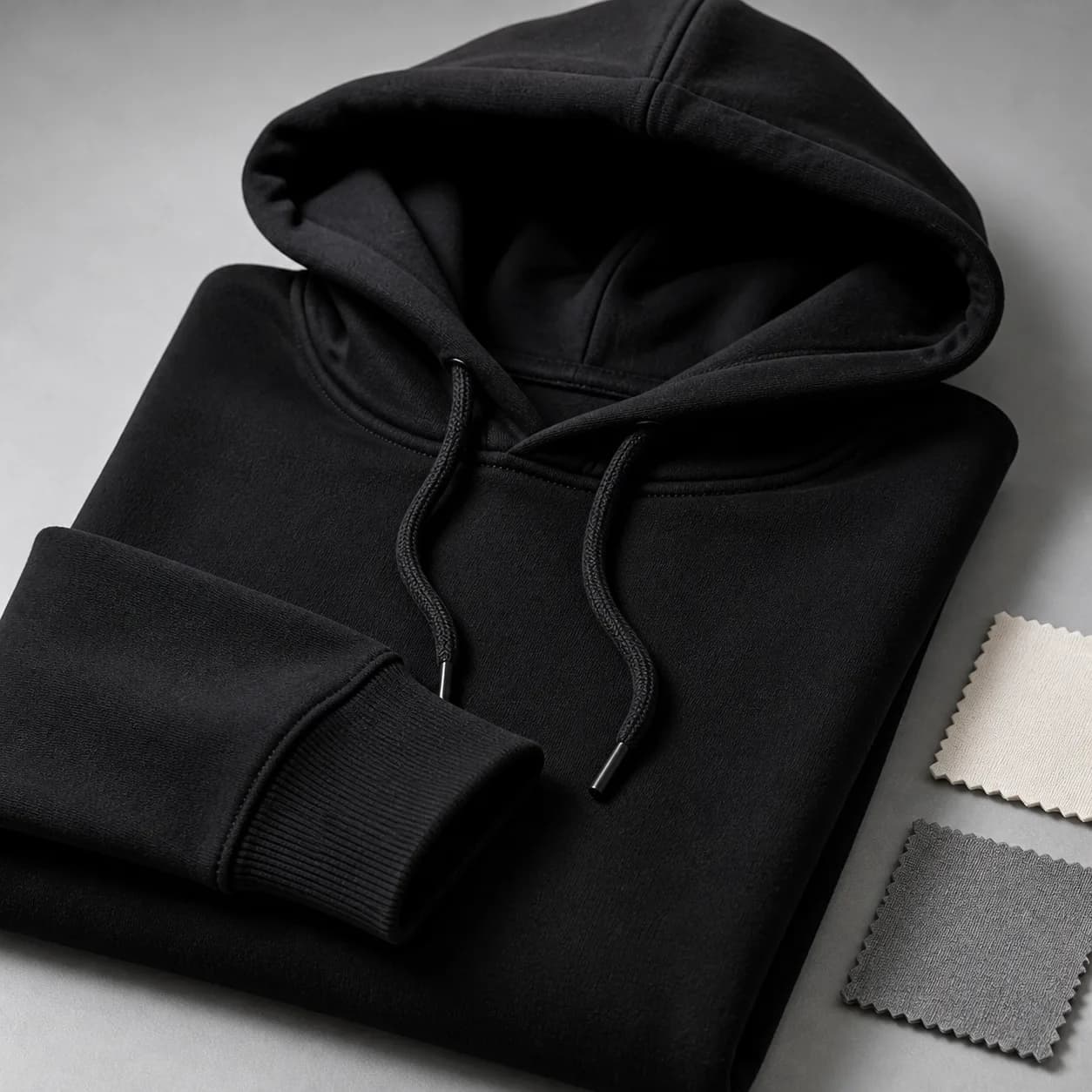
Fleece or French terry
Pullover, zip, wash, embroidery and puff print paths.MOQ 100 pcs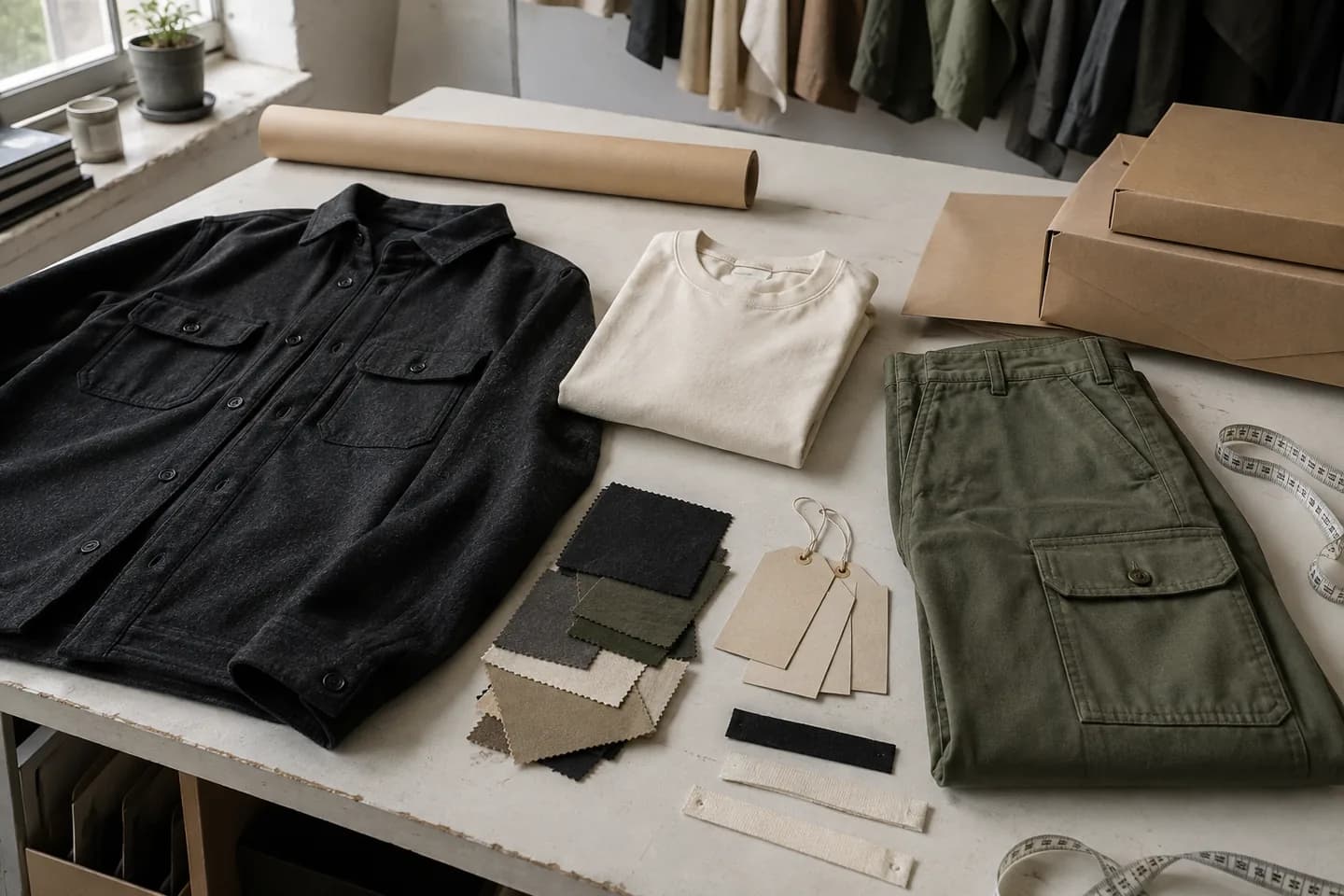
Labels and packaging
Neck labels, care labels, hang tags, zipper pulls and bags.Pack by SKUThese are the details a factory needs before discussing MOQ, sampling, lead time and production scope.
Start with Shell fabric, Lining construction, Zipper and hardware, Pocket layout. Add the quantity by color and size, destination country and required date.
The sample should resolve Woven jackets, Denim jackets, Workwear jackets and record the approved measurements, materials, trims and finish before bulk.
MOQ is 100 pcs. Samples take 7 days. Bulk production lead time depends on order quantity.
Hardware function, Lining finish, Pocket symmetry, Topstitching review should be compared with the approved sample and packing requirements before release.
Jackets involve more components than most garments: shell fabric, lining, closures, pockets, cuffs, collars and sometimes insulation. Each choice affects look, function and cost, so a jacket brief should be more detailed than a tee or hoodie brief.
Start with the jacket type — coach, bomber, work jacket, overshirt or denim — and send references. Then list the components you want to control.
Include in your brief:
Jackets often need more revision than simple knits, so allow time for comments. Samples typically take 7 days once the brief and materials are confirmed. The MOQ is 100 pcs. For denim jackets, see our denim site; for other styles, send references from the RFQ page.
Can you add water resistance? This depends on the fabric and finish chosen, and should be confirmed for the specific fabric rather than assumed. Can jackets match other pieces in a collection? Yes, if colors and labels are planned together and approved side by side.
Common requests include coach jackets, bombers, work jackets, overshirts and lightweight shells. Each has its own program page or can be briefed from references. Denim jackets are covered on our denim site.
If you are unsure which construction suits your design, send references and describe how the jacket will be worn — as a light layer, everyday outerwear or a statement piece — and we can discuss the options before sampling.
Jackets usually sell in smaller quantities than tees and hoodies, so the 100 pcs MOQ per style often means one or two colors in the first order. Use reorders to add colors once you see which sell best.
Jackets with linings or padding need clear care instructions. Agree the care label content before bulk so it matches the materials used.
Zippers, snaps and buttons define much of a jacket's look. Specify finish and color, and check that hardware matches across colorways.
A jacket can match the specified chest width and still feel restrictive when the wearer reaches forward. For our development review, define the intended underlayer before judging the pattern: a thin shirt, medium sweatshirt or heavier knit changes the space needed through the upper back, armhole and sleeve. Send the actual underlayer measurements or a representative garment rather than describing the fit only as relaxed. Ask for separate comments on standing appearance and movement. Adding width at the side seams may improve chest room without correcting a narrow back or an awkward sleeve position. The useful decision is where additional space belongs, not simply whether the next sample should be larger overall or graded up by one size across every point.
Record cross-back width, shoulder slope, armhole depth, upper-sleeve width and sleeve pitch alongside the usual body measurements. Define the cross-back measurement position with a diagram, because a measurement taken near the shoulder blades will not mean the same thing as one taken just below the armhole. For a dropped-shoulder design, shoulder extension and sleeve length must be assessed together; shortening the sleeve alone can leave the elbow position wrong. For a set-in sleeve, forward-reaching comfort may require a pattern adjustment rather than a wider cuff. Give the sample reviewer a repeatable movement routine and photograph the jacket both open and fastened over the agreed layer. This helps distinguish an intended silhouette from a restriction that needs correction before production begins.
At fitting, watch how the collar and front hem react when the wearer sits or extends both arms. A small amount of movement is normal, but a collar pulling hard into the neck or the entire jacket rising sharply deserves investigation. Check whether the restriction comes from the shell pattern, a short lining or tight internal attachment points before altering the outside shape. Record comments as a symptom, location and requested outcome, such as upper back feels tight when reaching forward; improve reach while retaining the approved front chest width. That instruction is more actionable than make it comfortable. After revision, repeat the same routine over the same underlayer so that an apparent improvement is not caused by a different fitting setup.
For a multi-layer jacket, approving each material separately does not establish that the finished assembly will hang correctly. The shell, lining, interlining and reinforcement can respond differently to pressing, washing and normal wear. A shell that relaxes while the lining remains stable may develop a rolled hem or visible bubbling. A lining that becomes shorter can lift the outer hem or pull at the sleeve opening. Before approving the construction, identify which layers are attached continuously and which need movement allowance. Ask us to review the intended care method against the assembled jacket, not just a loose fabric swatch. Any dimensional change assessment should use an agreed method and acceptance limit; there is no single suitable shrinkage allowance for every jacket.
Lining ease is a construction decision, not simply extra width added everywhere. Depending on the design, movement may be accommodated through a back pleat, sleeve allowance or controlled ease where the lining joins the hem. Excess material can show below the shell or become trapped in the closure, while insufficient allowance can distort an otherwise correct outer pattern. For an unlined jacket, internal binding and facing edges need a different review because they remain visible and can affect drape. State whether inside appearance is part of the selling proposition, particularly when the jacket will be photographed open. Where internal access is needed for repairs or decoration, agree its location and closing method without allowing that opening to weaken a stressed seam.
Reinforcement should support the selected shell without making adjoining areas unexpectedly rigid. A broad fused front can change the character of a soft jacket, while a narrow unsupported closure edge may ripple under repeated use. On coated or heat-sensitive materials, pressing conditions and adhesive compatibility need review before the full sample is assembled. Request a small construction trial where the proposed shell, reinforcement and stitching can be examined together. Look for strike-through, hard edges, surface marking and distortion after cooling, rather than judging the piece while it is still warm from pressing. For bulk, retain an approved assembly reference showing the required hand and appearance. Material substitution should trigger a compatibility review even when the replacement has a similar composition and weight.
The front opening acts as a structural line through a jacket, so its length and attachment can change the appearance of the entire garment. A zipper tape that is eased into a shorter edge, or a shell edge stretched during sewing, can produce waves even when the zipper itself functions correctly. Review the opening with the jacket lying flat and hanging naturally, then compare it on the wearer. These views help separate sewing distortion from body balance problems. Specify where the closure begins and ends relative to the neckline and finished hem, including any intentional clearance. A zipper ordered from an approximate garment length may force a later pattern compromise, particularly where the neckline shape or hem depth is still changing during development.
For a two-way opening, establish the intended use rather than choosing it only for appearance. Opening the lower slider can improve seated comfort on a longer jacket, but slider handling, insertion clearance and bottom-stop placement need review on the actual sample. Covered openings introduce another variable: the overlap must conceal the closure without folding into its path. At the neck, test whether a guard or facing protects the wearer without creating a bulky ridge under the chin. Snap-front constructions need adequate support at the attachment area, especially on lightweight shells. The relevant check is not only whether a snap closes, but whether operating it repeatedly pulls or distorts the surrounding material. Confirm the intended operating checks and acceptance criteria before bulk assembly begins.
Front balance also affects visual alignment across the opening. A horizontal seam, chest panel or decorative line can appear mismatched if one front is longer, even when its individual components were cut correctly. Establish alignment references with the garment fastened and without pulling either side into position. For checked or striped shells, decide which matching locations take priority because perfect matching everywhere may conflict with pattern shaping and fabric consumption. Keep those decisions specific to the jacket rather than requesting all stripes match. During sample review, mark the required junctions on photographs. During bulk review, compare those same junctions against the approved reference and investigate repeated drift before treating it as an isolated finishing issue that can be corrected by pressing alone.
Consider an illustrative order for a hip-length, lined woven jacket intended to fit over a medium sweatshirt. The buyer wants a clean front, a stand collar and enough reach for everyday movement, without a ribbed waistband or bomber-shaped body. The example order is 240 pieces across navy and stone, with 120 pieces in each colour. Our MOQ is 100 pcs per colour per design, so both colour allocations meet that requirement. This is a planning example, not a recommended sales forecast. The buyer should base the final allocation on their own customer data. If the stone version changes to a different silhouette or construction, ask us to confirm whether it is a separate design rather than assuming it remains one colourway within the original order.
For the example size M, send a finished measurement sheet showing half chest 62 cm, centre-back length 70 cm, shoulder width 51 cm, shoulder-to-cuff sleeve length 64 cm, half upper sleeve 25 cm and half hem 60 cm. These are illustrative development targets to confirm, not a standard fit block. Define chest and upper-sleeve measurement positions on sketches, and show whether centre-back length excludes the collar. Add cross-back width, armhole depth, collar height, cuff opening and front-opening length before pattern approval. Include the sweatshirt reference and any existing brand fit sample. Set tolerances by measurement point after discussing construction capability; applying one broad tolerance to collar height, body length and sleeve width would hide differences that matter to fit and appearance.
Use three review gates: first confirm silhouette and movement over the sweatshirt; next review the revised assembly, including lining freedom and front balance; finally approve the production-intent sample with confirmed materials and measurements. If one sample resolves multiple gates, record each approval separately rather than leaving an ambiguous approved comment. Samples typically take about 7 days once the brief and materials are confirmed, but allow for revision decisions and any material changes in the launch plan. Bulk timing depends on quantity and is confirmed after sample approval. Before release, compare representative bulk garments with the approved measurement record and assembly reference. Use an agreed sampling plan covering colours and sizes, rather than assuming a single size M garment represents the entire production run.
Use this program when the main development problem is how an upper-body outer garment fits and functions as an assembled piece. That includes coordinating shoulder movement, front balance and internal layer allowance across a custom jacket design. We can make all kinds of custom designs, but choosing the closest program helps keep the initial review focused. The custom bomber jacket program is the more direct route when a bomber silhouette and its characteristic proportions are central to the brief. If your design replaces that shape with a straighter body, different opening geometry or a more structured upper-body pattern, this broader jacket program is a better starting point. A reference photograph can help us identify the appropriate route without forcing your design into an unsuitable product category.
The custom cargo pants, custom chino pants, custom cargo shorts and custom shorts programs address lower-body garments, so they should not carry the development brief for a matching jacket. Even when a collection uses one fabric across tops and bottoms, the jacket needs its own fit reference, pattern decisions and approval record. A cargo-style storage detail does not make a jacket a cargo-pants project. Likewise, a jacket coordinated with chino trousers should not inherit trouser construction assumptions simply because both pieces use cotton twill. For a matching set, identify the jacket as a separate style and explain which visual features must remain shared. That lets us distinguish collection coordination from garment-specific engineering and prevents a change to one piece from silently altering the other.
The custom waffle-knit program is the closer fit when waffle construction and knit-garment behaviour define the product. This jacket program is more appropriate when outerwear assembly is the controlling issue, even if one component uses a textured knit. For a hybrid design, explain whether the knit forms the main body, a lining or an insert, and identify the intended outerwear function. Do not select a program solely from a retailer's product name: terms such as shirt jacket and knitted jacket can describe very different constructions. Send front, back and inside references with a short explanation of what must be retained and what may change. For routing details, contact us on WhatsApp +86 15920568771 before dividing a complicated design across separate production briefs.
Include references, quantity, fabric target, color count, logo files, packaging notes and the delivery window.