Sample set
Minimum viable style list, Color count
Use the 100 pcs MOQ as a starting point for planning your menswear order. Discuss your garment specifications and quantity requirements before sampling. Samples typically take 7 days; bulk lead time depends on order quantity.
Minimum viable style list, Color count
Small-batch sampling, Low color-count programs
Color count, size split and reorder assumptions
MOQ is 100 pcs. Samples take 7 days. Bulk production lead time depends on order quantity. For small batch clothing production, send the style, color and size breakdown so the quote reflects the collection you want to make. Keep development and trim setup charges separate when budgeting a low MOQ private label order.
Choose an available fabric or describe the custom knit and color you need. Confirm the exact fabric reference and any development charges so the sample and bulk order use the same material.
Keep the fabric reference, composition, weight and confirmed available quantity with the quote.
List your intended quantity for each style, color and size. A clear breakdown lets the quote cover the right fabric colors, size labels and packing arrangement.
Record the agreed style, color and size breakdown with the order.
A bespoke zipper, woven label or printed bag may exceed the first garment run. Standard components or an agreed trim reserve can be worth comparing.
Separate setup cost, excess trim ownership and storage terms from the garment unit price.
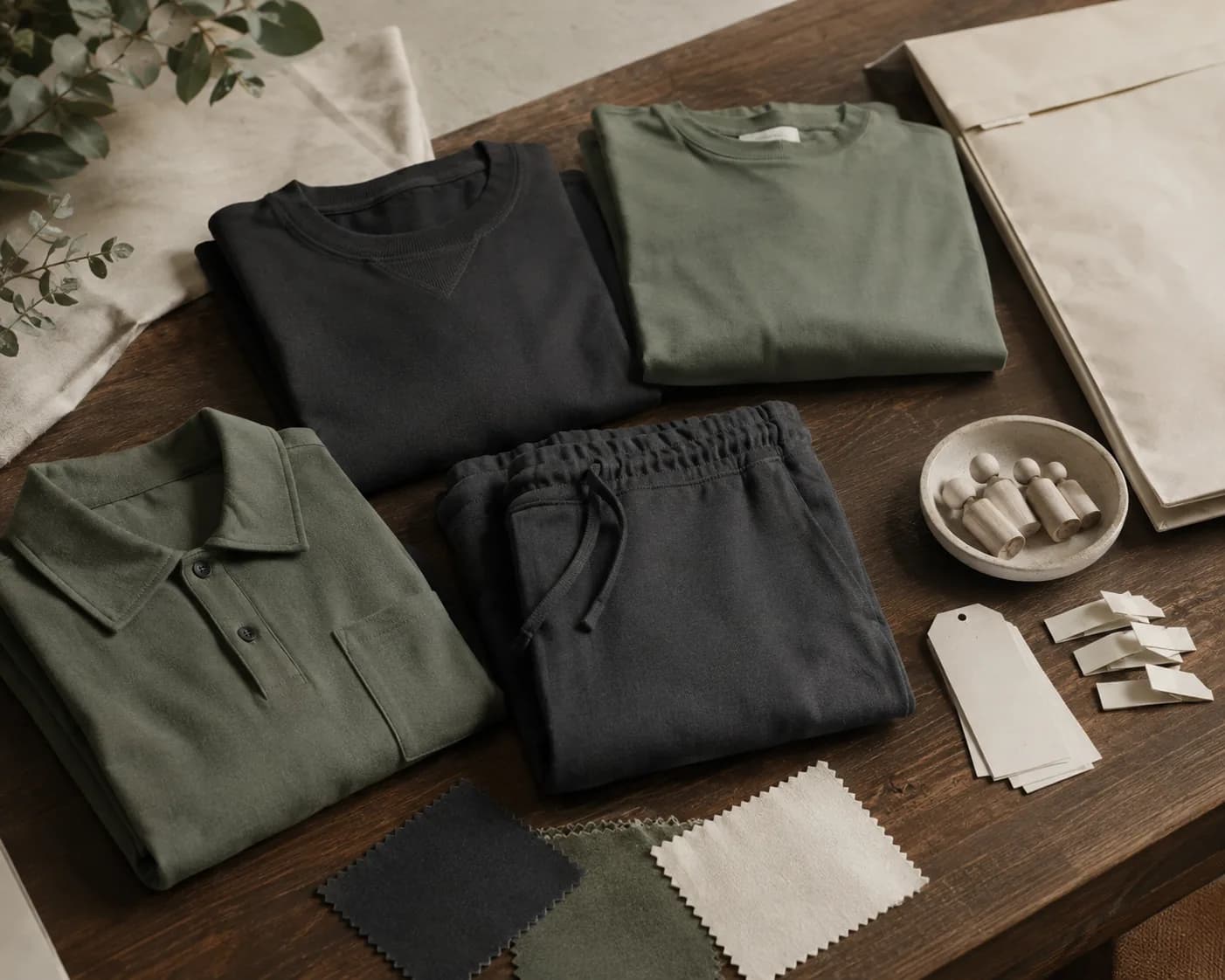
Keep the first run practical by narrowing fabric choices, color count, decoration methods and size distribution.
Keep the first drop focused so MOQ, cash flow, and sample revisions stay manageable.
Approve fit, fabric, decoration, trims, and packing before bulk production starts.
Use measurement, construction, decoration, and carton checks to keep the approved sample aligned with shipment.
MOQ is 100 pcs. Samples take 7 days. Bulk production lead time depends on order quantity. Include your intended style, color and size breakdown, plus the fabric and branding references for the quote.
Compare fewer colorways, available fabrics and standard trims while preserving the fit and features your product needs. Request revised quotes for specific alternatives rather than lowering every specification at once.
Approve the sample and record the fabric, measurements, decoration, trims and quantity breakdown. Bulk production lead time depends on order quantity; share the planned units so the production schedule can be confirmed.
MOQ is 100 pcs. Samples take 7 days. Bulk production lead time depends on order quantity.
Our minimum is 100 pcs per style. Suppliers that advertise no MOQ usually print on existing blanks rather than cutting and sewing a custom product. If you need fewer than 100 pieces, blank-based production may be the right starting point; when you are ready for your own fit and fabric, a 100 pcs custom order is a manageable next step.
Ask how the MOQ applies across colors before planning quantities.
For this program, the minimum is 100 pcs per colour per design, not 100 pcs spread across a collection. This distinction changes which assortment can enter production. One design in two colours requires at least 200 pcs; two designs in two colours require at least 400 pcs. Sizes sit within each colour and design allocation, subject to confirmation of the proposed breakdown. A buyer requesting 60 black and 40 grey garments has described 100 garments overall, but neither colour reaches the minimum. Treat each design and colour combination as a separate purchasing commitment when assessing the order. This is especially important when a range presentation groups several visually similar products under one commercial name. A shared collection name does not make those products one production design, and shared fabric does not automatically combine their quantities.
The next question is what counts as a separate design. A different pocket arrangement, body length, sleeve construction or decoration treatment may require separate patterns, cutting instructions or production handling. Do not assume that two garments qualify as one design simply because they use the same base silhouette. Send the differences together and ask us to identify the production boundaries before you commit to an assortment. We can make all kinds of custom designs, but production feasibility and eligibility within one minimum allocation are different questions. For example, a plain overshirt and a version with additional utility pockets may both be feasible while needing separate order lines. The useful output is a written design classification against your references, rather than a general statement that the collection meets a low minimum.
Small-run flexibility is most valuable when it protects a meaningful product choice rather than multiplying minor variations. Consider whether a second version serves a different customer need or merely creates another stock commitment. If buyers need both a standard and an extended body length, retaining both may justify the additional units. If two pocket treatments are still competing concepts, resolve that choice before ordering both. Ask for alternatives against a fixed commercial objective: preserve the intended silhouette, retain the functional pocket, or keep the required decoration area. This makes the trade-off visible without treating every feature as disposable. The decision should be made at design and colour level, because that is where the minimum applies. An assortment that looks compact on a line sheet can still contain several independent production commitments.
Consider an illustrative order for one custom short-sleeve tee design in washed black and stone, with 100 pcs in each colour. These are example allocations to confirm, not a recommended sales forecast. The brief could read: 'Relaxed menswear tee with a straight hem, dropped shoulder and one front print; 200 pcs total across two colours, using the same approved construction and artwork dimensions.' Identify whether the washed appearance comes from fabric selection or a garment treatment, because a visual reference alone does not settle that production requirement. Name the intended sales use, such as a standalone retail product rather than a promotional giveaway, and identify any feature that must survive cost review. For this example, the protected features might be the body proportions and neckline appearance, while the precise packing presentation remains open for discussion.
For the measurement submission, an illustrative size M target could include 58 cm half chest measured 2.5 cm below the armhole, 72 cm body length from high shoulder point, 54 cm shoulder width, and 23 cm sleeve length from the shoulder seam. Add 20 cm sleeve opening measured flat, 19 cm neck width between seam points, and 2.5 cm finished neckband width. These figures describe one example silhouette, not standard menswear dimensions or promised finished results. Supply a labelled measurement sketch, specify whether each dimension is taken relaxed, and state whether the target applies before or after the agreed wash assessment. Request confirmation of achievable tolerances by measurement point. Do not apply one blanket tolerance to the body, neckline and print position, since a small variation has different visual consequences at each location.
Keep the review sequence tied to the decisions this small run needs. First, resolve the base silhouette and neckline in the development sample, recording any measurements that require correction. Next, assess colour-specific effects, including whether the same print remains legible on both backgrounds and whether the intended finish changes dimensions. Then confirm the corrected specification and ask which additional size or colour evidence is needed before releasing both 100-piece allocations. Samples typically take about 7 days once the brief and materials are confirmed; do not treat that as the duration of several revision rounds. Bulk timing depends on quantity and is confirmed after sample approval. During bulk review, keep observations separated by colour so that a satisfactory black garment does not conceal a stone-colour issue affecting half the order.
At a 100-piece colour allocation, a small numerical discrepancy can have a large commercial effect. If five garments are unavailable for dispatch, that represents five percent of that colour order. The impact is greater when those five all belong to a size with only ten planned units. For this reason, discuss delivery quantity expectations by size rather than only by total garment count. Ask how any short shipment, excess production or rejected units would be reported and resolved, and record the agreed position before authorising production. Do not assume an overage is free, a shortage is automatically replaceable, or spare garments in one size compensate for missing garments in another. A small brand order needs an explicit commercial decision on these situations because there may be little remaining stock to absorb an uneven delivery.
The same principle applies to material substitutions discovered after approval. A replacement neck rib, elastic or zipper may look close enough in isolation while changing the product across a substantial share of a short run. Your order instruction should say which changes require written approval and whether the affected work should pause while a decision is made. For a tee, that could include a change in rib composition or finished width; for trousers, it could include an elastic specification or zipper length. Ask for the affected colour, sizes and quantity, not simply a photograph of the alternative component. This lets you decide whether the change is acceptable for the whole order, acceptable only with a revised specification, or unsuitable. It also prevents a small production exception from becoming an undocumented second product version.
Make dispatch evidence useful at the same level of detail. Request an actual packed quantity statement against the agreed colour and size matrix, with any differences identified before shipment arrangements are finalised. If the order supplies several sales channels, show those allocations separately without confusing them with production quantities. For example, ten units reserved for photography, sales representatives or wholesale presentations should be deducted from sellable inventory, not silently added to the factory commitment. At receipt, reconcile the packed statement with the garments received and retain the colour and size identity of any issue. Avoid reporting only that several pieces are wrong. A precise report supports a proportionate resolution and gives the next order a reliable starting point. For a low-volume program, accurate delivered inventory matters as much as the headline number originally ordered.
This page fits buyers who need to place a custom menswear order at a limited but defined production quantity. The main decision is whether the proposed design and colour combinations work at 100 pcs each, and what that means for the order you are prepared to purchase. The broader OEM clothing manufacturing program is the better starting point when your primary question concerns the scope of custom development or the manufacturing relationship, rather than this quantity constraint. The startup clothing manufacturer program addresses buyers organising a new brand's development needs. A first-time buyer can use this low-MOQ program, but being a startup is not an eligibility condition. An established brand testing a new silhouette, a retailer commissioning an exclusive design, or a wholesale business introducing a focused capsule may have the same small-run requirement.
The small-quantity order planning guide serves a different purpose: it helps buyers work through planning decisions before an order is ready for a production discussion. The guide to working with low-MOQ manufacturers concerns the working relationship and coordination of a small order. Use those resources when you need a method for organising the project. Use this program when you want a specific proposed assortment reviewed against a production commitment. Likewise, the sample approval guide is the place for a fuller approval method, while the tech-pack-versus-reference-sample resource helps you decide how to communicate the product. Neither question should be mistaken for confirmation that an assortment meets the minimum. A complete technical pack can still describe an unworkable quantity split, and an excellent reference garment does not establish which colours or design variants can share an order allocation.
For a focused discussion here, state the purchasing decision you need resolved. Examples include: 'Can these two pocket versions be treated as one design?' or 'We can commit to 200 units; please assess one design in two colours rather than two designs in two colours.' Identify any variation you are willing to remove and any feature that is essential to the product's intended use. If the requested quantity falls below 100 pcs for a colour and design, say whether increasing that allocation is commercially possible instead of assuming another colour can offset it. This keeps the response centred on a feasible order rather than an open-ended development exercise. For details, contact us on WhatsApp +86 15920568771 with the proposed design variants and colour-level quantities so the relevant production questions can be addressed directly.
Finding a clothing manufacturer in China is less about locating factories, which are easy to find, and more about filtering them. A short, comparable brief and a paid sample tell you more than any directory listing or sales promise.
Read the guide Cost planningClothing manufacturing cost is easier to assess when every supplier quotes the same garment specification, order breakdown and delivery scope. This guide explains which decisions change a quote and what menswear sourcing teams should request before comparing totals.
Read the guide Production planningFinding factories is easy; choosing the right clothing manufacturer in China is a filtering problem. This consolidated checklist turns scattered advice into a decision table you can reuse across shortlisted suppliers before you pay for samples.
Read the guideInclude references, quantity, fabric target, color count, logo files, packaging notes and the delivery window.