MOQ
100 pcs
Sample lead time
7 days
Bulk production
Depends on order quantity
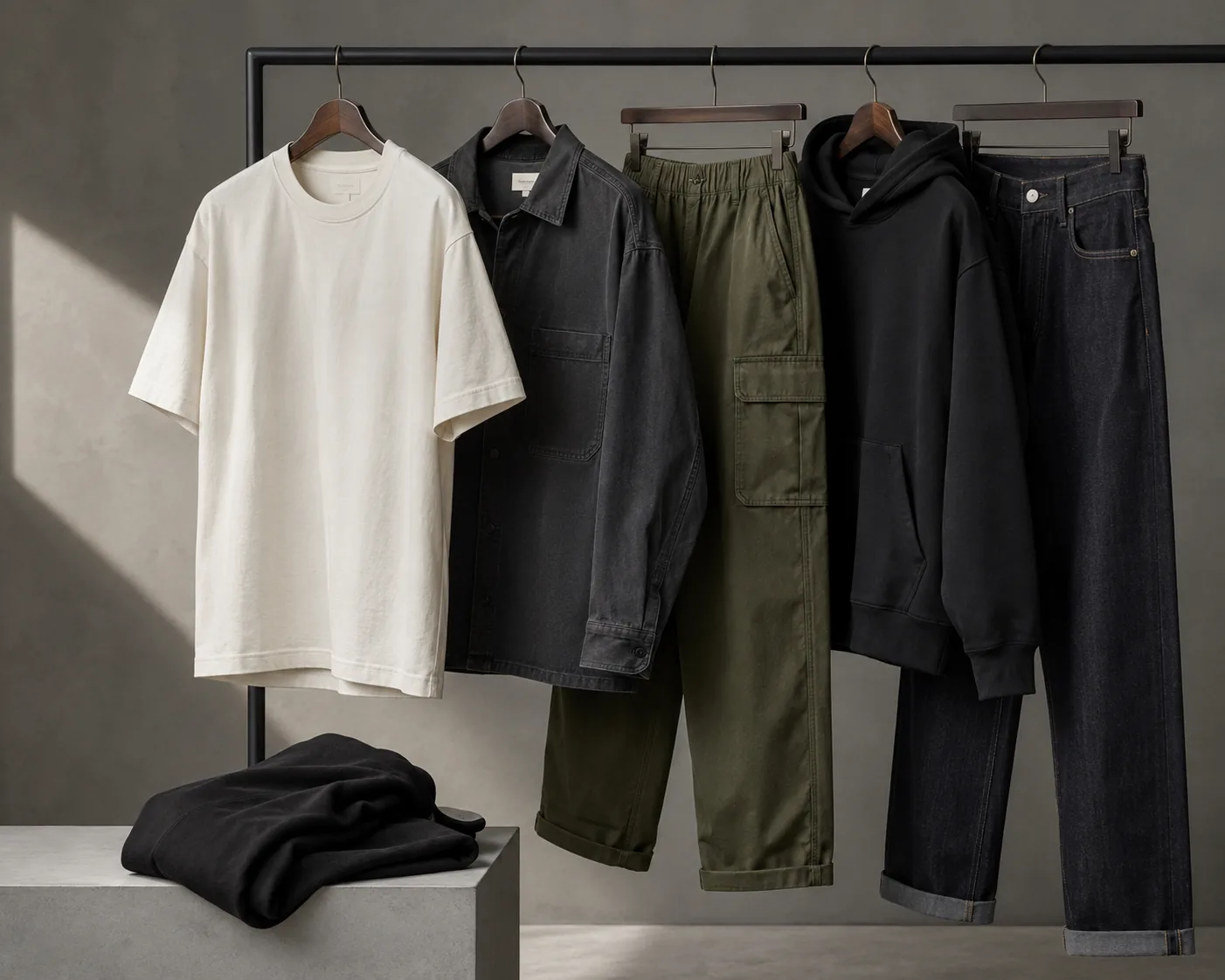
menswear capsule rack with an ivory tee, dark overshirt, olive cargos, hoodie and jeans
Product reference · custom chino pants manufacturer
Product line sheet

Custom Chino Pants Manufacturer in China for Menswear Brands

Develop twill chino trousers around your brand's fit block, fabric requirements and target retail position. As a custom chino pants manufacturer, we work from your tech pack or development brief to define fabric weight, crease treatment, rise, leg taper, pocket construction and branding. MOQ is 100 pcs. Samples take approximately 7 days once the brief and materials are confirmed; bulk production timing depends on quantity.

Construction and finish options

Twill fabric selection, approved garment measurements, balanced rise and taper, consistent crease presentation, durable pocket bags and clearly specified brand applications.

Cotton or cotton-blend twill, with fabric weight and stretch selected against sourcing availability.Flat-front or pleated chinos with straight, slim or tapered legs and buyer-defined rise.Slant front pockets, welt back pockets and pocket bag materials specified for the intended use.Private label waistband labels, care labels, branded trims and hangtags subject to artwork and material confirmation.

Nearby production programs

Fields that make this request quotable

These are the details a factory needs before discussing MOQ, sampling, lead time and production scope.

01 Fabric composition, twill construction, weight in gsm, stretch requirement, color reference and finishing route.02 Waist, front and back rise, seat, thigh, knee, leg opening, inseam and grading rules.03 Flat-front or pleated styling, crease position, waistband construction and belt loop dimensions.04 Pocket opening measurements, pocket bag fabric and depth, back pocket construction and reinforcement points.05 Branding artwork, label placement, trims, size assortment, packing instructions and approved measurement tolerances.06 Target quantity by color and size07 Delivery country and required launch date08 Trade term, packing, and shipment needs

Checks to agree before production

Check incoming fabric against the approved composition specification, weight, shade and hand-feel reference.Measure rise, waist, seat, thigh, inseam and leg opening against the approved size chart and tolerances.Inspect pocket bag attachment, pocket openings, belt loops, fly assembly and reinforcement at stress points.Review crease alignment, pressing, visible stitching, label placement and packing against the approved sample.

Questions before sampling and ordering

What belongs in a custom chino pants manufacturer RFQ?

Start with Fabric composition, twill construction, weight in gsm, stretch requirement, color reference and finishing route., Waist, front and back rise, seat, thigh, knee, leg opening, inseam and grading rules., Flat-front or pleated styling, crease position, waistband construction and belt loop dimensions., Pocket opening measurements, pocket bag fabric and depth, back pocket construction and reinforcement points.. Add the quantity by color and size, destination country and required date.

What should the sample confirm for custom chino pants manufacturer?

The sample should resolve Cotton or cotton-blend twill, with fabric weight and stretch selected against sourcing availability., Flat-front or pleated chinos with straight, slim or tapered legs and buyer-defined rise., Slant front pockets, welt back pockets and pocket bag materials specified for the intended use. and record the approved measurements, materials, trims and finish before bulk.

What are your MOQ, sample time and bulk lead time?

MOQ is 100 pcs. Samples take 7 days. Bulk production lead time depends on order quantity.

Which checks should be recorded before shipment?

Check incoming fabric against the approved composition specification, weight, shade and hand-feel reference., Measure rise, waist, seat, thigh, inseam and leg opening against the approved size chart and tolerances., Inspect pocket bag attachment, pocket openings, belt loops, fly assembly and reinforcement at stress points., Review crease alignment, pressing, visible stitching, label placement and packing against the approved sample. should be compared with the approved sample and packing requirements before release.

Choose Twill Fabric Weight Around the Intended Chino Fit

Fabric weight should support the fit and wearing season rather than function as an isolated purchasing target. A lighter twill can suit warm-weather collections, while a heavier construction can give straight or tapered chinos a more structured appearance. Specify your preferred weight in gsm, fiber composition, stretch requirement and hand feel before sampling. If you are comparing cotton with a cotton-blend option, consider recovery, surface texture and the finishing route alongside price. Fabric availability should be confirmed against your color and order requirements so that the development sample represents a realistic bulk production choice.

Twill appearance also influences how the finished trousers read within a menswear range. A pronounced diagonal structure, a cleaner compact surface and a softened finish can produce different results even at a similar fabric weight. Send a physical reference where possible, and identify which characteristics are essential rather than asking for a general match. Agree on how shade, hand feel and dimensional change will be evaluated before bulk approval. For repeat programs, retain the approved fabric reference and record the finishing specification so future orders have a clear comparison point rather than relying on product photographs alone.

Define Rise and Taper With Measurable Fit Standards

A chino fit brief needs more than a label such as slim, regular or relaxed. Define front rise, back rise, waistband position, seat allowance and thigh width together, because changing one measurement can alter balance elsewhere. The intended customer and styling direction should guide these decisions. A higher rise with room through the thigh creates a different silhouette from a lower rise with a close seat, even when both styles share the same hem opening. Provide an existing fit block, measurement chart or reference garment, then identify any changes that must be incorporated into the first sample.

Control the taper through the knee and lower leg instead of specifying only the leg opening. Record where the knee measurement is taken, how the inseam is measured and whether the finished length is intended for a clean break, cropped styling or alteration by the retailer. Size grading should preserve the intended silhouette across the range, not simply add the same amount at every point. During sample review, assess front and back balance, seated comfort and movement as well as flat measurements. Approved tolerances and clearly marked measurement methods help both purchasing and production teams evaluate the same requirements.

Specify Crease Presentation and Pocket Bag Construction

Crease treatment should be agreed early because it affects both presentation and buyer expectations. State whether the chino should ship with a pressed center crease, a softer crease or no visible crease. A standard pressed crease is not the same as a permanent crease claim, and any expectation for retention after laundering needs a separately defined process and verification. Position the crease consistently relative to the leg construction and review its appearance on the approved sample. Packing instructions should also support the requested finish, since folding and compression can change how trousers look when cartons reach your warehouse.

Pocket bags deserve the same specification attention as the outer twill. Define the pocketing composition, weight, depth and shape according to the intended use and garment price point. Lightweight pocketing may reduce bulk, but the selected material still needs to suit everyday carrying and repeated wear. Confirm front pocket opening length, the placement of pocket stays if required, and how pocket bags are secured inside the garment. For back pockets, specify welt dimensions, closures and reinforcement details. Review the sample for pocket gaping, visible pocket outlines, restricted hand entry and loose internal fabric before approving the construction for production.

Build Branding Into an Approval-Ready Sample Brief

Branding is easier to control when it is included in the original brief rather than added after fit approval. Provide artwork, dimensions, colors and placement instructions for waistband labels, size labels, care labels and hangtags. If branded buttons or other custom trims are requested, their availability and development requirements need confirmation before the sampling schedule is fixed. Keep branding proportionate to the design: a core chino often relies on restrained identification, consistent trim choices and a clean interior finish. Label content, including fiber and care information, should be checked against the actual product and the destination market's requirements.

The MOQ is 100 pcs, and your inquiry should include the proposed size assortment, color plan and total quantity so the order structure can be reviewed. Samples take approximately 7 days once the brief and materials are confirmed. That timing starts after the required inputs are settled, not when an incomplete inquiry first arrives. Send the tech pack, fabric direction, measurement chart, branding files and reference images together where possible. If the sample needs changes, consolidate feedback into one marked document that separates fit corrections, construction changes and cosmetic adjustments. Keep the latest approved version clearly identified for subsequent production planning.

Plan Bulk Production and Inspection Against Approved Details

Bulk production timing depends on quantity, and the schedule should be confirmed against the approved style details and material readiness. Share your required delivery window before placing the order so fabric sourcing, trim preparation, cutting, sewing, finishing and packing can be considered together. Avoid treating sample timing as a bulk delivery promise. A practical purchase specification should identify the approved sample, fabric reference, size breakdown, color allocation and packing method. It should also state which changes require written approval, helping prevent an apparently minor substitution in pocketing, trims or finishing from changing the product your team expects to receive.

Quality review should connect directly to the characteristics that define your chino program. Check fabric shade and weight against agreed references, then verify critical measurements such as waist, rise, thigh, inseam and leg opening. Inspect fly assembly, waistband alignment, belt loop attachment, pocket reinforcement and seam appearance. Review crease positioning and pressing without overlooking interior workmanship or label accuracy. Where wash performance or other testing is required, agree on the method, acceptance criteria and documentation before production rather than assuming a result. Final packing checks should confirm size identification, quantity and presentation against the purchase order and approved packing instructions.
Send your product brief for a production review.

Include references, quantity, fabric target, color count, logo files, packaging notes and the delivery window.

Production RFQStart RFQ briefView product programsWhatsApp +86 15920568771Email salessales@clothingmanufacturerchina.comSend tech packs and reference images by email or WhatsApp. A clear quantity, fabric direction and delivery window gets a faster first reply.