Garment Dyed vs Piece Dyed T-Shirts: A Buyer's Guide
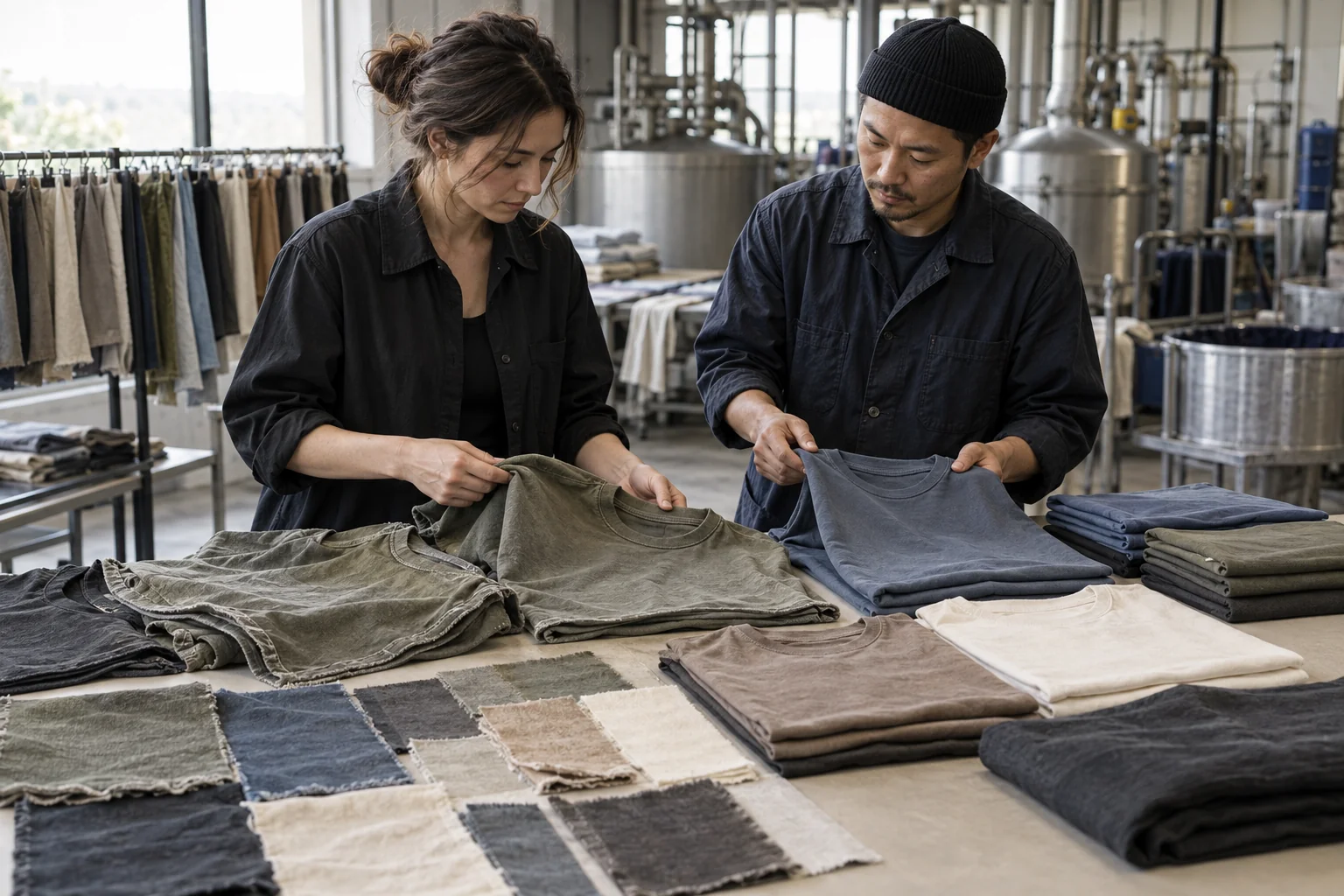
Garment dyeing colors a sewn T-shirt; piece dyeing colors the fabric before cutting and sewing. For a brand buyer, that sequence changes what needs to be approved, from collar tone to final dimensions.
At a glance
Swipe the table sideways to compare both columns →
| Decision | Garment dyed | Piece dyed |
|---|---|---|
| Color stage | The assembled garment enters the dye process. Thread, rib and labels must be considered together. | Fabric is dyed before cutting. Body and rib may come from separate submissions that need matching. |
| Visual direction | Can suit tonal, worn-in effects; the result depends on dye chemistry and finishing, not the name alone. | Can suit a cleaner, uniform color direction. Shade variation between rolls or components still needs control. |
| Fit approval | Measure after the dye and finishing sequence, then check the intended care procedure. | Approve the finished garment and its care-cycle measurements; dyed fabric is not a shrinkage guarantee. |
| Print and trims | Agree which steps happen before or after dyeing; review thread contrast and trim compatibility. | Approve artwork on the chosen fabric shade, with the actual neck rib and brand trims. |
| Repeat orders | Keep a physical shade range and finish record, not just a screen color or last order's name. | Retain approved fabric and rib references and check the new batch against them. |
Which dyeing route fits your collection?
For a clean graphic tee, start by comparing a piece-dyed fabric submission with the required neck rib. Judge the body color, the contrast under the print and the collar as one product. This is especially useful when a logo color must stay distinct from the garment background.
For a faded streetwear tee, a garment-dyed reference can communicate the desired seam character and overall tone. Send front, back and close-up references and identify which variations you want. A photograph that merely looks vintage does not establish how it was made; ask for a proposed process and finished sample.
Garment dye and pigment dye describe different things
Garment dyed describes when color is applied. Pigment dyed describes a coloration approach, commonly using pigment held to the material with a binder. They are not interchangeable specifications. A garment-dyed tee can use a different dye system, and a pigment-colored finish does not by itself tell you the complete production sequence.
Ask the supplier to name the proposed coloration and wash steps. Confirm the hand feel, rub-off expectations and care instructions through appropriate samples and agreed checks. Do not write a zero-fade or colorfast claim based only on the dyeing label.
Keep color and fit in the same approval record
Review body jersey, collar rib, sewing thread and decoration together under consistent viewing conditions. Record the approved shade and any acceptable tonal range. If the collar is meant to contrast, state that explicitly rather than leaving it to a sample photograph.
Measure chest, body length, shoulder, sleeve and neck opening after the production finish, then compare the same points after the agreed care cycle. Record the measurement method and acceptance limits with the supplier. Garment dyeing can change dimensions, but it does not prove that all later shrinkage has been removed.
Decide when inventory becomes colour specific
For a brand testing several seasonal colours, the useful distinction is when stock becomes committed to a shade. With piece dyeing, that commitment normally happens while the material is still fabric. With garment dyeing, suitable undyed garments may be held before colour allocation, provided the supplier supports that arrangement. This can postpone a colour decision, but it does not postpone every decision: an undyed sewn tee already has a design, size and construction. If medium sells out while extra large remains, dyeing cannot rebalance those sizes. Before requesting an undyed stock programme, ask who owns the stock, where it will be stored and when colour instructions become binding. Keep initial orders separate from reserved inventory in the purchase agreement. Otherwise, a proposal described as flexible colour replenishment may actually require buying a complete size assortment before there is evidence of demand for that fit.
Undyed garments intended for later coloration should be specified as prepared for dyeing, often shortened to PFD, rather than simply described as white blanks. A commercially finished white tee may contain optical brighteners, softeners or other treatments that affect the subsequent result. For cotton garment dyeing, ask the supplier to confirm the preparation route and whether body fabric and other absorbent components have compatible pretreatment. Uneven absorbency can appear as cloudy areas or pale patches that were difficult to see before dyeing. Set aside a representative blank from each incoming preparation lot and use a dye trial to establish suitability before committing that lot. The brief should prohibit substituting retail white blanks without approval. This is especially important when different deliveries look identical in their undyed state but have different finishing histories. A successful trial on one delivery does not automatically qualify later stock.
Compare the inventory consequences using actual colour demand, not just the total number of tees. For example, a proposed 600 piece programme might contain three colours at 200 pieces each, but retaining some units undyed only helps if later dye batches remain commercially workable. Our MOQ is 100 pcs per colour per design; do not assume a shared blank pool removes that requirement. Ask separately whether reserved blanks can be released in stages and how dyehouse loading affects each release. With piece dyeing, clarify whether unused coloured fabric remains available for another cutting run or becomes buyer owned surplus. With garment dyeing, clarify whether unused blanks can be carried forward without changing the approved material source. These are different liabilities. Write down the point after which colour changes require a revised quotation, and distinguish stock storage time from the processing time required once a colour is released.
Make dye batches traceable through cutting and packing
A colour name is not a sufficient production identifier when one order passes through several dye batches. In piece dyed production, request a roll map connecting fabric roll numbers, dye lots and cutting bundles. The practical objective is to avoid combining visibly different rolls within one tee. Front, back and sleeves should follow an agreed shade segregation rule rather than being treated as interchangeable cut panels. This matters when cutting teams use remaining fabric to complete the last sizes in an order. A small saving in fabric can create a two tone garment that cannot be corrected through ordinary sewing repairs. Ask the supplier how remnants will be identified and whether spreading includes shade separation. In the bulk review, open finished tees flat and inspect the junctions between sleeves and body, not only a stacked pile where panel differences may remain hidden behind folds.
For garment dyed production, traceability needs to follow the sewn garment through the dye load. Ask for a batch identifier that remains connected to the goods during sorting, finishing and packing, without introducing a visible mark on the product. One purchase order may require several loads, and a development sample does not establish that every load will behave identically. Loading, circulation and the relationship between garment weight and processing conditions can influence the outcome. Leave machine settings to the dye technician, but require the supplier to identify which bulk loads supplied the inspection pieces. A useful submission includes a clearly labelled selection from every load rather than several attractive tees selected from one load. Where sizes are distributed unevenly between loads, include that information too. It helps explain why a shade issue might appear concentrated in particular sizes without incorrectly treating size as the cause.
Set a packing rule before the factory starts combining finished goods. Even when each tee falls within the accepted appearance range, placing opposite ends of that range in one retail replenishment carton may create avoidable complaints. If your stores display several sizes together, ask whether shade groups can be kept together across the size assortment. If an online operation picks individual pieces, maintaining batch identification at carton level may be more useful than insisting on one shade group throughout the entire order. Neither approach should be used to hide unacceptable units. State whether mixing approved dye batches within a carton is allowed and how exceptions must be reported. For example, request a carton list showing colour, size, quantity and dye batch, with any mixed cartons identified. This creates a practical route for investigating a later complaint without rejecting unrelated cartons simply because they share the same commercial colour name.
Separate intended dye character from defects and rework
A worn appearance needs boundaries that distinguish intentional character from processing faults. For garment dyed tees, concentrated colour at a seam may be part of the chosen effect, while a sharp pale crease across the chest may indicate restricted dye access or uneven processing. Oil contamination, preparation differences and trapped folds can also produce marks that should not be accepted merely because the style is described as vintage. Build a defect reference using close photographs and physical examples where possible. Identify the affected zone, visibility and repeatability instead of writing only acceptable variation. A buyer might allow mild seam shading but reject isolated spots on the front body; this is an example decision to confirm, not an industry standard. Piece dyed tees need a different emphasis: inspect for fabric streaks, repeating bands and roll shading that become conspicuous after panels are assembled into a garment.
When a bulk shade misses the target, ask for a proposed correction route before authorising reprocessing. Piece dyed fabric may sometimes be corrected before cutting, allowing the material to be reassessed while it is still in roll form. Once a tee is sewn, a further wet process affects the whole assembly and may change more than colour. Depending on the chemistry and treatment severity, redyeing or stripping can alter handle, strength and surface appearance. A darker overdye is not a neutral repair, and it may move the product away from the approved commercial colour. Request a small representative correction trial, its processing history and a comparison with an untreated piece from the same failed batch. Do not authorise an entire order based on a photograph of one improved area. The decision should consider whether the corrected tee still meets the intended product standard, not simply whether the original shade error is less obvious.
Agree who can release corrected goods and what evidence must accompany that release. A practical record identifies the original batch, the reason for correction, the treatment performed and the quantity affected. It should also show which checks need repeating because of that treatment. For a cotton tee, these may include fabric strength, seam condition, surface abrasion and the product's agreed performance checks, selected with the supplier or testing provider. Check areas exposed to mechanical action, including folded sleeve edges and raised seam intersections, for damage rather than judging only the middle of the body. Keep corrected and uncorrected goods identifiable until approval is complete. Write a clear instruction that further wet processing requires buyer authorisation after the initial correction trial. This avoids a sequence of repeated attempts that gradually changes the product while leaving the buyer unaware of how many treatments the delivered garments have received.
Send these details together
- Physical color/finish reference and acceptable variation
- Body jersey, rib and thread specification; target GSM
- Print placement and dye/decoration order
- Finished size chart and agreed care-check method
- Quantity by color and size, branding and destination
- Confirm PFD stock ownership, preparation lots and the deadline for final colour allocation.
- Specify roll or dye load traceability and whether approved batches may share cartons.
- Require buyer authorisation for correction trials and further wet processing.
This guide explains dyeing choices. Availability of a particular dye process, fabric or finish must be confirmed against your brief and sample; it is not a published capability guarantee.
Prepare a quote briefThe RFQ form prepares a WhatsApp message for you to review. For files, email sales@clothingmanufacturerchina.com.
Questions before sampling
What does garment dyed mean for a T-shirt?
The T-shirt is assembled before the dye process. The body, seams and rib can respond differently depending on their materials. Approve a complete finished tee instead of choosing from a color name alone.
Will a garment-dyed T-shirt shrink?
It can still change size during later care. The result depends on the fabric, production finish and wash/dry procedure. Measure the actual sample before and after an agreed care cycle; do not assume zero shrinkage.
Is piece dyeing always cheaper than garment dyeing?
No universal price comparison covers every order. Match fabric, color count, finish, quantity and decoration first. Request separate development and production costs for each proposed route before choosing.
Can we garment dye leftover finished tees into a new seasonal colour?
Possibly, but treat this as a separate development exercise rather than routine replenishment. The original colour, finishing chemicals and any existing decoration can restrict the available result. A light target generally cannot be achieved by simply adding dye to a darker tee. Send representative leftovers with their material and processing records, then request a trial. Confirm whether the recovered stock still meets the intended product standard before counting it as saleable inventory for the new season.
Why can a garment dye trial work but the production load look different?
A trial may use different equipment, loading or circulation from the production run. The blanks may also come from a different preparation lot. Ask whether the trial represents the proposed bulk conditions and which variables will change during scale up. Where the risk justifies it, agree a first production load review before the remaining loads proceed. This is a process checkpoint, not a promise that every subsequent load will be identical or that a small sample predicts all bulk behaviour.
Is either dyeing route automatically the lower environmental impact choice?
No. The sequence alone does not establish water use, energy use, chemical impact or waste. Compare the actual proposed processes, including preparation, rinsing, drying, rejected goods and any reprocessing. Delaying colour allocation may reduce unwanted coloured stock in some programmes, but that benefit depends on demand and how the blanks are managed. If your brand needs an environmental claim, request supporting process data with a defined comparison basis rather than using garment dyed or piece dyed as a sustainability label.
What are your MOQ, sample time and bulk lead time?
MOQ is 100 pcs. Samples take 7 days. Bulk production lead time depends on order quantity.
Further reading
Levi's: What is garment dye?
Background on dyeing sequence and component color variation; brand-specific performance claims are not specifications for your order.