Jersey vs Interlock T-Shirts: A Fabric Buying Guide for Menswear Brands
Single jersey and interlock can both work for custom menswear T-shirts, but they solve different buying problems. Single jersey usually suits lighter, more relaxed styles and offers broad sourcing options. Interlock generally delivers a smoother surface on both sides and a fuller hand, which can support cleaner silhouettes. Neither construction alone guarantees opacity, shrinkage control, or durability. This guide compares fabric behavior, garment development, decoration, and costing so buyers can write a clearer brief, compare equivalent quotations, and approve representative samples before committing to bulk production. Start with the intended fit and use, then confirm performance on the actual fabric.
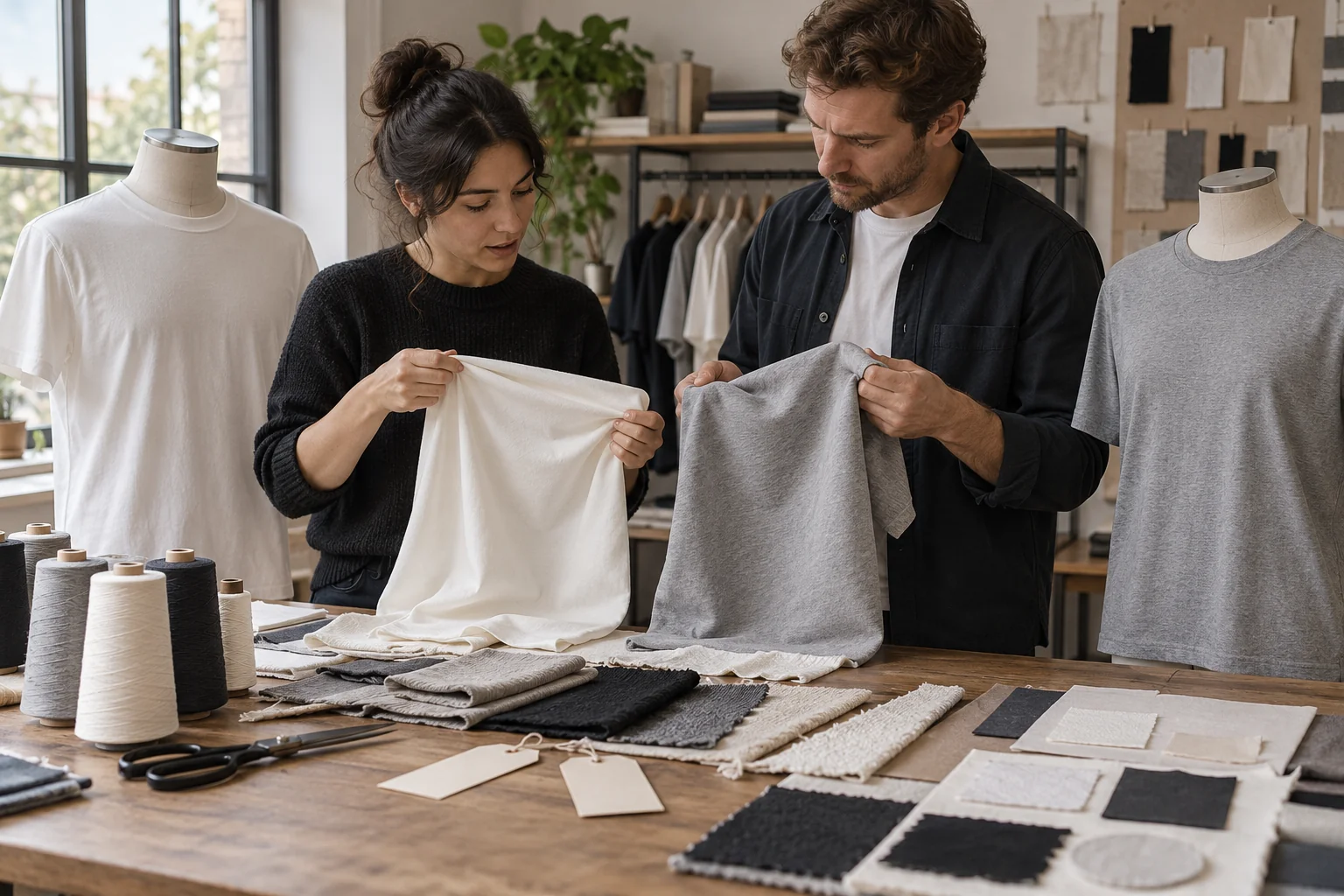
At a glance
Swipe the table sideways to compare both columns →
| Decision | Single jersey | Interlock |
|---|---|---|
| Silhouette and hand | Often lighter and more fluid; useful for relaxed everyday fits. | Often fuller and more compact; useful for cleaner, structured fits. |
| Face, back, and cutting | Different face and back; cut edges tend to curl. | Similar surfaces on both sides; cut edges generally curl less. |
| Opacity and weight | Light shades and low weights need careful coverage checks. | Compact construction can help coverage, but shade, yarn, and weight still matter. |
| Fit and wash approval | Check twisting, dimensional change, neckline behavior, and seam appearance. | Check dimensional change, recovery, seam bulk, and whether the body feels too firm. |
| Cost and sourcing | Common programs can offer economical options; specifications determine price. | May cost more through fabric consumption or processing; compare matched specifications. |
Compare Knit Structure Before Choosing Fabric Weight
Single jersey is a single knit construction with a recognizable face and a different reverse. It commonly gives T-shirts a flexible, familiar hand and works across many weights, from light layering styles to heavier streetwear bodies. Its cut edges tend to curl, which affects handling during cutting and sewing rather than automatically making the finished garment unsuitable. Interlock is a double knit construction with similar looking surfaces on both sides. It generally feels fuller and more compact, with less edge curl. These are useful starting points, not acceptance criteria. Yarn size, fiber blend, knitting settings, and finishing can change the result substantially, so request physical swatches that represent the proposed bulk fabric rather than choosing from construction names alone.
GSM measures fabric mass per unit area, not softness, thickness, or opacity by itself. Two fabrics at the same GSM can feel different because their loops, yarns, and finishes are different. A single jersey may drape loosely while an interlock at a comparable weight feels more compact, but buyers should verify that comparison with actual options. For a menswear range, describe the intended hand in practical terms: fluid or firm, dry or smooth, close fitting or boxy. Include a reference garment if available and identify what should be matched. Ask the supplier to record composition, nominal GSM, usable width, and finish for each swatch. That record keeps later quotation and sample discussions tied to the same material.
Approve Fit, Coverage, and Wash Behavior Together
Start fit development with the intended silhouette rather than assuming either knit can use an unchanged pattern. A relaxed single jersey body may fall closer to the wearer, while a fuller interlock can hold the chest, sleeve, and hem differently. On oversized styles, that difference can determine whether the garment looks relaxed or overly rigid. On closer fits, assess movement through the shoulder and upper arm instead of judging only a flat measurement sheet. Specify finished garment measurements and agreed tolerances, then review a sample in the proposed fabric. Check neckline opening, collar recovery, sleeve shape, and hem behavior together. A collar rib that works on one body fabric may need a different specification on the other.
Opacity deserves a separate approval, especially for white, pale colors, and fitted styles. Interlock's compact structure can help coverage, but it does not remove the need to inspect the actual shade and weight under consistent lighting. Review the garment on a wearer as well as over a contrasting background, including areas stretched by movement. Washing should also be evaluated on representative samples using the intended care instructions. Record measurements before and after washing and note twisting, surface change, neckline distortion, and seam appearance. Neither single jersey nor interlock is automatically shrink resistant or twist free. Agree acceptable outcomes with the supplier before bulk approval, and avoid translating a promising swatch into an unsupported claim about the finished production run.
Match Decoration and Sewing to the Selected Knit
Both constructions can support printed branding, but a fabric name is not enough to approve a decoration method. Surface texture, fiber content, finish, shade, and stretch affect how an artwork appears and feels. A smooth interlock can provide a useful printing surface, while many single jerseys also produce clear results with suitable artwork and processing. Ask for a strike off or decorated sample on the selected fabric, not a substitute with a similar color. Review fine lines, large solid areas, print hand, and appearance after the agreed wash check. For embroidery, evaluate puckering, backing feel, and local distortion. A fuller fabric may support stitching better, but design density and placement still need adjustment to the actual garment.
Construction choices also influence sewing development and factory handling. Single jersey edge curl can complicate alignment at hems and seams, while interlock's fuller structure can add bulk where multiple layers meet. Neither issue should be treated as a reason to reject the fabric without sampling. Instead, review shoulder seams, neck binding or rib attachment, sleeve hems, and bottom hems on a finished garment. Ask the supplier to propose suitable stitch settings and seam construction, then judge the visible result and comfort. If the style includes side vents, chest pockets, or heavy trims, inspect those areas separately. Confirm which approved details will be carried into bulk, including fabric reference, collar specification, seam finish, artwork placement, and measurement tolerances.
Compare Landed Specifications, Not Fabric Names Alone
Compare quotations against a shared specification rather than asking which knit is cheaper in general. Single jersey often has broad availability and economical options, while interlock may carry a higher garment cost because of fabric consumption, knitting requirements, or finishing choices. However, composition, yarn quality, weight, usable width, color program, and order volume can change that relationship. Request quotations that identify the fabric specification, garment measurements, decoration, labels, packaging, and delivery terms. Check whether prices include development or sample charges and whether any material availability assumptions apply. Comparing fabric prices per kilogram alone can be misleading because garment yield depends on weight, width, pattern layout, and cutting loss. Use the finished garment quotation to evaluate the commercial difference.
Plan development around decisions that can be approved in sequence: fabric selection, fit, color, decoration, and final garment details. The MOQ is 100 pcs; confirm how the proposed size and color breakdown fits the available material program before placing an order. Samples typically take about 7 days once the brief and materials are confirmed, while bulk lead time depends on quantity. Treat those points as a planning baseline, not a guaranteed dispatch date. Ask for an order specific schedule after fabric availability and approval steps are clear. For a first program, select the construction that best matches the target product rather than adding two fabrics without a clear merchandising reason. Keep the approved sample and specification together for production reference.
Send these details together
- Define the intended silhouette, hand, composition, GSM, and target selling season before requesting fabric options.
- Compare labeled single jersey and interlock swatches with recorded usable width, finish, and material availability.
- Approve fit, opacity, collar behavior, and agreed wash outcomes on representative garment samples.
- Review decoration on the selected fabric and confirm seams, trims, measurements, and tolerances in writing.
- Confirm the 100 pcs MOQ, size and color allocation, quotation inclusions, sample readiness, and quantity-dependent bulk schedule.
This guide supports fabric selection and custom T-shirt development; it does not certify performance or replace sample approval. MOQ is 100 pcs. Samples typically take about 7 days once the brief and materials are confirmed. Bulk lead time depends on quantity, with scheduling confirmed for the specific order. Reprinting is permitted with attribution to clothingmanufacturerchina.com and inclusion of the contact email sales@clothingmanufacturerchina.com.
Prepare a quote briefThe RFQ form prepares a WhatsApp message for you to review. For files, email sales@clothingmanufacturerchina.com.
Questions before sampling
Is interlock always better than single jersey for premium T-shirts?
No. Interlock can suit a fuller, cleaner silhouette, while single jersey can be the better choice for soft drape or a relaxed hand. Premium positioning should be supported by the selected yarn, finish, fit, construction, and approved garment quality rather than the knit name alone.
Can single jersey and interlock use the same T-shirt pattern?
They can share a starting pattern, but do not assume the finished fit will match. Drape, stretch, recovery, and wash behavior may differ. Sample each proposed fabric and adjust the pattern, collar, or sewing details where needed before approving bulk.
What should buyers send to request samples and pricing?
Send the target fit or reference garment, composition, preferred weight, colors, measurement chart, artwork, trims, size breakdown, and order quantity. MOQ is 100 pcs. Samples typically take about 7 days once the brief and materials are confirmed; bulk lead time depends on quantity.
What are your MOQ, sample time and bulk lead time?
MOQ is 100 pcs. Samples take 7 days. Bulk production lead time depends on order quantity.