T-Shirt Neck Rib: Specify Shape, Width and Recovery
A T-shirt collar is a small component with a large effect on the silhouette. Neck opening, rib width, attachment and material behavior all influence how it sits. Specifying only thick rib or tight neck leaves the factory to decide several features that should be reviewed together on a finished tee.
At a glance
Swipe the table sideways to compare both columns →
| Decision | What to specify | What to verify |
|---|---|---|
| Opening | Width and depth with clear endpoints | State whether rib is included in the measurement. |
| Rib profile | Visible finished width and shape reference | Do not confuse cut width with finished width. |
| Finished behavior | Review body, rib, seam and label together | Record changes after the agreed opening or care check. |
Define the collar in measurable terms
Mark the neckline on a flat drawing and define how its width and depth are measured. State whether the rib is included in each point. Give the finished visible rib width separately from the cut component width. Those are different quantities because folding and seam construction use part of the material before it becomes the visible collar.
Describe the desired profile: close to the neck, open, flat or deliberately substantial. Pair those words with front and side references and identify the features you want retained. A narrow opening can still look weak if the rib rolls, while a wider opening can look intentional when its shape and attachment are controlled. Avoid treating one measurement as the complete design.
Match the rib to the body and finish
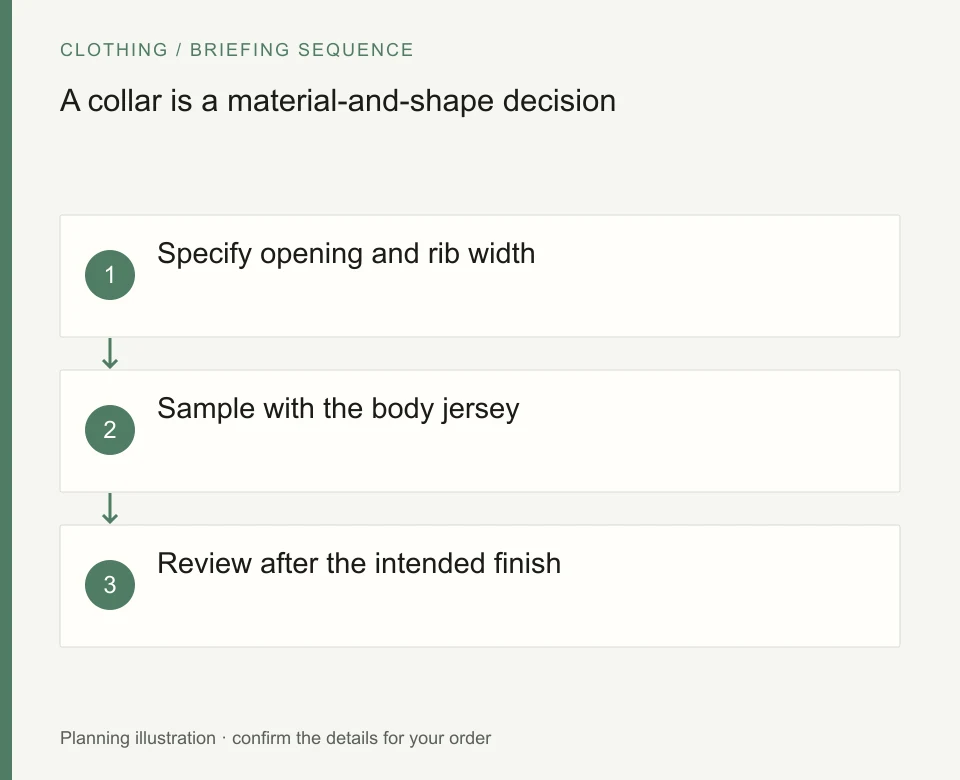
Request the proposed rib construction and composition alongside the body jersey. The material must allow the opening to function and return toward its intended shape, but composition alone does not establish recovery. Ask to review the actual combination on a sample. A rib that looks suitable as a loose swatch may behave differently after it is sewn around the neckline.
For garment-dyed or washed tees, check the collar after the planned treatment. Rib, body and thread may respond differently in shade, handle and dimensions. If a tonal collar is intended, approve the acceptable contrast; if a matched collar is required, state that target and evaluate the finished combination. A digital color code cannot settle the relationship between these different textile surfaces.
Review attachment and wear behavior
Inspect the seam around the full opening, including the shoulder joins and back-neck area. Look for uneven distribution, unwanted rippling or a join that changes the collar profile. Check any neck tape and label with the collar because their bulk can affect comfort and appearance. Photograph problems at the point where they occur rather than sending only a distant front view.
Agree a practical opening and care review with the supplier, and record measurements before and after the chosen procedure. Do not prescribe an unverified universal stretch percentage or claim that one rib blend prevents every issue. If the sample needs correction, identify whether the change concerns material, opening shape, component length or sewing; changing all four obscures the reason for improvement.
Send these details together
- Neck opening diagram and measurement definitions
- Finished visible rib width and profile reference
- Proposed rib and body material identification
- Dye, wash, neck tape and label details
- Agreed recovery and care-review observations
Use this checklist to prepare your own order brief. Materials, processes, acceptance criteria and any applicable product requirements need order-specific confirmation; this guide is not a test report or availability guarantee.
Prepare a quote briefThe RFQ form prepares a WhatsApp message for you to review. For files, email sales@clothingmanufacturerchina.com.
Questions before sampling
What are your MOQ, sample time and bulk lead time?
MOQ is 100 pcs. Samples take 7 days. Bulk production lead time depends on order quantity.