Heat Transfer vs Screen Print Tees
For menswear buyers sourcing China OEM tees and light knits, heat transfer versus screen print is a decoration decision that must be matched to the fabric, artwork and order plan. Heat transfer uses vinyl or transfer film applied with heat and pressure, while screen printing deposits ink through prepared screens. Neither method is automatically softer, sharper or more durable in every application. Start with graphic coverage, required detail, garment color and intended care instructions, then approve a physical decoration sample on the actual production fabric. MOQ is 100 pcs, samples take approximately 7 days once the brief and materials are confirmed, and bulk timing depends on quantity.
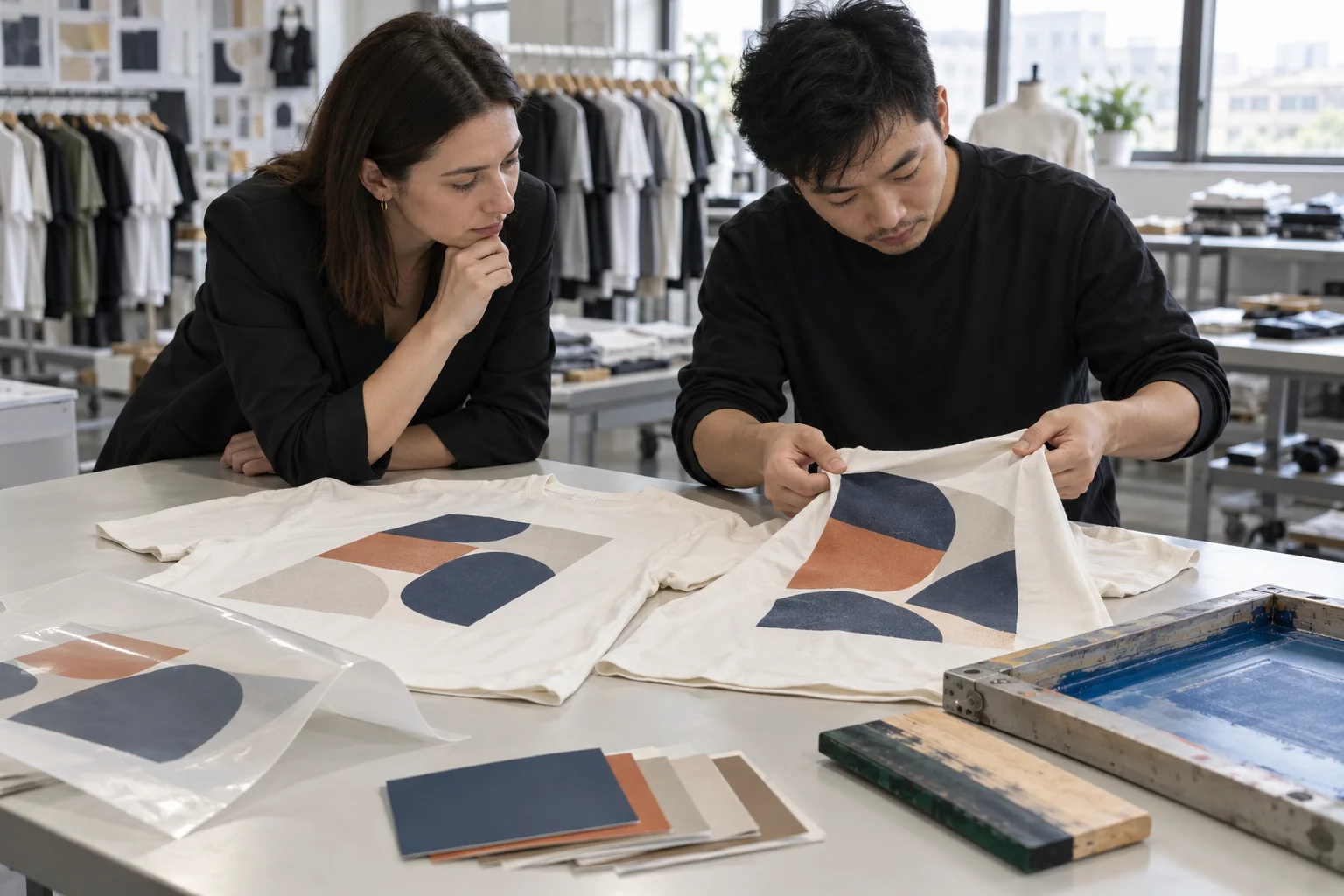
At a glance
Swipe the table sideways to compare both columns →
| Decoration decision | Heat transfer | Screen print |
|---|---|---|
| Graphic coverage and handfeel | Vinyl or transfer film creates a surface layer; compare coverage, flexibility and edge feel on the actual knit. | Handfeel depends on ink system, underbase and deposit; large printed areas can still feel substantial. |
| Fine detail and artwork | Cut vinyl has cutting and weeding limits; printed transfer film may suit detailed or multicolor graphics. | Detail depends on separations, screens, ink and fabric texture; confirm small text and registration with a strike-off. |
| Color matching | Stock vinyl colors may limit matching; printed films need a physical color reference and sample review. | Custom ink mixing can support matching, but garment shade, underbase and curing affect the final appearance. |
| Wash observation | Observe lifting edges, cracking, puckering and appearance changes under agreed care conditions. | Observe fading, cracking, print distortion and appearance changes under the same agreed care conditions. |
| Commercial planning | Compare film preparation, application labor and graphic size; suitability depends on the specific order. | Compare screen setup, color count and run size; bulk timing depends on quantity and production requirements. |
1. Define the fabric and graphic before requesting quotes
Build the request around the garment rather than asking which printing method is best in general. Specify the menswear tee or light knit style, fabric composition, weight, construction, garment color and any known surface finish. Include artwork dimensions, front or back placement, quantity by design and the size breakdown. A compact cotton jersey and a stretchy lightweight blended knit can behave differently under the same decoration process. Ask the factory to flag heat sensitivity, stretch mismatch or possible dye migration where relevant, but do not treat a verbal assurance as approval. Require a sample on the intended fabric before committing the decoration to bulk.
Clarify what the supplier means by heat transfer because cut vinyl and printed transfer film are not interchangeable specifications. Cut vinyl suits graphics that can be cut and weeded cleanly, while printed transfer films may accommodate different detail and color requirements. For screen print, request the proposed ink approach, number of print colors and whether an underbase is needed on darker garments. Keep commercial assumptions consistent across quotations, including artwork preparation, screens, application and packing. MOQ is 100 pcs; confirm how the factory will allocate that order across designs, colors and sizes. Companion reading in Custom T-Shirt Manufacturer helps buyers organize the garment brief before decoration costs are compared.
2. Compare coverage, handfeel and fine detail on fabric
Judge coverage by the amount of fabric actually covered, not only by the outer dimensions of the artwork. A large open line drawing can feel very different from a solid rectangle with the same width and height. Vinyl and transfer film leave a surface layer whose thickness, flexibility and adhesive system influence handfeel. Screen printing also varies: ink chemistry, deposit thickness and underbase coverage can make a print feel lighter or heavier than expected. Compare both options after the samples have cooled and settled, then handle them as a customer would. Fold the panel, drape it over a hand and assess whether the decorated area feels disproportionately stiff on the chosen light knit.
Use a detail crop from the real artwork to evaluate small lettering, narrow gaps, outlines and gradients. Do not assume every heat transfer handles photographic artwork, since cut vinyl has different limitations from printed film. Likewise, screen printing can reproduce detailed designs only when separations, screen preparation, ink and fabric texture support the required result. Ask the factory to identify details that need enlarging or simplifying before sample work begins. Compare edge definition, alignment between colors and legibility at the intended finished size rather than judging an enlarged digital preview. How to Approve Clothing Print Strike-Offs provides companion guidance for documenting these checks on representative printed fabric before approving a complete garment.
3. Check color and wash appearance without unsupported scores
Set the color target using a physical reference or an agreed color standard, and state whether the priority is matching brand artwork or coordinating with the garment shade. Stock vinyl colors can restrict the available match, while printed transfer film depends on the supplier's printing process and material. Screen print color is affected by the ink mix, garment background, underbase and finished deposit. Review the sample under consistent lighting and avoid approving critical shades from phone photographs alone. If exact matching is commercially important, agree the acceptance approach with the factory before sampling. Record any approved deviation in writing so bulk inspection does not rely on conflicting memories of a screen image.
Use wash observation as a practical approval step, not as a substitute for an independently specified laboratory test. Agree the wash program, detergent, drying method and number of observation cycles in advance, consistent with the intended care instructions. Keep an unwashed reference and compare samples for color change, cracking, lifting edges, puckering and distortion after they are dry. Heat transfer checks should include adhesion around corners and fine elements; screen print checks should include ink appearance and whether fabric shrinkage changes the graphic. Record what was actually observed and under which conditions. Do not convert a favorable sample observation into a guaranteed service life, invented wash rating or certification claim.
4. Approve the sample and control the bulk handoff
Separate decoration approval from complete garment approval so a good print does not conceal an unsuitable tee body. First approve the strike-off for process, artwork, color and handfeel, then review the decorated garment for placement, proportions, fit and construction. A centered graphic on a flat panel may look different when the garment is worn, particularly across larger menswear sizes. State whether graphic dimensions remain constant or change by size, and define placement from repeatable garment reference points. How to Approve Clothing Samples is useful companion reading for the wider garment review. Samples take approximately 7 days once the brief and materials are confirmed; allow additional time if artwork revisions, replacement materials or repeat approvals are needed.
Release bulk only when the purchase order and approval record identify the same fabric, artwork version, decoration method, color target and placement specification. Retain an approved physical sample and clear photographs, and ask the factory to retain a matching reference for production checks. Confirm the inspection approach for crooked placement, missing detail, visible contamination, adhesion concerns and unacceptable color variation. Where quantities or design allocations change, request an updated quote and schedule rather than assuming the original setup remains valid. Bulk timing depends on quantity, with artwork complexity, material availability and approval status also affecting the production plan. Put the agreed schedule in writing and require review before any substitution of transfer material, ink approach or garment fabric.
Send these details together
- Submit the actual fabric specification, garment shades, artwork files, finished graphic dimensions and size breakdown before asking for a heat transfer versus screen print comparison.
- Confirm MOQ of 100 pcs and ask how design, color and size allocations affect pricing, setup requirements and the feasibility of the proposed order.
- Approve representative strike-offs for coverage, handfeel, small detail and color, then check decoration placement on a complete garment rather than approving from artwork alone.
- Record wash observation conditions and visible findings, retain an unwashed reference, and avoid presenting sample observations as laboratory results or guaranteed durability claims.
- Sign off the artwork version, physical reference, process and inspection criteria; confirm approximately 7-day sampling after brief and material confirmation and obtain a quantity-based bulk schedule.
This buying resource covers heat-applied vinyl and transfer film versus screen printing for menswear China OEM tees and light knits. It provides sourcing and sample approval guidance, not laboratory test results, certification guarantees or a universal durability ranking. Reprint permission is granted with attribution to clothingmanufacturerchina.com and sales@clothingmanufacturerchina.com.
Prepare a quote briefThe RFQ form prepares a WhatsApp message for you to review. For files, email sales@clothingmanufacturerchina.com.
Questions before sampling
Is heat transfer or screen print better for a 100-piece tee order?
Either may be suitable at MOQ 100 pcs. Compare the actual artwork, graphic coverage, fabric and design allocation rather than choosing from quantity alone. Heat transfer pricing can be influenced by film size and application work, while screen printing involves setup linked to colors and separations. Ask for comparable quotations that include sampling and setup, then select the process that meets the approved appearance and handfeel requirements.
Which method lasts longer on lightweight menswear knits?
There is no reliable universal winner without knowing the fabric, decoration materials, application or curing conditions and care routine. Poorly matched transfer material can lift or feel restrictive, while an unsuitable screen print process can produce cracking or other appearance problems. Review samples under agreed wash conditions and document actual changes. If formal performance evidence is required, define the test method and acceptance criteria separately rather than inventing durability scores.
What must be confirmed before the approximately 7-day sample window starts?
Confirm the garment brief, available sample fabric and decoration materials, usable artwork, graphic dimensions, placement, color targets and proposed printing method. Samples take approximately 7 days once the brief and materials are confirmed. Ask whether the stated timing covers a strike-off, a complete decorated garment or both, and confirm shipping separately. Revisions may require another approval round. Bulk timing depends on quantity and should be reconfirmed after sample approval.
What are your MOQ, sample time and bulk lead time?
MOQ is 100 pcs. Samples take 7 days. Bulk production lead time depends on order quantity.