How to Approve Clothing Samples from a China Manufacturer
Approving a clothing sample is a controlled purchasing decision, not simply confirmation that a garment looks acceptable. For menswear OEM orders, the buyer and China manufacturer should compare the same sample against the same technical brief, measure defined points, evaluate the intended fabric, inspect construction, and verify decoration placement. Every issue needs a written decision, an accountable owner, and a clear next step. Start with a complete brief and confirmed materials; samples take approximately 7 days once both are confirmed. The MOQ is 100 pcs, while bulk timing depends on quantity and should be confirmed against the final specifications and production plan.
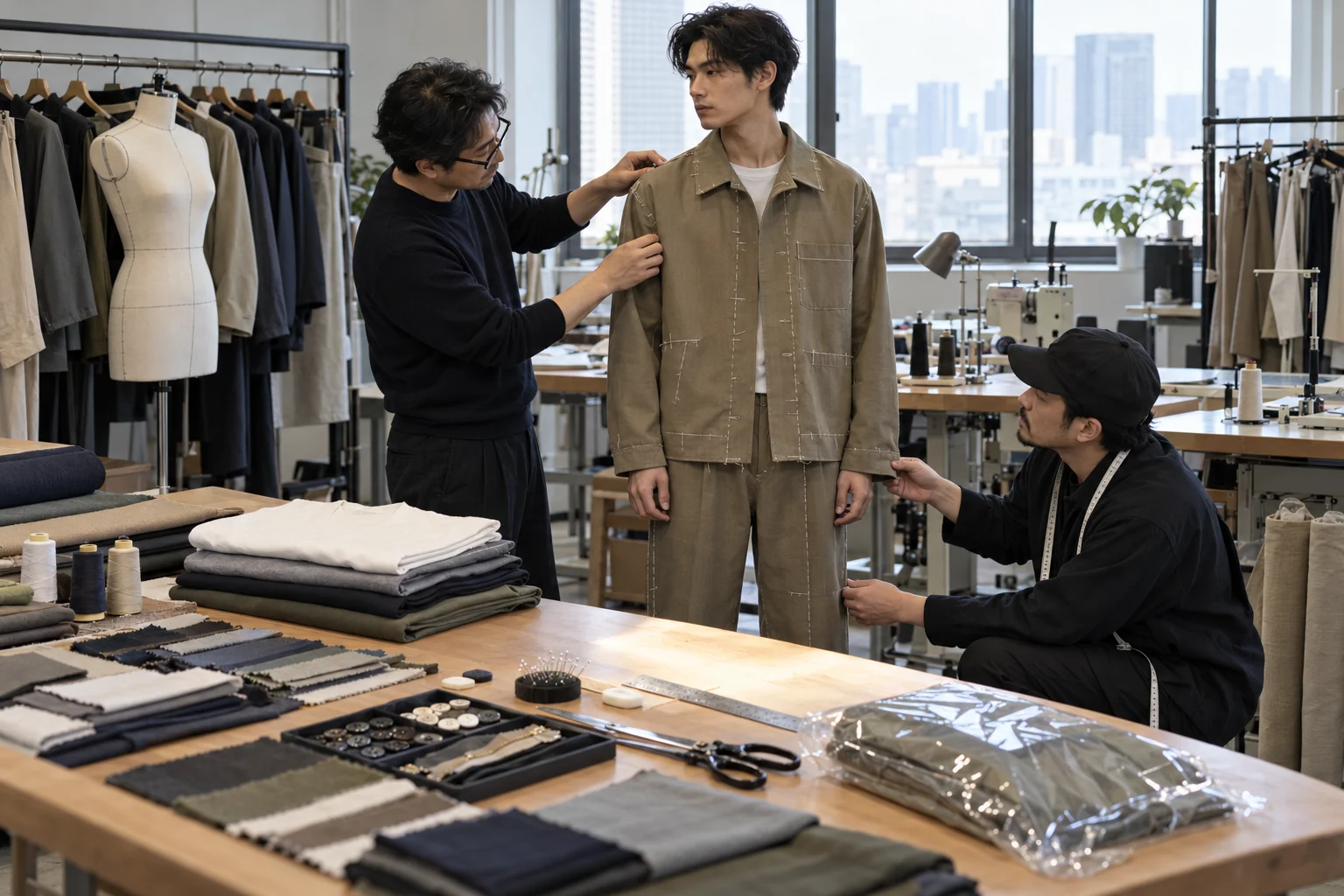
At a glance
Swipe the table sideways to compare both columns →
| Approval step | What to check | What to record |
|---|---|---|
| Confirm the sample brief | Tech pack version, base size, fabric, trims, decoration artwork, and intended use | Style code, specification revision, confirmed materials, and sample purpose |
| Review fit and fabric | Measurements, silhouette, movement, fabric hand, shade, and agreed wash behavior | Actual measurements, tolerances, fit photos, material references, and discrepancies |
| Inspect construction and decoration | Seams, reinforcement, closures, finishing, artwork scale, placement, and appearance | Annotated photos, measured positions, workmanship issues, and required corrections |
| Manage comments and revisions | Open issues, correction feasibility, dependencies, and previously approved details | One consolidated comment sheet, revision number, factory response, and next review date |
| Release the bulk reference | Final sample identity, approved specifications, and closure of unresolved requirements | Written approval, reference sample location, version-controlled files, and production authorization |
1. Establish the brief and approval criteria before sampling
Begin by defining what the sample must prove. A development sample may confirm silhouette and assembly, while a later sample may need to represent the actual bulk fabric, trims, and decoration. Send the factory a controlled menswear tech pack containing the style code, base size, measurement diagram, size chart, construction details, material specifications, and artwork files. Identify the intended customer and fit direction, such as a relaxed overshirt or a tailored casual trouser, rather than relying on subjective labels alone. Agree measurement methods and tolerances by point of measure before review so the buyer and sample room are not judging the same garment using different rules.
Confirm material availability before treating a sampling date as committed. Samples take approximately 7 days once the brief and materials are confirmed; shipping, buyer review, additional testing, and revision rounds should be planned separately. If the factory proposes a substitute fabric or temporary trim, record its exact purpose and limitations. A substitute may help assess a construction method without proving final drape, shade, or shrinkage. Establish who can approve each category and who will issue the final consolidated decision. For purchasing planning, use MOQ 100 pcs as the starting requirement and confirm the proposed style, color, and size allocation with the manufacturer. Bulk timing depends on quantity.
2. Check menswear fit and fabric against measurable requirements
Measure the sample before the fit session using the agreed method, garment condition, and reference diagram. Record actual values beside the specification and tolerance instead of writing only that the garment is too large or too small. For a menswear shirt, relevant points may include chest width, shoulder width, body length, sleeve length, collar, and cuff opening. For trousers, review waist, hip, rise, thigh, inseam, and leg opening as specified in the tech pack. Assess the garment on an appropriate fit model and document the model's relevant measurements. Use consistent front, side, and back photographs, then check sitting, reaching, and bending where those movements reflect the garment's intended use.
Evaluate fabric separately from garment dimensions because an acceptable size chart does not guarantee the intended wearing experience. Compare composition documentation, weight, construction, hand feel, stretch, recovery, opacity, and drape against the agreed material reference. Review shade under consistent lighting and note whether the sample fabric represents the planned bulk material or only a development substitute. When laundering performance matters, agree the wash and drying method and compare measurements and appearance before and after the trial. A sample wash observation is not proof of a certification or a substitute for required testing. Identify any unresolved performance requirement and request appropriate evidence before granting approval for that requirement.
3. Inspect construction, trims, and decoration as separate approval items
Inspect the garment inside and outside rather than judging only the presentation photos. Compare seam types, seam allowances where accessible, stitch consistency, reinforcement points, pocket construction, collar shape, plackets, hems, and lining details against the approved brief. Open and close buttons, snaps, and zippers several times to identify obvious functional problems, without presenting this informal check as a formal durability test. Look for puckering, skipped stitches, twisting, uneven topstitching, raw edges where finishing is required, and mismatched panels. Distinguish an isolated sample-room finishing defect from a specification problem that could repeat throughout bulk production. Both need written disposition, but they may require different corrective actions.
For prints, embroidery, patches, and other decoration, inspect the physical result against the controlled artwork rather than an email preview alone. Verify spelling, artwork version, dimensions, orientation, color references, and placement measured from agreed garment landmarks. Check whether embroidery creates puckering or stiffness, whether print coverage meets the agreed appearance, and whether the decoration interferes with seams or movement. Ask whether the sample uses the intended bulk technique and material combination. If it does not, withhold approval of that element until a representative result is available. Record label content, size labels, and care instructions separately, and have the responsible buyer verify destination-market requirements rather than assuming the sample proves compliance.
4. Control revision rounds and approve a traceable bulk reference
Send one consolidated comment sheet for each review round. Identify the style, sample version, receipt date, reviewed size, and reviewer, then list issues by fit, fabric, construction, decoration, and labeling. Each comment should state the observed condition, the required outcome, and the supporting measurement or photograph. For example, specify the sleeve measurement and target rather than asking the factory to make the sleeve better. Mark items as approved, revise and resubmit, or pending evidence, and make clear that a partial approval does not release the whole garment. Request a factory response against every numbered issue so feasibility questions, conflicting instructions, and material dependencies are resolved before the next sample is made.
Plan revision rounds around unresolved risks rather than promising a fixed number for every style. When the revised sample arrives, recheck both the requested corrections and previously acceptable areas that the changes could affect. A shoulder adjustment, for example, may alter sleeve position and overall balance. Once all release requirements are met, identify the approved sample with a durable tag or other traceable record and retain matching buyer and factory references where practical. Link the approval to the final tech pack, material references, artwork, and measurement record. State explicitly whether bulk production is authorized. The approved sample is the physical bulk reference, but agreed inspection criteria and size specifications still govern production checks.
Close every comment with a dated decision
Record the sample ID, size and governing tech-pack version before reviewing. Keep numbered photographs linked to a consolidated comment sheet so the factory does not have to choose between conflicting chat messages. For each item, state retain, revise or leave pending with a reason.
List wash, decoration and trim exceptions that are still open so a partial approval cannot be read as a full bulk release. End with a dated decision, an updated specification and a retained physical reference sample.
Send these details together
- Confirm the style code, sample purpose, base size, tech pack revision, and material status before review; identify any substitute components that prevent full approval.
- Record actual measurements, agreed tolerances, fit model measurements, movement observations, and consistent photographs so fit decisions are reproducible rather than subjective.
- Review fabric, construction, decoration, trims, and labels individually; request relevant evidence for performance or compliance requirements without implying unsupported certifications.
- Issue one numbered comment sheet per revision round, obtain the factory's response to every open item, and verify corrections on the next sample.
- Retain an identifiable approved sample and linked specifications, close outstanding release conditions, and confirm written bulk authorization, order quantity, and the production schedule.
- Sample ID, size and governing tech-pack version on the comment sheet
- Numbered photographs matched to consolidated comments
- Wash, decoration and trim exceptions listed before any bulk authorization
This informational buying resource covers menswear OEM sample approval for clothing sourcing from China, including fit, fabric, construction, decoration, written comments, revision rounds, and the approved sample as a bulk reference. It does not replace destination-market compliance review, laboratory testing, or a purchase contract. MOQ is 100 pcs; samples take approximately 7 days once the brief and materials are confirmed; bulk timing depends on quantity. Reprint permission is granted provided attribution is given to clothingmanufacturerchina.com and sales@clothingmanufacturerchina.com.
Prepare a quote briefThe RFQ form prepares a WhatsApp message for you to review. For files, email sales@clothingmanufacturerchina.com.
Questions before sampling
Can we approve fit when the sample uses substitute fabric?
You can issue a limited fit decision if the substitute is suitable for that purpose, but document the limitation clearly. Different stretch, weight, drape, or shrinkage can change the final fit even when flat measurements match. State which measurements or construction features are accepted and which must be reviewed again in the intended fabric. Do not describe the entire sample as bulk approved while material-dependent requirements remain unresolved.
How many sample revision rounds should a menswear buyer plan?
There is no reliable fixed number for every menswear style. Complexity, brief quality, material changes, and the seriousness of fit or construction issues determine whether another round is needed. Budget time for review, factory clarification, shipping, and any agreed testing in addition to sampling. Samples take approximately 7 days once the brief and materials are confirmed, but confirm the timing of each revision with the factory rather than assuming every round follows an identical schedule.
Does approving one sample guarantee that the bulk order will match?
No. Approval establishes a reference and an agreed specification; it does not independently verify every production unit. The buyer should agree bulk measurement tolerances, workmanship criteria, material controls, and an inspection plan appropriate to the order. A base-size sample also does not validate every graded size. For an order starting at MOQ 100 pcs, confirm the size and color breakdown, retain traceable approval records, and request a bulk schedule based on the actual quantity.
What are your MOQ, sample time and bulk lead time?
MOQ is 100 pcs. Samples take 7 days. Bulk production lead time depends on order quantity.
Related production briefs
- OEM clothing manufacturer China
- clothing sample maker
- clothing manufacturer china low moq
- How to Brief Clothing Decoration Placements for OEM
- How to Brief Clothing Collar and Neckline Construction
- How to Brief Clothing Sleeve and Hem Construction
- How to Write a Clothing Tech Pack
- How to Approve Clothing Pre-Production Samples Before Bulk