What belongs in a custom sweatpants manufacturer RFQ?
Start with Fleece GSM, Waistband construction, Pocket style, Cuff or open hem. Add the quantity by color and size, destination country and required date.
Sweatpants need proper fleece selection, waistband stretch, pocket construction, inseam control and finish details.
Control fabric weight, relaxed fit, waistband, cuffs, drawcords, pockets, embroidery and label application.
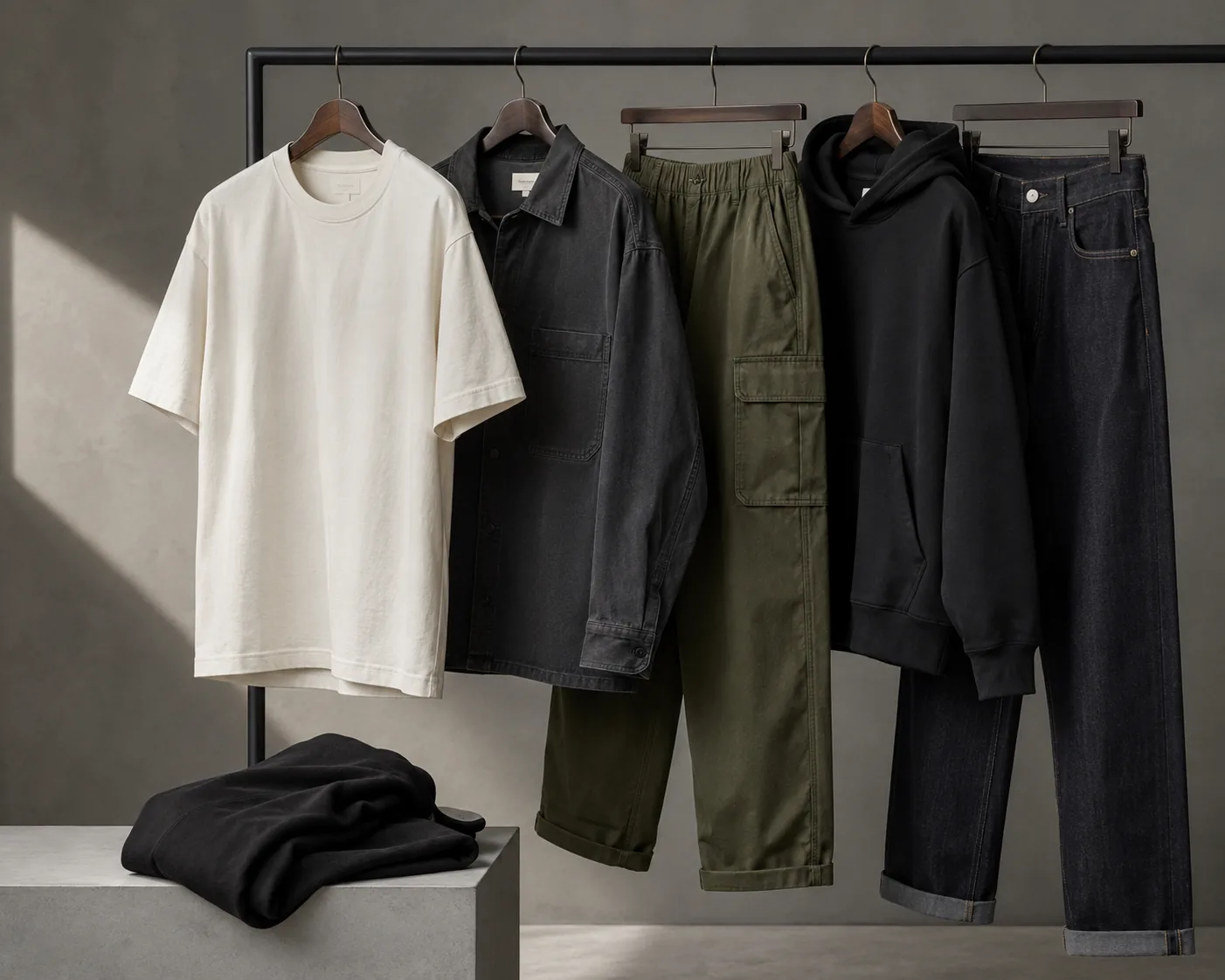
Denim and twill
Jeans, jackets, carpenter pants and hardware trims.Sample first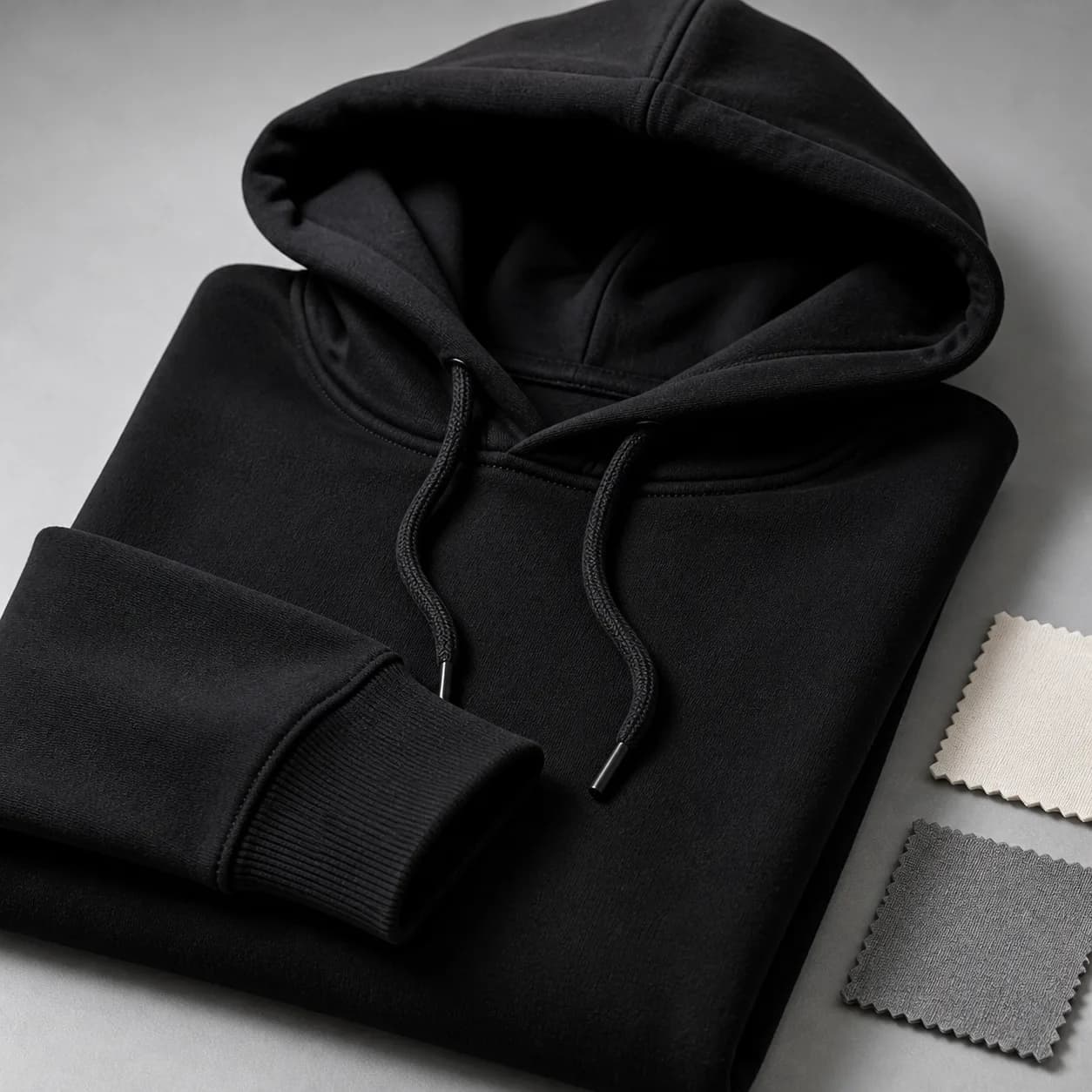
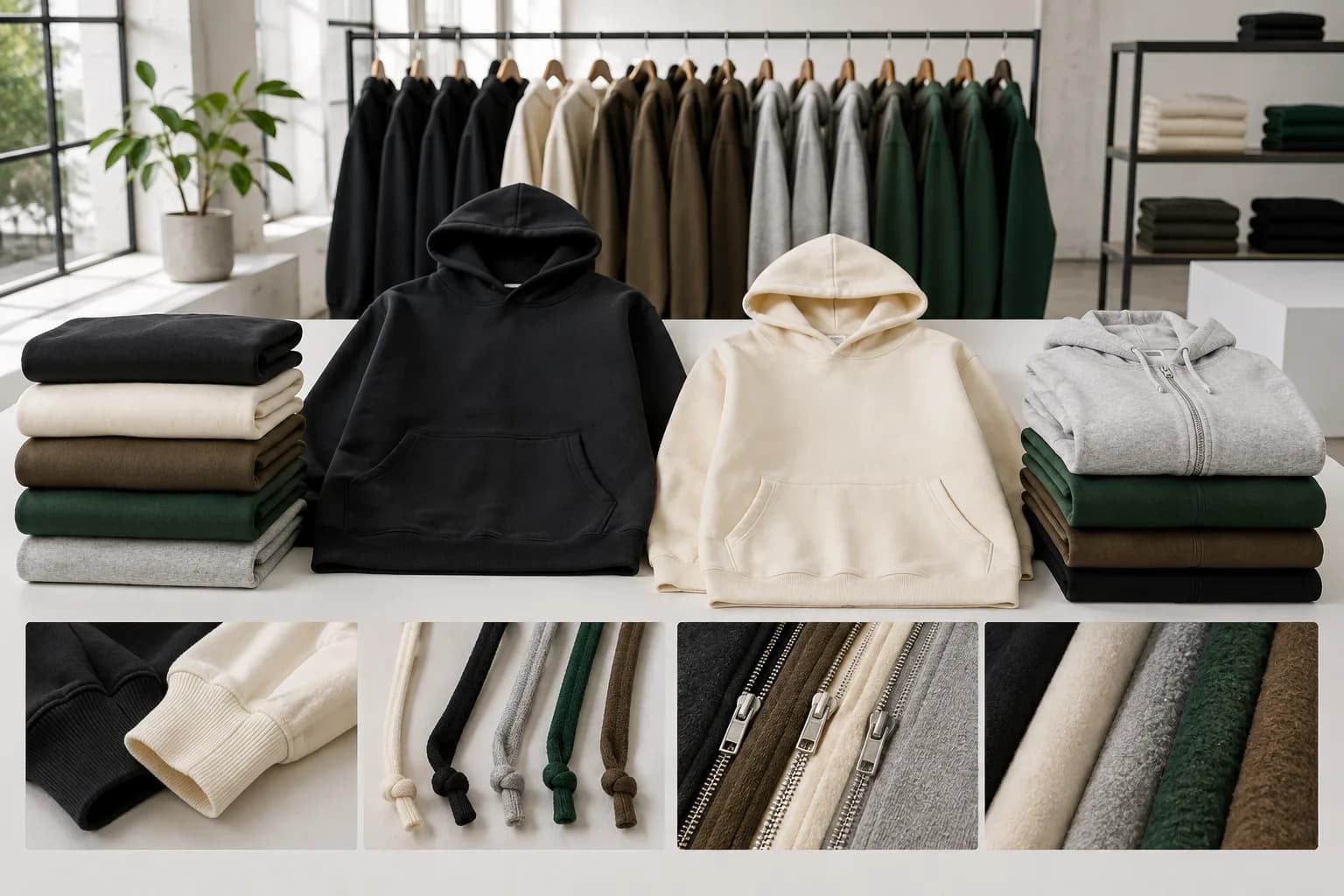
Fleece or French terry
Pullover, zip, wash, embroidery and puff print paths.MOQ 100 pcs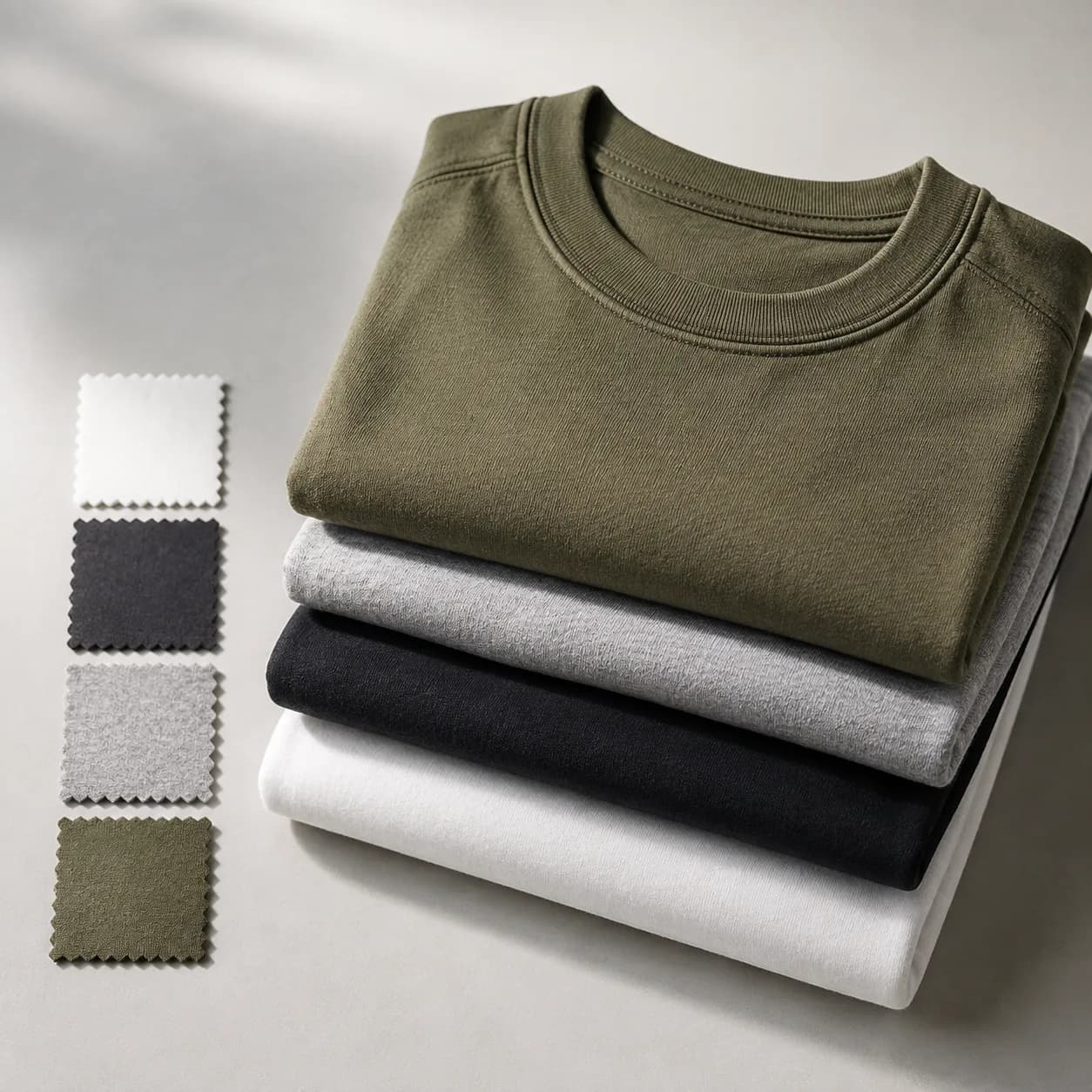
220-280 GSM jersey
Oversized fit, neck rib, print and label package.Quote by tech pack
Labels and packaging
Neck labels, care labels, hang tags, zipper pulls and bags.Pack by SKUThese are the details a factory needs before discussing MOQ, sampling, lead time and production scope.
Start with Fleece GSM, Waistband construction, Pocket style, Cuff or open hem. Add the quantity by color and size, destination country and required date.
The sample should resolve Brushed fleece, French terry, Open hem sweats and record the approved measurements, materials, trims and finish before bulk.
MOQ is 100 pcs. Samples take 7 days. Bulk production lead time depends on order quantity.
Waist stretch test, Pocket seam review, Inseam measurement, Cuff recovery should be compared with the approved sample and packing requirements before release.
Sweatpants range from slim joggers with cuffs to wide, straight-leg streetwear styles with open hems. Define the leg shape, rise and hem finish, and send references of the fit on a body.
Fabric affects comfort and drape. Fleece is warmer with a brushed inside; French terry is lighter. Weight changes how the leg falls.
Include in your brief:
Sweatpants often sell alongside hoodies. Matching colors across fabrics needs side-by-side approval. The MOQ is 100 pcs and samples typically take 7 days. See the tracksuit program or our hoodie site.
Joggers or open hem? Joggers with cuffs look sporty and tapered; open hems look relaxed and suit streetwear. Should the waistband have an external drawcord? It is a common detail; specify drawcord color and tip finish if you want it.
Rise and seat room determine comfort; leg shape and hem determine style. A relaxed seat with a tapered jogger leg is a common combination for everyday wear, while straight or wide legs with open hems suit streetwear. Specify both parts of the fit rather than describing only the leg.
Typical placements include the upper thigh, the hip and down the side of the leg. Large prints down the leg need careful placement across sizes. Embroidery on the thigh is a subtle option that pairs well with a matching hoodie.
Sweatpants often sell in larger sizes than tops from the same customer, so plan the size split separately rather than copying your tee or hoodie ratios.
Deep side pockets are useful but add bulk at the hip in lighter fabrics. Check the sample for how pockets sit when walking and sitting.
An elastic waistband with an internal or external drawcord is most common. Wider waistbands feel more substantial; narrower ones sit lower and lighter. Specify width and check recovery after washing.
Check hem length on a model wearing typical shoes.
Sweatpants can look correct at the first fitting and develop pronounced knee bags after several hours of wear. This is different from ordering an intentionally loose silhouette: the original pattern may be right, but the knitted fabric does not return sufficiently after sustained bending. For a brand selling everyday lounge-to-street sweatpants, the development brief should describe the intended wear cycle, such as desk work, commuting or extended indoor wear. Ask us to review fabric candidates against that use rather than choosing only by hand feel. Fibre blend, knit structure and finishing all influence residual growth. A very soft sample is not automatically the best bulk choice if the knee and seat become noticeably distorted before the garment is washed again.
Use the development sample to establish a repeatable comparison, not an unsupported performance claim. Photograph the unworn garment from the front and side, then repeat the photographs after a defined sitting and walking session. Keep the wearer, movements and camera position consistent between revisions. Mark the knee area on the review sheet so that comments identify the same location each time. Allow the garment to rest flat for an agreed period before judging recovery. A wear session of two hours followed by a thirty-minute rest is one possible internal comparison routine to confirm, not a standard test or guaranteed result. If formal performance evidence is needed, agree the relevant laboratory method and acceptance requirement separately before approving the production fabric.
When a sample bags excessively, avoid immediately narrowing the knee to hide the problem. Extra tension can make the wearer uncomfortable and increase distortion during bending. First determine whether the cause is material recovery, insufficient movement allowance or both. A firmer knit may hold shape better but feel less fluid; introducing a stretch component can change the handle, finishing route and cost. Neither adjustment should be made without another wear review. Keep one unwashed control sample alongside the worn sample so that the team can distinguish original silhouette from wear-induced growth. For bulk approval, identify the exact approved fabric reference and finish, since a visually similar replacement may behave differently during prolonged sitting even when its stated weight is unchanged.
The inside surface of brushed sweatpants needs its own approval because it rubs against underwear, socks and the wearer throughout the day. Loose fibres can transfer onto dark base layers or collect around the lower leg, even when the outside face looks clean. Request an assessment of the brushed back after the intended care cycle, using the actual proposed production fabric rather than an unrelated showroom swatch. Define whether the back should retain a dense, even nap or have a cleaner, less lofty appearance. More aggressive brushing can increase initial softness but may also release more loose fibre, depending on the yarn and finishing conditions. The decision should balance warmth, interior appearance and acceptable fibre transfer rather than treating maximum softness as the only target.
Long sweatpant panels also make directional surface differences conspicuous. A face with a slight nap or directional sheen can make one leg appear lighter when the panels are cut in opposite directions. This may be mistaken for a dye-lot problem, particularly in black, charcoal and muted neutrals. During fabric review, rotate adjoining pieces through 180 degrees under consistent lighting and assess whether the appearance changes. If it does, specify a common cutting direction for the visible leg panels and discuss the resulting fabric consumption. That requirement can reduce marker efficiency, but it is preferable to discovering apparently mismatched legs after sewing. Keep the assessment separate from colour approval: a correct colour reference alone does not resolve a directional cutting issue.
Brushing and finishing should also remain consistent across production fabric lots. A replacement roll with a flatter back may create sweatpants that feel thinner even if its measured mass is close to the approved fabric. Retain a labelled reference showing both face and back, and assess incoming material against both surfaces. At sample review, turn the garment inside out and examine brushing near seams, where loose fibre can accumulate and obscure stitch inspection. At bulk review, compare garments from different production lots rather than repeatedly inspecting one carton. Any proposed extra cleaning, washing or finishing step should be approved for its effect on dimensions and appearance as well as shedding. Do not assume a softer finish will correct loose fibre without introducing another variable.
The crotch junction is a concentrated stress point in sweatpants because the fabric stretches during sitting, stepping up and squatting. A seam can look tidy on a flat table yet feel restrictive or open under movement. The brief should identify whether unrestricted everyday movement is expected or whether the design is primarily a fashion silhouette with limited activity demands. During development, assess front and back crotch extension together with the seam behaviour. Adding overall body width does not necessarily solve a short crotch extension, and stronger thread alone does not correct a seam that cannot extend with the fabric. Ask for the proposed assembly to be reviewed on the actual material, especially where a thick brushed back creates a bulky four-way seam intersection.
Use controlled movement to separate pattern problems from sewing problems. If the wearer feels pulling from the back waist toward the crotch while seated, review back-body balance and extension before changing stitch settings. If the garment has sufficient room but stitches crack during bending, examine seam extensibility and assembly. If the junction feels like a hard lump, review seam allowance stacking and local bulk. A gusset can be considered for designs requiring additional movement, but it changes the pattern, visible seam layout and sewing work. It should not be added automatically to a standard sweatpant. Record each observation against a specific movement and location so that the next sample addresses a diagnosed cause rather than making several untraceable changes at once.
Leg rotation requires a separate check because long knitted panels can move off balance after laundering. Lay the washed sweatpants flat without pulling them into alignment, then inspect whether the inseams migrate toward the front or whether one lower leg turns differently from the other. Review fabric skew, panel alignment and sewing feed before trying to correct the appearance through pressing. Pressing may temporarily disguise a problem that returns after washing. When the design has no outer side seam, establish another consistent reference, such as the pattern grain line and agreed front-leg centre, for the review. Approve any pattern compensation only after checking a repeat washed sample. The aim is balanced hanging legs in normal use, not a garment that looks straight only when manually arranged.
The following example shows how a buyer could organise a sweatpant development request; all dimensions and material choices require confirmation against the intended customer. The project is one adult menswear design in washed black and ash grey, with 200 pieces per colour and 400 pieces total. Both colours use the same pattern, but each proposed fabric must be identified separately if the ash grey uses a different yarn construction. Our MOQ is 100 pcs per colour per design, so this example meets that threshold without combining colours. The brief states that the garment is intended for daily seated wear and walking, with particular attention to knee recovery, low interior shedding and balanced legs after washing. A nominated reference garment establishes the starting appearance, not the final production specification.
For the medium development size, an illustrative measurement sheet could show a 37 cm relaxed half waist, 54 cm extended half waist under an agreed measuring method, 58 cm half hip measured 20 cm below the top edge, and 35 cm half thigh measured 2.5 cm below the crotch. Additional example points are a 31 cm front rise and 42 cm back rise, both including the waistband, plus a 76 cm inseam, 27 cm half knee at 35 cm below the crotch and 24 cm half leg opening. Send diagrams defining every location and state whether dimensions apply before or after laundering. These figures are examples, not a recommended universal fit. Agree point-specific tolerances and the finished size chart before releasing the pattern for production.
Review the first sample in sequence: verify the submitted material, measure it before wear, conduct the seated and walking assessment, then wash it according to the proposed care instruction and measure it again. Review knee recovery and leg rotation separately from basic dimensional change. Consolidate comments into one revision sheet, identifying which dimensions or construction details must change and which remain approved. Samples typically take about 7 days once the brief and materials are confirmed; material changes or further revisions require schedule confirmation. After the revised sample resolves the issues, review the pre-production version in the intended materials and confirm both colours. Bulk timing depends on quantity and is confirmed after sample approval. Keep the approval record tied to a dated specification rather than a message saying only that the sample looks good.
Use this program when the main development problem is a standalone knitted sweat bottom: how the fabric behaves across the seat and knees, how the long legs hang, and how the inside surface performs during wear. Pocket styling alone should not decide the category. A fleece sweatpant with applied utility pockets remains a sweatpant development if knitted-body recovery and movement are the central requirements. Choose the cargo pants program when the brief is primarily about utility trouser construction, structured pocket arrangements and their supporting details. Choose the chino pants program for a chino-style trouser whose development depends on that product's construction and presentation rather than sweatshirt-type fabric behaviour. Send the proposed material with the sketch if the product sits between categories so that we can identify the appropriate development route.
The tracksuit program is the better starting point when the commercial unit is a coordinated top and bottom and both garments must be developed as one set. This sweatpants page is for buyers who need the bottom resolved independently, even if they may merchandise it with existing tops. The shorts program is appropriate when the intended product ends above or around the knee; full-length sweatpants introduce lower-leg rotation, extended panel direction and additional wear distortion that a short sample cannot establish. Do not approve a full-length style solely from a shortened prototype. The heavyweight T-shirt program concerns an upper-body jersey product, so a successful tee fabric or supplier reference does not by itself establish suitable material recovery or interior performance for a pair of sweatpants.
The bomber jacket program addresses an outerwear product and its assembly requirements, not the repeated seated loading of a knitted trouser. Sharing a colour story or trim idea does not make the development routes interchangeable. If your range includes several of these products, identify each garment separately and nominate which sample decisions are shared and which require independent approval. We can make all kinds of custom designs, including hybrid sweatpant concepts, but a clear product description helps avoid quoting the wrong construction route. For an unusual design, send front and back sketches, the proposed fabric and a short explanation of how the customer will wear it. Contact us on WhatsApp +86 15920568771 for details about routing a mixed-product or hybrid-design enquiry before development begins.
Include references, quantity, fabric target, color count, logo files, packaging notes and the delivery window.