How to Brief a Custom Shorts Manufacturer in China
Briefing a custom shorts manufacturer starts with defining the finished silhouette and construction rather than sending a reference image alone. Separate woven twill or chino requirements from jersey or French terry requirements, then connect inseam, rise, waistband, pockets, and hem finish to measurable approval criteria. Plan MOQ 100 pcs per color per design separately from fabric and trim minimums. Samples take approximately 7 days once the brief and materials are confirmed; bulk timing depends on quantity, material readiness, capacity, and approvals. Use a documented fit review and graded measurement chart to keep development decisions connected to the production order.
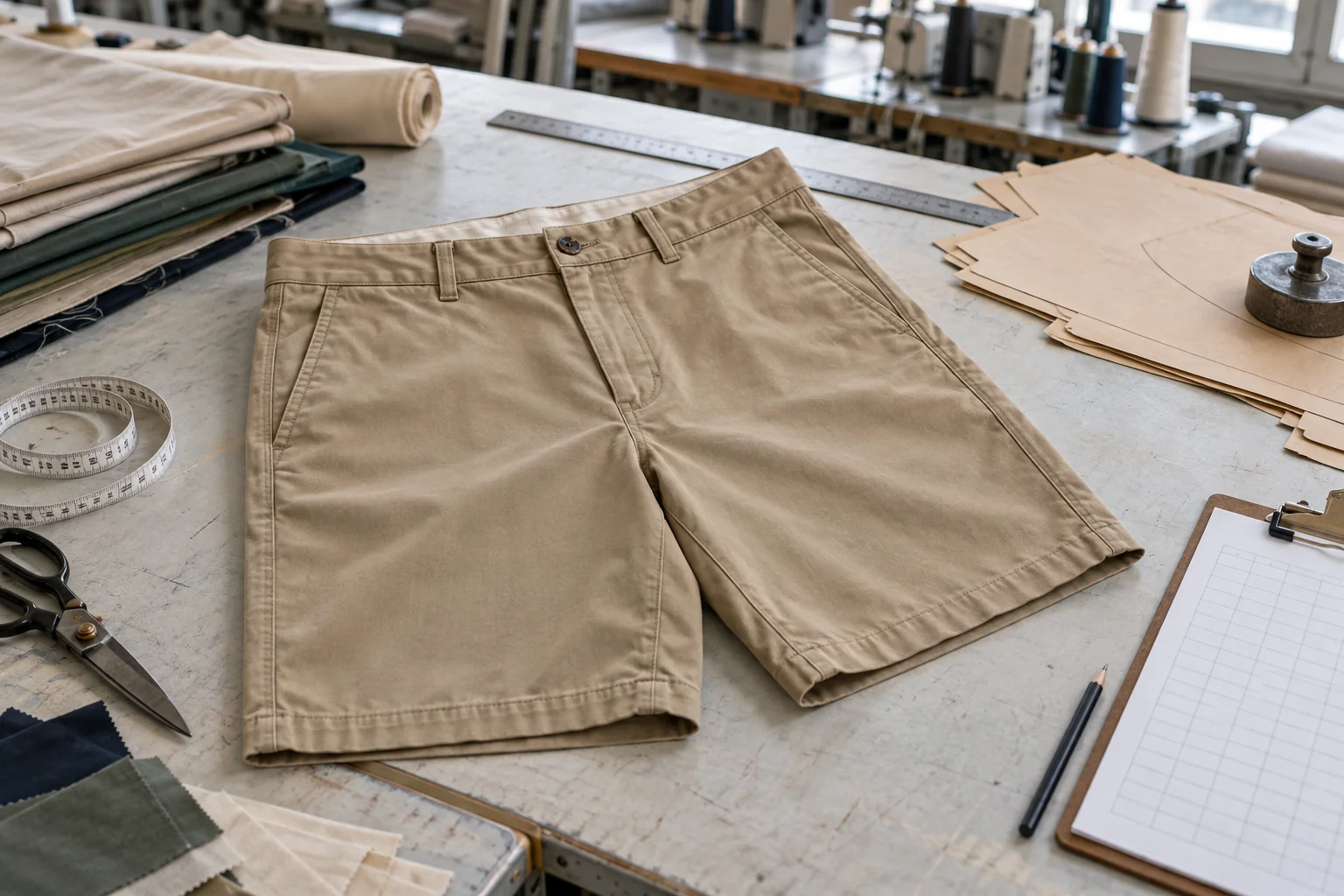
At a glance
Swipe the table sideways to compare both columns →
| Briefing point | Evidence to request | Decision or control |
|---|---|---|
| Silhouette and length | Front and back sketches, inseam, rise, thigh, and opening measurements | Define proportion and wearing position before pattern development |
| Fabric route | Identified twill, chino, jersey, or French terry swatch with finishing details | Approve weight, stretch, opacity, and dimensional behavior together |
| Waistband and drawcord | Construction section, elastic specification, cord route, and component samples | Check waist comfort, retention, adjustment, and attachment |
| Pockets and hems | Pocket bag dimensions, opening details, hem section, and sample photographs | Control access, bag visibility, edge appearance, and movement |
| Fit and production release | Reviewed sample, graded chart, material record, and approval log | Resolve deviations before cutting and inspect against the same references |
1. Give the custom shorts manufacturer a measurable silhouette
Start with the intended use and wearing position, then describe the shape in terms the pattern team can reproduce. State whether the shorts are tailored, straight, relaxed, or athletic, and whether the waistband sits at the natural waist or lower on the body. Provide front and back drawings showing side seams, pocket positions, waistband depth, and hem shape. Specify inseam alongside front rise, back rise, thigh width, and leg opening; an inseam alone cannot establish where the hem will sit. Identify the base size and explain whether measurements refer to the finished garment laid flat or to the wearer's body. If a reference sample is supplied, mark which features should be copied and which should change. Keep woven and knit versions as separate specifications when their fit allowances or construction routes differ.
Define each measurement location before asking the factory to develop a pattern or quote consumption. For inseam, identify the crotch seam intersection and the finished hem edge; for thigh width, state the distance below the crotch where the measurement is taken. Clarify whether the waistband is included in rise and outseam measurements, and describe how curved seams are measured. Add finished garment tolerances that reflect the intended fit and material rather than applying one tolerance everywhere. Show any curved hem, side vent, or stepped length on a dimensioned sketch. During review, assess standing, sitting, and walking positions because a short inseam can expose a pocket bag or restrict movement when combined with an unsuitable rise. Record the approved measurement method with the chart so later samples and bulk inspections use the same interpretation.
2. Choose fabric by structure and finished behavior
Separate fabric selection into woven and knit routes before comparing offers. For twill or chino shorts, request composition, weight in GSM, usable width, stretch direction where relevant, surface finish, and the supplier's article reference. Chino is not a complete technical specification, so attach a physical swatch that establishes the intended appearance and handfeel. For jersey or French terry, add knit structure, loop-side requirements, and any surface treatment. Identify which side faces outward and whether the fabric is supplied compacted or otherwise stabilized. Weight alone does not establish opacity, drape, or recovery. Ask the factory to comment on suitability for the proposed pocket weight, waistband, and leg opening. Retain a labeled swatch and record whether sample yardage represents the intended bulk article or is only a development substitute that still needs separate approval.
Review the proposed fabric in the finished condition expected at shipment, not just as an unprocessed swatch. Ask how laundering, garment washing, pressing, or other planned finishing may affect dimensions, shade, surface appearance, and seam behavior. Agree an assessment procedure and acceptance criteria for dimensional change and relevant stretch recovery, then review an actual-fabric garment through that route. Light colors may need an opacity check with the chosen pocketing, underwear contrast, and ordinary wearing tension. Jersey can reveal pocket outlines, while French terry can create bulk where bags, waistband seams, and hems overlap. Woven stretch fabric may require different pattern allowances from rigid twill even at a similar weight. Require written approval before changing the article, finish, or composition, and identify who carries any extra fabric commitment caused by separate mill minimums or replacement material.
3. Detail the waistband, elastic, and drawcord route
Choose the waistband construction explicitly: fixed woven waistband, fully elasticated casing, partial elastic, or a separate knit waistband. Provide finished waistband depth and a cross-section showing layers, seam positions, interfacing where used, and elastic placement. For elasticated shorts, specify the relaxed waist measurement and agree an extended measurement method with a defined load or extension condition; maximum hand stretching is not a repeatable inspection method. Confirm elastic width, joining method, and whether it is secured to prevent twisting or migration. For a fixed waistband, describe the fly, closure, internal finish, and required reinforcement. Check that the waistband construction suits the selected fabric rather than assuming one route works for both chino and French terry. Request a sample view of the inside assembly because exterior photographs do not reveal bulky joins, exposed edges, or unsecured components.
For drawcord styles, specify whether the cord is internal or external, its material, width or diameter, color, exit position, and visible length under an agreed waist condition. Show the cord path and clarify whether it runs freely around the waist or is anchored at a specified point. Detail buttonhole or eyelet openings, reinforcement, end treatment, and any tips or other attached components. Ask the factory to identify component availability and minimums before the sample is scheduled. During fitting, check adjustment range, ease of tying, contact against the body, and whether the cord can pull into the casing. Review attachment security and applicable destination-market requirements with the responsible compliance party. Do not treat a decorative reference photograph as proof that the proposed cord arrangement is suitable. Record the approved assembly and component references in the bill of materials.
4. Control pocket access, support, and bag visibility
Specify every pocket by type, position, opening length, usable depth, and construction rather than using a general instruction such as side pockets. For slanted or inseam pockets, show the opening endpoints and the bag outline relative to the waistband, side seam, and finished hem. Identify pocketing composition, weight, color, and whether a self-fabric facing prevents the bag material from showing at the opening. State where the bag is anchored and which opening edges or corners need reinforcement. For patch, welt, or zipped pockets, add dimensions, placement references, closure details, and interior finishing requirements. Ask the factory to review the arrangement against the chosen fabric: an unsupported bag can distort light jersey, while heavy pocketing can add unwanted stiffness to relaxed shorts. Keep functional capacity separate from exterior appearance so both can be reviewed during sampling.
Assess bag visibility on the finished shorts in standing, sitting, and walking positions, including when the pockets carry the intended everyday contents. A bag that clears the hem on a flat table may hang below it during wear or become visible through an angled opening. Define the required clearance from the hem and check it across the size range, particularly where inseam grading is limited. Do not solve exposure by shortening the bag without checking usable depth and retention. Review pocket outlines through light or close-fitting fabrics under agreed lighting, and check whether contrasting pocketing becomes visible when the opening spreads. For knit shorts, examine stretching or waviness around the opening after use and the agreed care procedure. Record any changes to facing depth, bag shape, anchoring, or reinforcement on the construction drawing, not only in sample comments.
5. Match the hem finish to fit and grading
Identify the finished hem construction with a section drawing and an actual sample reference where appearance matters. Woven shorts may use a turned and stitched hem with a specified turnback depth, edge finish, stitch position, and pressing requirement. Knit shorts may use a coverstitched hem or another agreed construction that accommodates the intended stretch. Distinguish the visible stitch rows from the internal raw-edge treatment; an overlocked edge alone does not define a finished coverstitched hem. Specify thread color, stitch appearance, and how the seam crosses bulky intersections. If the design includes side vents, show vent depth, reinforcement, and the relationship between front and back lengths. Review the finished opening for restriction, flare, tunneling, or waviness. Ask for a construction trial when the proposed fabric and hem combination has not yet been verified on a garment.
Fit the base size before treating the graded chart as ready for production. Review waist position, seat room, crotch shape, thigh ease, leg opening, pocket behavior, and hem level together, using the intended wearing position and a consistent fit subject or documented body measurements. Record corrections by measurement point and pattern area rather than asking for a general looser or shorter fit. Then agree grade increments for each size, including rises, waist, hip, thigh, opening, and inseam. Do not assume that every dimension increases by the same amount or that inseam must grow with each size. Request representative sizes to check the grading, especially at the range limits or where proportions change. Recheck pocket bag clearance and waistband adjustment in those sizes. Keep the final chart, pattern revision, and approved sample linked so later corrections do not overwrite unrelated decisions.
6. Set separate development and bulk release gates
Build the sample request around a complete brief, identified materials, base size, construction details, and a list of decisions the sample must resolve. MOQ 100 pcs per color per design is the garment planning requirement; confirm the size allocation and keep fabric, elastic, drawcord, and hardware minimums separate. Samples take approximately 7 days once the brief and materials are confirmed. Allow additional time for sourcing unavailable components, shipping, testing, or revisions rather than treating the sample estimate as an arrival commitment. If substitute fabric or trims are used, label the sample as developmental and list which approvals remain open. Consolidate fit, appearance, and construction comments into one revision record with photographs and measurement findings. Ask the factory to acknowledge each change and identify any effect on consumption, production method, material booking, or the quoted commercial assumptions.
Before bulk cutting, approve a production reference made with the intended fabric and trims through the agreed finishing route. The release record should identify the material article and color, pattern version, graded measurement chart, pocket and waistband details, hem construction, labels, and packaging instructions. Resolve open deviations or record a specific written concession rather than allowing an informal sample comment to become a bulk instruction. Agree checks at material receipt, early sewing, finishing, and final inspection, with responsibility for reporting and correcting nonconformities. Include finished measurements, shade consistency, pocket exposure, waistband behavior, and hem appearance in the inspection scope. Bulk timing depends on quantity as well as material readiness, production capacity, and approval dates. Request a schedule tied to these dependencies and require review before substitutions or construction changes proceed. Retain an approved reference for shipment inspection and subsequent repeat-order comparisons.
Send these details together
- Define the wearing position, base size, silhouette, inseam, rises, thigh, and leg opening with measurement methods.
- Identify the woven or knit fabric article, composition, weight, finish, usable width, and relevant performance criteria.
- Document waistband layers, elastic measurement conditions, drawcord routing, reinforcement, and component references.
- Specify pocket openings, bag dimensions, facing, anchoring, usable capacity, and visibility checks during wear.
- Approve hem construction, base-size fit, grade increments, and representative sizes against a controlled chart.
- Confirm MOQ 100 pcs per color per design, separate material commitments, sample limitations, and written bulk release gates.
This guide covers buyer-side briefing for woven and knit men's custom shorts made through a China OEM, including twill, chino, jersey, and French terry. It does not cover denim jorts or denim-specific wash development. MOQ 100 pcs per color per design is the starting garment requirement; confirm size allocation and separate material minimums. Samples take approximately 7 days once the brief and materials are confirmed; bulk timing depends on quantity, materials, capacity, and approvals. Reprint attribution: clothingmanufacturerchina.com.
Prepare a quote briefThe RFQ form prepares a WhatsApp message for you to review. For files, email sales@clothingmanufacturerchina.com.
Questions before sampling
Can one technical brief cover both woven and knit shorts?
A shared design outline can establish the intended look, but woven and knit versions should have separate material and construction specifications. Stretch, recovery, seam behavior, waistband support, and pocket weight can require different patterns or allowances. Ask the factory to identify which measurements and operations change, then approve each version in its actual fabric rather than transferring approval from one to the other.
How do I prevent pocket bags from showing below a short inseam?
Show the bag outline and required hem clearance on the drawing, then review the actual garment during standing, sitting, and walking. Check representative sizes and intended pocket contents. Adjust bag shape, anchoring, or placement where necessary, but preserve the agreed usable depth. A flat measurement alone is insufficient because fabric stretch, drape, and movement can change where the bag hangs.
What does MOQ 100 pcs per color per design include?
It is the starting garment quantity for each color and design, not a promise that every fabric or trim is available at that volume. Confirm the size breakdown and ask for separate minimums for custom fabric, dyed elastic, drawcords, and other components. Record any surplus purchasing, ownership, and storage terms before accepting the material commitment.
Does the approximately 7-day sample timing include bulk approval?
No. Samples take approximately 7 days once the brief and materials are confirmed, but shipping, revisions, additional size reviews, and material qualification can require more time. A developmental sample with substitute components does not close all approval points. Agree the required review stages and release bulk only when the intended materials, construction, fit, and graded measurements have been accepted.
What are your MOQ, sample time and bulk lead time?
MOQ is 100 pcs. Samples take 7 days. Bulk production lead time depends on order quantity.