How to Brief Clothing Elastic Waistbands for Menswear
A useful elastic waistband brief translates the intended wearing experience into measurable construction instructions. For menswear joggers, shorts, and lounge pants sourced through a China OEM factory, specify the elastic width and type, finished waistband dimensions, enclosure method, drawcord route, stitch construction, and size grading together. These decisions affect comfort, dressing ease, rise, pocket behavior, and production consistency. Start with a reference garment and a dimensioned sketch, then confirm the factory's proposed materials before sampling. MOQ is 100 pcs, samples take approximately 7 days once the brief and materials are confirmed, and bulk timing depends on quantity.
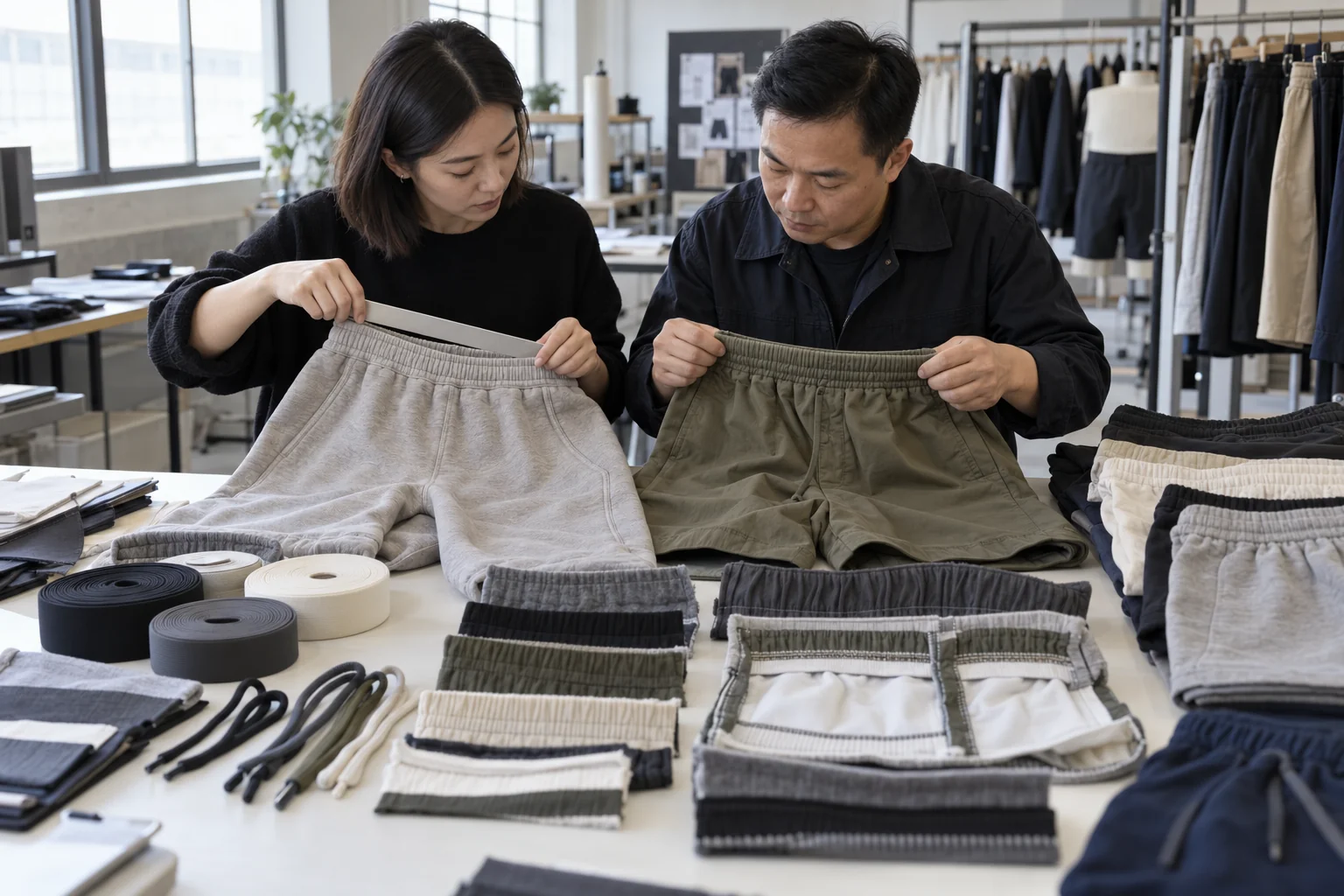
At a glance
Swipe the table sideways to compare both columns →
| Waistband decision | What to specify | Sample check |
|---|---|---|
| Elastic width and type | Nominal elastic width, material reference, knitted or woven construction, and intended firmness. | Compare the sample with the approved elastic reference and check comfort, folding, and usable stretch. |
| Enclosed or exposed finish | Finished waistband height, casing fabric or exposed elastic face, seam placement, and attachment method. | Inspect skin contact, casing clearance, seam bulk, and whether the elastic twists or rolls. |
| Drawcord channel | Internal or external exits, channel position, cord dimensions, reinforcement, and any anchoring. | Pull both ends, check passage through the channel, and inspect exit reinforcement and cord security. |
| Stitch method and recovery | Seam construction, stitch layout, suitable stretch allowance, and an agreed recovery review procedure. | Stretch the waistband through its intended use range and inspect stitches and residual deformation. |
| Rise and size grading | Waist measurement definitions, waistband contribution to rise, elastic cut lengths, and size-specific targets. | Review dressing ease, seated fit, waistband position, and proportional fit across selected sizes. |
1. Define the elastic material and measurement rules
Begin the brief with the product, intended wearer, and use case rather than a generic instruction such as soft elastic waist. A men's training jogger may need a different holding feel from lounge pants, while casual shorts may require enough support for loaded pockets without excessive pressure. State the nominal elastic width, proposed construction such as knitted or woven elastic, preferred hand feel, and any material requirements. Attach a physical reference when available and ask the China OEM factory to identify the proposed elastic before sampling. Keep elastic width separate from finished waistband height because casing clearance, seam allowances, and top-edge construction can make those dimensions different.
Define how every waist measurement is taken. Identify whether the relaxed waist is measured flat across the garment or around the full circumference, whether the drawcord is loose, and where the tape is positioned. If you specify a stretched waist measurement, agree on the checking method and force or handling conditions instead of asking an operator to pull as hard as possible. Include measurement tolerances that the factory has reviewed for feasibility. Record the elastic cut length and joining allowance in the approved production specification when finalized, but do not assume the cut length equals the finished relaxed circumference. Gathering, elastic tension, stitching, and fabric resistance can change the assembled result.
2. Choose the enclosure and map the drawcord channel
Choose an enclosed or exposed waistband deliberately and illustrate the construction in a cross-section sketch. For enclosed elastic, specify the casing fabric, finished height, elastic clearance, attachment seam, joining location, and any securing stitches intended to limit twisting. Too much clearance can let the elastic rotate, while too little can restrict movement or produce uneven gathering. For exposed elastic, identify the approved face, width, edge feel, join finish, and any logo placement requirements. Ask the factory to show how the join and attachment seam will sit against the body. Avoid treating exposed branded elastic as an interchangeable trim, because artwork, hand feel, and stretch behavior all require approval.
Map the drawcord independently from the elastic so the factory knows whether it runs through a separate channel, shares the casing space, or follows another approved construction. Specify internal or external exits, their position relative to center front, reinforcement, cord diameter or width, finished end treatment, and intended visible length. State whether the cord is anchored and where, since an anchor changes adjustment and replacement behavior. Check that stitch lines do not accidentally trap the cord or narrow its passage. Companion reading in How to Brief Clothing Pocket Construction helps coordinate pocket bags and openings near the waistband, especially when bulky pocket assemblies or loaded pockets could distort the front waist.
3. Specify stitch construction and practical recovery checks
Ask the factory to propose a stitch method suited to the shell fabric, elastic, and required extension, then document the approved seam construction and visible stitch layout. Show the number and position of stitch rows, whether stitches pass through the elastic, and how seam ends and the elastic join are secured. A waistband with several rows sewn through stretched elastic behaves differently from a free-moving elastic inside a casing, even when both use the same nominal width. Review puckering, skipped stitches, seam bulk, and thread breakage on the sample under realistic extension. How to Brief Clothing Sleeve and Hem Construction is useful companion reading when coordinating stretch-sensitive seams and a consistent finish across the garment.
Describe recovery as an expectation to verify, not as an unsupported laboratory claim. For example, ask the factory to agree on a repeatable handling check that records the relaxed measurement before stretching, the extension used, the repetition count, and the resting time before remeasurement. Set acceptance criteria only after reviewing material capability and the sample; do not invent a recovery percentage and present it as proven performance. If laundering matters, agree on the care procedure and review method, then record actual observations. Check for residual growth, rolling, twisting, and loss of holding feel. Any formal test or certification requirement needs an identified method, responsible testing party, and supporting documentation.
4. Coordinate rise, size grading, and production approval
Review the waistband as part of the trouser fit rather than as an isolated component. State whether front and back rise measurements include the waistband, identify the intended wearing position, and show the top-edge reference on the measurement diagram. Increasing waistband height without adjusting the rise can move the top edge or alter crotch position and seated comfort. During fitting, check standing, sitting, bending, and pulling the garment over the hips with the drawcord loosened. Observe whether the waistband folds under the abdomen, gaps at the back, or pulls pocket openings out of shape. How to Handle Clothing Fit Comments provides companion guidance for turning these observations into clear, prioritized sample revisions.
Create a size-specific grading plan for relaxed waist, intended extension, elastic cut length, and drawcord length rather than applying one increment blindly to every component. Confirm that each size allows dressing ease and appropriate holding tension, and review selected sizes beyond the base sample where the fit risk warrants it. Consolidate comments into one revision sheet that identifies the sample version, measurement changes, construction changes, and approved materials. For this sourcing brief, MOQ is 100 pcs; confirm how the order can be allocated across sizes and colors before commitment. Samples take approximately 7 days once the brief and materials are confirmed. Bulk timing depends on quantity and should be reconfirmed against the approved specification and production plan.
Send these details together
- Provide a waistband sketch, intended wearing position, elastic material reference, nominal width, finished waistband height, and clear measurement definitions before requesting the sample.
- Confirm whether the elastic is enclosed or exposed, how its ends are joined, where securing stitches sit, and which surfaces or seams contact the wearer.
- Document the complete drawcord route, exit positions, reinforcement, cord dimensions, end treatment, anchoring decision, and adjustment checks with the garment on the body.
- Agree on stretch and recovery review conditions, inspect seam behavior, and record observed sample performance without substituting unsupported test results or certification claims.
- Approve rise interaction, size grading, material identity, and the final revision sheet; confirm the 100 pcs MOQ allocation and obtain a quantity-based bulk schedule.
This informational buying resource covers briefing and sample approval for menswear China OEM elastic waistbands on joggers, shorts, and lounge pants. It does not provide laboratory results, certify products, or replace buyer-specific technical review. Reprint permission is granted with attribution to clothingmanufacturerchina.com and sales@clothingmanufacturerchina.com.
Prepare a quote briefThe RFQ form prepares a WhatsApp message for you to review. For files, email sales@clothingmanufacturerchina.com.
Questions before sampling
What should I send a China OEM factory to brief an elastic waistband?
Send a technical sketch, product use case, size chart, measurement definitions, and an elastic reference if available. Identify elastic width and type, finished waistband height, enclosed or exposed construction, drawcord routing, stitch layout, and rise measurement rules. Include photographs of the desired appearance and explain which features are essential rather than leaving the factory to copy an entire reference garment. Ask for confirmation of material availability and construction feasibility before starting the sample clock.
How can I specify waistband recovery without claiming unverified performance?
State the intended holding feel and ask for an agreed, repeatable sample review procedure. Record the starting measurement, extension conditions, repetitions, rest period, and resulting measurement, along with visible rolling or distortion. These observations support sample approval but should not be described as accredited laboratory results. If your purchase requires formal performance evidence, define the applicable test method and documentation separately and verify the actual report before making any claim.
What are the MOQ and timing expectations for these menswear waistbands?
MOQ is 100 pcs for the garment order, with the size and color allocation to be confirmed with the factory. Samples take approximately 7 days once the brief and materials are confirmed. Material changes, unresolved construction details, or additional revisions can affect the next approval step, so keep a dated specification and decision log. Bulk timing depends on quantity; request a production schedule for the approved order rather than assuming the sample timeline applies to manufacturing.
What are your MOQ, sample time and bulk lead time?
MOQ is 100 pcs. Samples take 7 days. Bulk production lead time depends on order quantity.