How to Approve Clothing Print Strike-Offs
A clothing print strike-off is an ink-on-fabric submission used to review a proposed decoration before bulk printing. For buyers sourcing men's T-shirts, polos and knits from a China OEM factory, approval should identify the exact artwork, fabric, colorway and print process being accepted. Treat the strike-off as a controlled production reference, not simply a pleasing photograph. Review color, coverage, handfeel, registration and practical wash or rubbing observations, then connect that decision to placement on an actual garment. MOQ is 100 pcs; samples take approximately 7 days once the brief and materials are confirmed, while bulk timing depends on quantity.
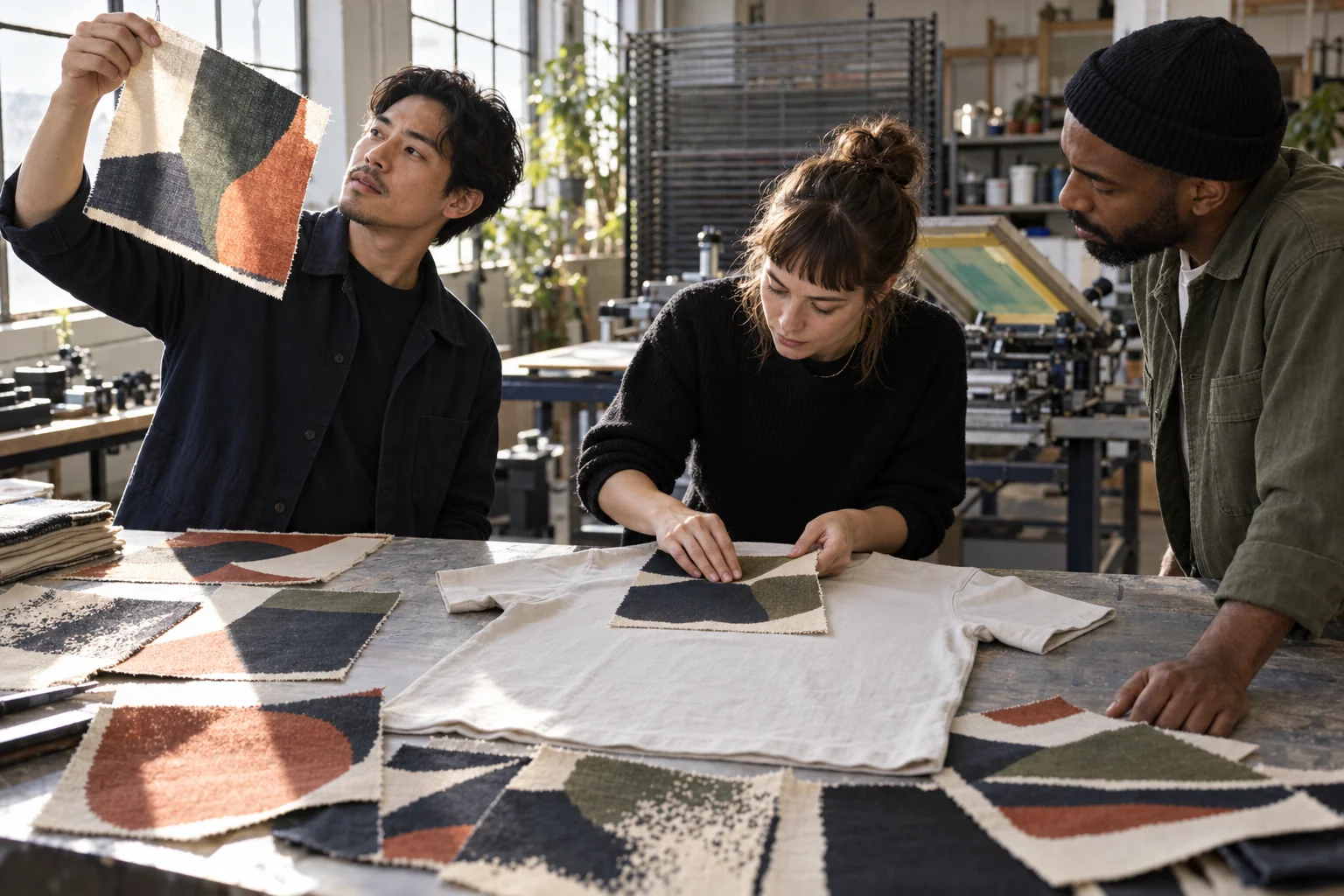
At a glance
Swipe the table sideways to compare both columns →
| Strike-off decision | What to specify | Sample check |
|---|---|---|
| Confirm submission identity | Artwork revision, fabric reference, colorway, print method and sample ID | Match the strike-off label to the current purchase brief before reviewing appearance |
| Accept or revise color | Physical color target, agreed viewing conditions and acceptable visual variation | Compare the dried or cured print with the target on the intended fabric |
| Approve print execution | Artwork dimensions, registration expectations, underbase coverage and detail priorities | Inspect edges, fine lines, opacity and visible underbase around the design |
| Confirm placement separately | Measurement anchors, print orientation and size-grading instructions | Check a decorated garment or placement sample rather than relying on a loose swatch |
| Release or hold bulk decoration | Written decision, retained reference, required revisions and verification plan | Confirm handfeel and documented wash or rubbing observations before release |
1. Define the submission before the factory prints it
Start with a strike-off request that connects the print to the garment you intend to buy. Identify the men's T-shirt, polo or knitted style, artwork filename and revision, intended print dimensions, fabric composition, construction, weight reference and body color. Ask whether the submission uses production-intent fabric or a substitute, and have any substitution clearly labeled. A smooth jersey swatch cannot fully represent ink appearance on textured pique or a stretch knit. State the proposed decoration process and ask the factory to flag artwork details that may be difficult to reproduce. Include the purchasing baseline: MOQ is 100 pcs, with size and color splits to be confirmed before ordering.
Agree on the purpose and boundaries of each submission before the sample clock starts. Samples take approximately 7 days once the brief and materials are confirmed; artwork revisions, unavailable fabric or additional evaluation can require a revised schedule. Bulk timing depends on quantity and should be confirmed separately. Request enough labeled material to support visual review, an untouched retained reference and any agreed wash or rubbing observations. For process selection, read Pigment Print vs Reactive Print Tees alongside this guide, but do not assume that either route is suitable for every fiber blend or artwork. Confirm the proposed process with the factory and identify any unresolved material questions before authorizing sampling.
2. Assess color, registration and underbase on the actual fabric
Review the physical strike-off after the factory's intended drying or curing steps, using agreed viewing conditions and a consistent background. Supply a physical color target where possible and describe a Pantone reference, if used, as a communication target rather than a guaranteed match across all fabrics and print systems. Fabric shade, surface texture, ink opacity and finishing can change the perceived result. Give actionable feedback such as slightly too warm, visibly darker than the retained target or insufficient contrast against the garment body. Photographs and screen previews are useful for discussion, but lighting, exposure and display settings make them unreliable as the sole basis for final color approval.
Inspect multicolor registration at normal viewing distance and close up, especially around small lettering, outlines and negative spaces. Ask the factory to identify any intentional trapping or overlap so it is not mistaken for an alignment defect. On dark fabrics, review whether an underbase is proposed, how it supports coverage and whether it is visible beyond the top colors. A heavier underbase may improve opacity while changing softness and flexibility, so approve the trade-off rather than reviewing color alone. Record the accepted artwork dimensions and any agreed measurable limits for alignment or edge quality. Avoid inventing a universal tolerance; the practical limit depends on the artwork, substrate and chosen process.
3. Separate garment placement from surface and wear observations
Do not use a loose strike-off as the only approval for decoration placement. Request a decorated garment or a separate placement sample that shows the actual print size, orientation and distance from defined garment landmarks. For T-shirts, specify the measurement anchor clearly rather than writing only center chest. For polos, account for the placket, collar opening and any pocket. On knits, check how the decoration sits when the garment is laid flat without distortion and when worn or supported appropriately. How to Brief Clothing Decoration Placements provides companion reading for measurement instructions. State whether placement and artwork size remain constant across the size range or require approved grading rules.
Assess handfeel by comparing the printed area with adjacent unprinted fabric and, where available, an accepted reference made with the same process. Note stiffness, tackiness, surface roughness, reduced drape or cracking during reasonable handling without claiming that a casual check predicts full service life. If you conduct a wash observation, record the care procedure, detergent, drying approach and number of cycles actually performed. For informal dry or wet rubbing observations, identify the cloth and procedure used and describe visible transfer honestly. These observations are not standardized crocking scores or laboratory certification. If a customer requires formal colorfastness or durability testing, agree on the method, acceptance criteria, sample identity and testing responsibility before bulk release.
4. Issue a traceable decision and protect the approved reference
Send one consolidated decision that identifies the strike-off ID, artwork revision, garment style, fabric reference, body color and date. Use an unambiguous status such as approved for the stated scope, revise and resubmit, or rejected. If approval covers color and handfeel but not placement, say so explicitly and keep bulk decoration on hold until the remaining checks are cleared. Attach annotated photographs for locating concerns, while identifying the physical sample as the visual reference where agreed. How to Approve Clothing Samples is useful companion reading for combining decoration decisions with garment fit, construction and finishing reviews. Do not allow a general sample approval message to conceal an unresolved print issue.
Keep a labeled approved reference with the buyer and arrange a matching reference for the factory, with both parties agreeing how differences between copies will be handled. Before bulk printing, confirm that the planned fabric, ink system, artwork and underbase approach remain consistent with the approval. Require notification and an appropriate new review if a relevant input changes, rather than permitting an undocumented substitute. Agree on an initial production check and subsequent inspection points that compare output with the approved reference. Bulk timing depends on quantity, and any repeat sampling should be incorporated into the schedule. A strike-off approval is a controlled manufacturing decision, not a promise that every production piece will be identical without inspection.
Send these details together
- Confirm that the strike-off is labeled with its sample ID, current artwork revision, intended fabric, garment color and print process; document any substitute material before evaluating it.
- Compare physical color, opacity, registration, edge detail and underbase visibility under agreed conditions, then write specific revision comments rather than asking only for a better match.
- Approve garment placement through clear measurement anchors and a suitable garment sample, including any different instructions for sizes, polos, pockets or textured knitted surfaces.
- Record handfeel and any wash or rubbing observations with the procedure actually used; request agreed formal testing separately if your customer or market requires it.
- Issue a scoped written approval, retain matching references and confirm that bulk decoration remains on hold until all required revisions and verification steps are closed.
This informational buying resource covers approval of clothing print strike-offs and ink-on-fabric submissions for China OEM men's T-shirts, polos and knits before bulk decoration. It does not provide laboratory results, guaranteed color matches or certification claims. MOQ is 100 pcs; samples take approximately 7 days once the brief and materials are confirmed, and bulk timing depends on quantity. Reprint permission is granted with attribution to clothingmanufacturerchina.com and sales@clothingmanufacturerchina.com.
Prepare a quote briefThe RFQ form prepares a WhatsApp message for you to review. For files, email sales@clothingmanufacturerchina.com.
Questions before sampling
Can we approve a print strike-off from photos alone?
Photos can help confirm artwork content, identify obvious defects and discuss revision points, but they cannot reliably establish physical color, handfeel or subtle underbase effects. For final approval of those features, review a labeled physical submission on the intended fabric. If commercial urgency requires a limited remote decision, state exactly what is accepted, what remains unverified and whether bulk decoration must stay on hold.
Does one approved strike-off cover every garment color and fabric?
Not automatically. Body shade, fiber content, surface structure and print coverage can affect color appearance, detail and handfeel. Ask the factory which combinations require separate submissions and document the agreed approval coverage. In particular, a print accepted on light jersey should not silently authorize the same artwork on dark pique with a different underbase. Review relevant changes before production proceeds.
What are the MOQ and expected sampling and bulk timelines?
MOQ is 100 pcs, with the proposed style, size and color breakdown to be confirmed during the brief. Samples take approximately 7 days once the brief and materials are confirmed. That estimate should not be treated as a guarantee covering shipping, multiple revision rounds or additional testing. Bulk timing depends on quantity; request a production schedule after the approval requirements and order details are clear.
What are your MOQ, sample time and bulk lead time?
MOQ is 100 pcs. Samples take 7 days. Bulk production lead time depends on order quantity.