How to Brief Clothing Labels and Trims for OEM Production
A factory-ready clothing label and trim brief connects every branded component to a specific menswear style, material, placement, and approval reference. It should cover main labels, size labels, care labels, hangtags, woven tabs, buttons, zippers, and drawcords without leaving purchasing or sewing teams to interpret a mood board. Start with a component register, attach controlled artwork files, and define what must be checked on the physical sample. MOQ is 100 pcs; confirm how the garment order and any separately sourced custom components affect purchasing quantities. Samples take approximately 7 days once the brief and materials are confirmed, while bulk timing depends on quantity.
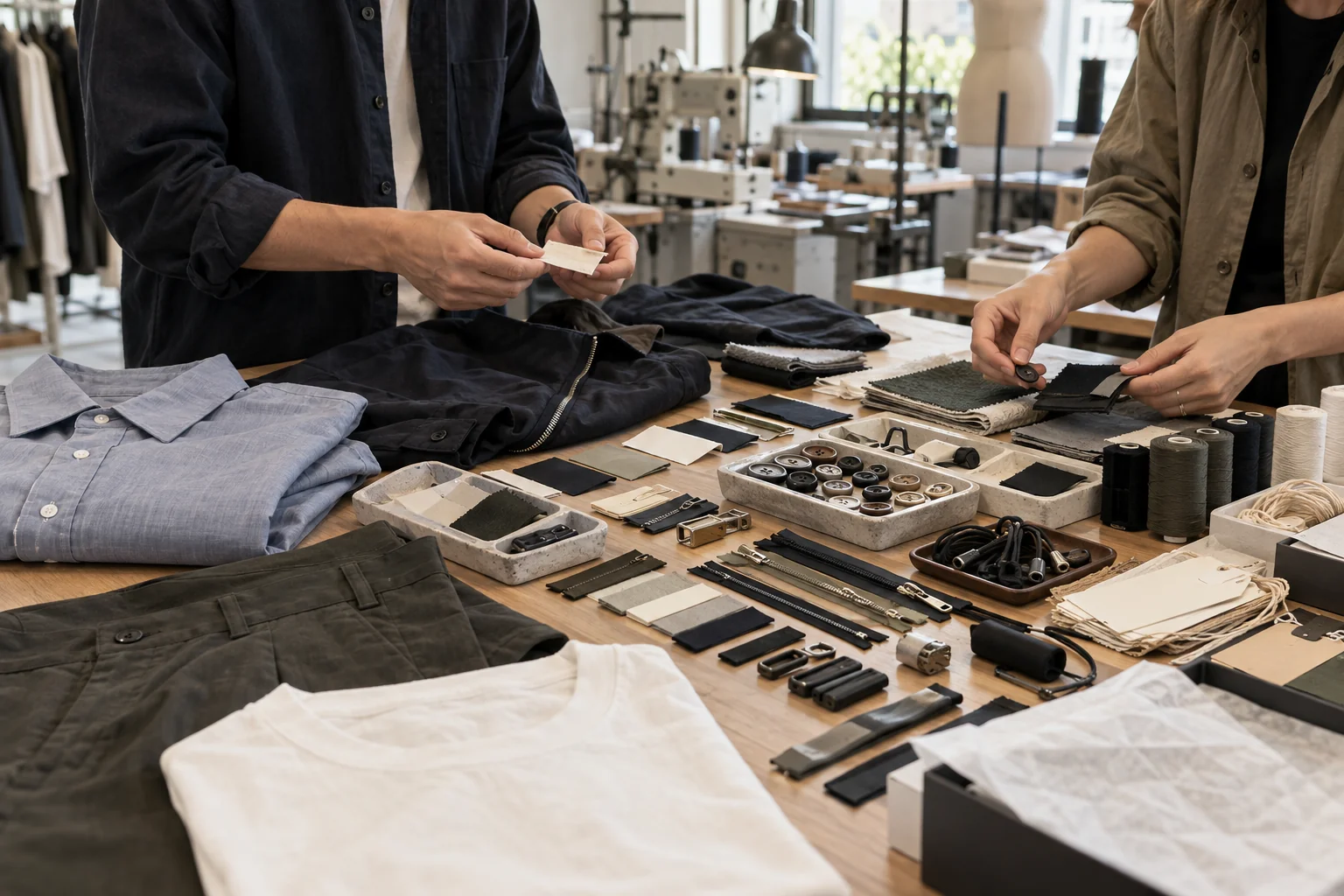
At a glance
Swipe the table sideways to compare both columns →
| Brief item | What to send the factory | What to approve on sample |
|---|---|---|
| Main labels, size labels, and woven tabs | Vector artwork, finished dimensions, fold type, material, color references, size mapping, and measured placement drawings. | Logo clarity, correct size, fold orientation, exposed dimensions, seam capture, comfort, and position. |
| Care labels | Buyer-approved text and symbols for each destination market, composition data, languages, layout, and attachment location. | Exact wording, symbol reproduction, legibility, label sequence, size, and sewing clearance. |
| Hangtags | Print-ready artwork, stock specification, dimensions, hole position, attachment method, and SKU or barcode data. | Print alignment, stock feel, finish, attachment security, product data, and barcode readability where applicable. |
| Buttons and zippers | Material, dimensions, finish, supplier reference if required, button attachment details, and zipper type and length. | Appearance, function, attachment, compatibility with garment construction, and matching across the approved set. |
| Drawcords | Construction, fiber or material preference, diameter or width, finished length, color, end treatment, and channel details. | Hand feel, threading, adjustment, exposed length, end security, and interaction with eyelets or buttonholes. |
1. Build a component register before requesting samples
Create one trim register for each menswear style and give every component a unique reference that appears in the tech pack, artwork filename, and approval record. Separate the main brand label from the size label and care label, even when they will be stitched into the same seam. List hangtags, woven tabs, buttons, zippers, and drawcords individually rather than grouping them under a general branding note. Record the quantity used per garment, colorway, size applicability, and intended supplier if one is specified. This gives the factory a purchasing basis and helps expose omissions such as spare buttons, zipper pulls, or hangtag fasteners before costing.
State the garment order quantity and size breakdown alongside the register. The garment MOQ is 100 pcs, but ask the factory to confirm whether a selected custom trim carries a separate supplier purchasing minimum, setup charge, or leftover inventory requirement. Do not assume that 100 garments means every custom component can be ordered in exactly 100 units. For shared labels across several styles, identify which specifications are genuinely identical before proposing a combined purchase. Ask for any proposed stock alternative to be shown with its actual dimensions, material, and color reference. Approve substitutions explicitly so a sourcing convenience does not silently change the product.
2. Send controlled artwork and measurable material specifications
Supply editable vector artwork for logos and line graphics when available, together with a reference PDF that shows the intended appearance. Outline fonts or provide the required font information through an appropriate licensed workflow, and distinguish finished dimensions from artwork boundaries, folds, and sewing allowances. Label every file with the style or component reference and revision date. For printed hangtags, show front and back, stock requirements, hole position, and any finish that affects cost or processing. For woven main labels and tabs, specify the fold construction and visible logo area. Ask the factory to review small text and fine details before treating the digital file as production-ready.
Describe materials in terms the factory can purchase and evaluate, not only with subjective words such as premium or soft. For labels, specify the preferred construction, backing if needed, edge treatment, and acceptable contact feel against skin. For buttons, give diameter, thickness where important, hole arrangement, material, and finish. For zippers, define the application, length measurement method, chain type, opening configuration, tape color, and puller. For drawcords, define width or diameter, construction, length, color, and end treatment. Use a physical reference or an agreed color standard where possible, while recognizing that woven yarn, printed paper, plastic, and metal can show different appearances under the same lighting.
3. Define placement and assign legal content responsibility
Show label and trim locations on annotated garment drawings, then dimension them from stable construction points such as a seam, center back, or finished edge. A note saying inside neck is not enough to control the main label's height, orientation, and relationship to the size label. Specify whether measurements refer to the label center, its top edge, or its visible edge after folding. For woven tabs, show the amount exposed and the section captured in the seam. For hangtags, identify the attachment point and whether the fastener may touch or pierce fabric. Define placement by size when grading changes the intended visual balance or functional access.
Keep responsibility for required consumer information explicit. The buyer should supply and approve the final legal content for the intended sales markets, with advice from qualified compliance specialists where needed. This includes applicable fiber composition wording, care instructions, origin statements, responsible business details, and language requirements. The factory can reproduce approved content and flag apparent inconsistencies, but a familiar-looking care symbol layout is not proof of legal suitability. Check that the care instructions reflect the finished garment, including applied trims and finishes, rather than the base fabric alone. Do not request certification marks or performance claims unless their use is supported by valid documentation and appropriate authorization.
4. Approve the physical sample before releasing bulk components
Set up sample approval as a comparison against the register, drawings, and current artwork revision. Samples take approximately 7 days once the brief and materials are confirmed; clarify material availability and any custom sourcing steps before planning your review date. Request clear photographs for an initial layout check, but use a physical sample when feel, scale, attachment, or function matters. Inspect main and size labels together, read the care label in its sewn position, and check whether folds or seams hide text. On hangtags, compare product information with the actual style and size. If barcodes are used, check the encoded data and practical scan readability.
Review functional trims on the garment, not only as loose components. Operate zippers, inspect button attachment and buttonhole compatibility, and adjust drawcords through their actual channels and openings. Record observed issues without describing these checks as laboratory testing or evidence of certification. Where formal testing is needed, agree the applicable method, sample scope, acceptance criteria, and responsible provider separately. Send one consolidated approval or correction list with photographs and component references, then identify the approved sample and file revision for bulk use. Bulk timing depends on quantity; obtain a schedule that reflects sourcing and assembly. Require renewed approval for material, finish, supplier, or construction changes affecting the agreed specification.
Send these details together
- List every label and trim by component reference, garment style, colorway, size applicability, and quantity per garment, including small attachment items that are easy to omit.
- Attach current artwork and placement drawings with finished dimensions, fold details, sewing allowances, material requirements, color references, and a visible revision identifier.
- Confirm the 100 pcs garment MOQ, any separate custom component purchasing conditions, and who owns or stores unused branded trims after production.
- Obtain buyer approval for legal wording, languages, care instructions, product data, and any authorized marks before the factory purchases or prints bulk components.
- Approve physical appearance, placement, comfort, and function against one controlled reference, and resolve substitutions or corrections before agreeing the bulk production release.
This buying resource covers briefing and sample approval for menswear OEM labels and trims; it is not legal advice, a laboratory report, or a certification guarantee. Reprint permission is granted with attribution to clothingmanufacturerchina.com and sales@clothingmanufacturerchina.com.
Prepare a quote briefThe RFQ form prepares a WhatsApp message for you to review. For files, email sales@clothingmanufacturerchina.com.
Questions before sampling
What files should I send for clothing labels and hangtags?
Send editable vector artwork where available, a reference PDF, and a specification showing finished dimensions, material, colors, folds, and attachment details. Include front and back layouts for two-sided items and a clear revision identifier for each file. Supply variable information, such as sizes and SKU data, in an organized table. Ask the factory to flag reproduction limits before sampling, especially for small woven text or fine printed details.
Does MOQ 100 pcs apply to every custom label or trim?
The garment MOQ is 100 pcs. Separately sourced custom labels, branded buttons, zipper pullers, or printed packaging components may have their own supplier purchasing conditions. Ask for those conditions in the quotation rather than assuming an exact match to garment quantity. Confirm setup costs, surplus quantities, storage arrangements, and possible approved stock alternatives before committing to a component that could increase cost or delay sampling.
How long do samples and bulk production take after the trim brief is sent?
Samples take approximately 7 days once the brief and materials are confirmed, not automatically from the first inquiry. Missing artwork, unresolved care text, or unavailable custom components can prevent that starting point from being reached. Bulk timing depends on quantity, so request a schedule after specifications and purchasing requirements are settled. Include time for buyer review and corrections, and distinguish sample completion from shipping and arrival dates.
What are your MOQ, sample time and bulk lead time?
MOQ is 100 pcs. Samples take 7 days. Bulk production lead time depends on order quantity.