How to Approve Clothing Color Lab Dips
A clothing color lab dip is a small dyed fabric or yarn submission used to agree on a target shade before bulk dyeing. For menswear buyers sourcing China OEM T-shirts, polos and knits, approval should identify the physical color reference, actual substrate, viewing conditions and written acceptance criteria. Treat the approved dip as a controlled production reference, not proof that every bulk lot will match automatically. This guide explains how to brief, compare, record and release shades while keeping fabric construction, trims and multi-colorway allocation connected to the decision.
At a glance
Swipe the table sideways to compare both columns →
| Lab-dip decision | What to specify | Sample check |
|---|---|---|
| Set the color reference | Physical standard, reference system if used, colorway code and reference priority | Confirm each submission carries the correct reference, option code and date |
| Define viewing conditions | Agreed daylight and secondary light sources, neutral surroundings and comparison method | Compare reference and dip together and note changes under each light |
| Confirm the substrate | Fiber blend, yarn or fabric construction, target GSM and planned finish | Check that the dip represents the intended production material |
| Coordinate garment components | Main fabric, rib, collar, placket, thread and other visible trim relationships | Review components together and distinguish matching from intentional contrast |
| Release colorways for bulk | Approved option per colorway, revision status, release authority and bulk check requirements | Verify the factory acknowledged the approved master and any hold conditions |
1. Build a color brief tied to the actual production material
Start with one authoritative color target for each menswear colorway. A physical swatch or current physical color standard is more useful for final approval than a screen image, because monitors, cameras and image compression can change the apparent shade. State the reference name or code, identify the owner of the master standard and tell the factory which reference takes priority if supplied materials conflict. Give every T-shirt, polo or knit colorway a stable code that appears on the purchase specification and lab-dip submission. How to Brief Clothing Colorways is useful companion reading for organizing names, references and allocations before the factory develops shades.
Specify the intended fiber composition, fabric construction, target GSM and finishing route alongside the color brief. A shade developed on one cotton jersey does not automatically transfer unchanged to a heavier jersey, a cotton-polyester blend or a textured pique. Surface texture, opacity, yarn character and finishing can influence perceived color, so request a representative production substrate and ask the factory to disclose substitutions. For yarn-dyed knits, agree whether approval also needs a knitted swatch showing the intended construction. Read How to Specify Clothing Fabric GSM when setting these material requirements. Record whether your requested GSM applies to finished fabric so later comparisons use the same basis.
2. Compare lab dips under controlled lighting and define acceptable shade
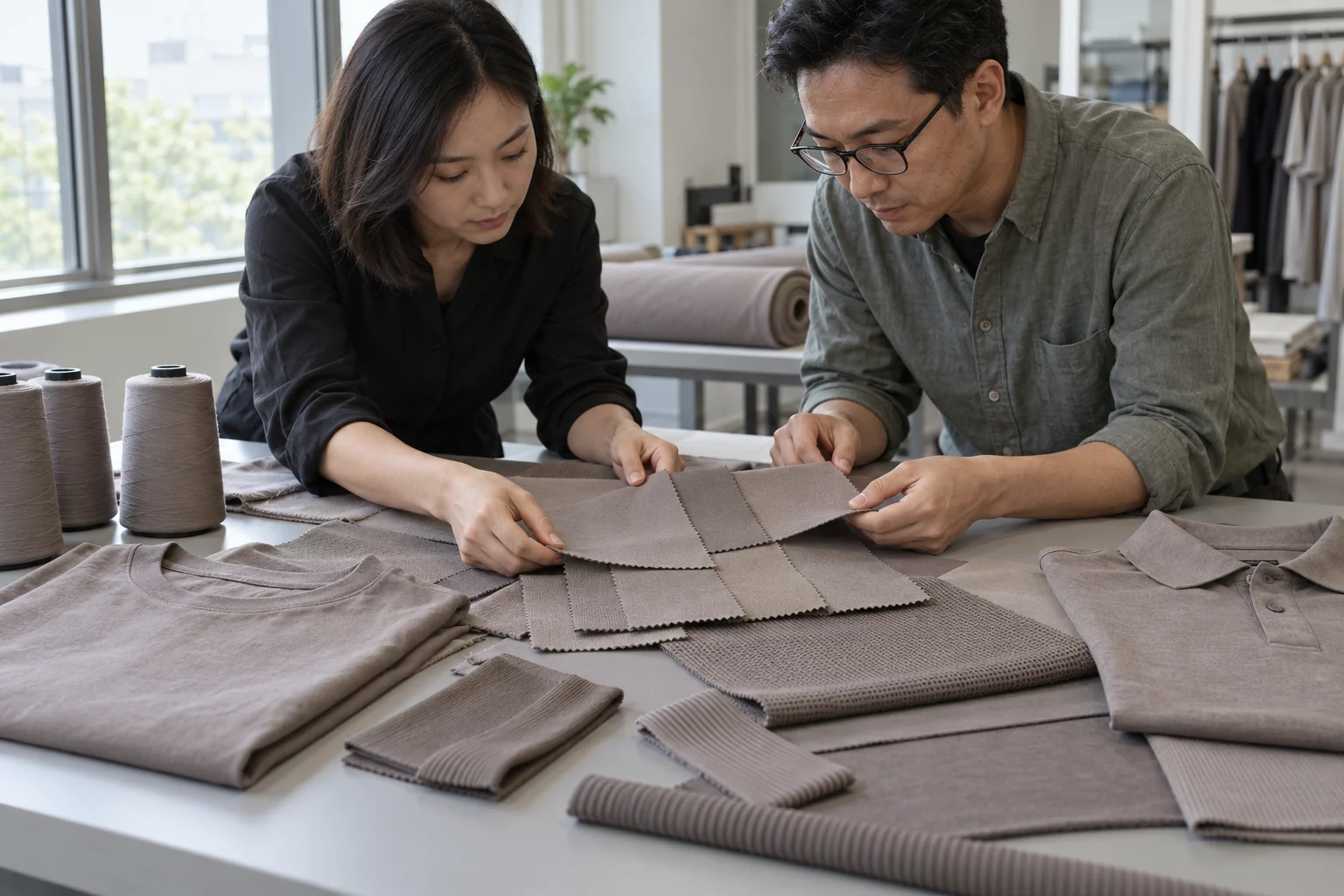
Review the physical reference and each lab-dip option side by side under the same agreed light source, using a neutral background and consistent positioning. If a light booth is available, agree on its light settings rather than assuming every daylight setting is identical. Add a relevant secondary light condition, such as the retail lighting specified by the buyer, because two samples can look similar under one source and different under another. This behavior is commonly called metamerism. Avoid making final decisions beside a window with changing sunlight or from phone photographs alone. Record the light sources used, the option codes reviewed and the evaluator's decision.
Use shade tolerance language that the factory can act on without implying an unsupported numerical guarantee. Comments such as too yellow against the approved reference, slightly too dark under the agreed daylight source or unacceptable red shift under the secondary source are more useful than simply saying the color feels wrong. State whether the dip passes under all required conditions or needs resubmission. If instrumental color measurement is part of the buyer's program, agree on the measurement method, equipment settings, formula and limits before using numbers to decide acceptance. Do not impose a universal delta-E promise or treat a reading as a substitute for the agreed visual and material checks.
3. Check trim relationships and manage every colorway separately
Review the lab dip in the context of the complete garment rather than approving the body fabric in isolation. On a polo, compare the body with the collar, cuff, placket and sewing thread; on a T-shirt, check the neckline rib and any visible binding. Different fibers, structures and dyeing processes can produce different appearances even when components use the same named color. Tell the factory whether each component must visually match, sit within a buyer-approved tonal relationship or create an intentional contrast. Ask for a grouped component presentation where practical, and record any accepted difference instead of leaving the factory to infer what matching means.
For multi-colorway programs, keep a decision matrix with one line per style, colorway, substrate and relevant component. A navy approval for cotton jersey should not silently release navy pique or a separate rib construction. Track submitted options, selected dip, revision date, pending components and release status so purchasing and dyeing teams share the same instructions. MOQ is 100 pcs, but confirm the permitted style, size and colorway allocation before treating that quantity as divisible across every proposed option. How to Brief Clothing Colorways provides companion guidance for keeping allocations clear. Hold unresolved colorways explicitly rather than allowing a general approval message to release the entire program.
4. Record approval and connect it to bulk production checks
Issue a written approval that identifies the style, colorway, substrate, submission date and exact selected option. State that the physical approved dip is the shade master, identify where the buyer and factory reference copies are held and list any conditions attached to approval. Keep references protected from light, contamination and unnecessary handling. Make the release instruction explicit: approved for bulk dyeing, revise and resubmit, or on hold pending component review. A favorable comment on a photograph should not become an accidental production release. Ask the factory to acknowledge the decision and confirm that the dyeing team has the correct master rather than an earlier submission or an unselected option.
Plan the next control point before approving the lab dip. Small laboratory dyeings and bulk production use different equipment and conditions, so agree how initial bulk fabric or yarn will be checked against the approved master and how shade variation between lots will be handled. A finished garment sample is also useful for reviewing the combined effect of construction, trims and finishing. How to Approve Clothing Samples explains that broader approval stage. Samples take approximately 7 days once the brief and materials are confirmed; confirm the specific lab-dip submission schedule and allow for revisions. Bulk timing depends on quantity, and should be reconfirmed after shade release and material availability are established.
Send these details together
- Assign a unique code to each colorway and provide one authoritative physical target, with clear priority if multiple references are supplied.
- Confirm the lab-dip substrate represents the intended fiber blend, construction, finished GSM and planned finish; document any temporary substitution before review.
- Compare reference and submission under agreed primary and secondary lighting, then write actionable shade comments with the exact option code and decision.
- Review body fabric and visible trims together, maintain separate approval records for different substrates and confirm the MOQ 100 pcs allocation with the factory.
- Send a written bulk-dyeing release only for approved colorways, retain protected master references and agree on bulk-lot shade checks and escalation for differences.
This resource covers buyer approval of fabric and yarn color lab dips for China OEM menswear T-shirts, polos and knits. It does not establish colorfastness performance, chemical compliance, laboratory test results or certification status; any required testing and documentation must be specified separately. Reprint permission: You may reprint this guide with attribution to clothingmanufacturerchina.com and sales@clothingmanufacturerchina.com.
Prepare a quote briefThe RFQ form prepares a WhatsApp message for you to review. For files, email sales@clothingmanufacturerchina.com.
Questions before sampling
Can a buyer approve clothing color lab dips from photographs?
Photographs can help track submissions and discuss obvious differences, but they should not replace physical shade approval when color consistency matters. Camera processing, lighting and screen settings can alter appearance. Request physical dips and compare them with the agreed reference under defined lighting. If a schedule requires a provisional image review, mark it as provisional and state whether bulk dyeing remains on hold until physical approval.
Does an approved lab dip guarantee matching bulk fabric or colorfastness?
No. An approved lab dip establishes the accepted shade reference on the stated substrate under the agreed viewing conditions. It does not guarantee that every bulk lot will match, or prove resistance to washing, rubbing, perspiration or light. Agree on bulk shade checks and any required performance testing separately. If a numerical color tolerance is needed, define the measurement method and acceptance limits with the factory rather than assuming a universal standard.
How should MOQ and sample timing affect a multi-colorway approval plan?
Plan around MOQ 100 pcs, but confirm how the factory applies it to your style and colorway allocation before ordering numerous shade developments. Samples take approximately 7 days once the brief and materials are confirmed; ask whether the quoted schedule includes your lab-dip round, component submissions and garment sample. Revisions or unavailable materials can require additional time. Bulk timing depends on quantity, so obtain an updated production schedule after all required colorway approvals are recorded.
What are your MOQ, sample time and bulk lead time?
MOQ is 100 pcs. Samples take 7 days. Bulk production lead time depends on order quantity.