Combed vs Carded Cotton for Custom T-Shirts
For menswear buyers sourcing custom T-shirts from a China OEM factory, combed versus carded cotton is a yarn preparation decision, not a complete fabric quality specification. Combing adds a preparation step that removes more short fibers and helps align the remaining fibers, generally supporting a cleaner, smoother yarn. Carded cotton skips that additional combing step and can suit value-focused or deliberately textured products. Compare both options at matched yarn count, knitting construction, finished GSM, and finishing conditions before approving production. MOQ is 100 pcs; samples take approximately 7 days once the brief and materials are confirmed, while bulk timing depends on quantity.
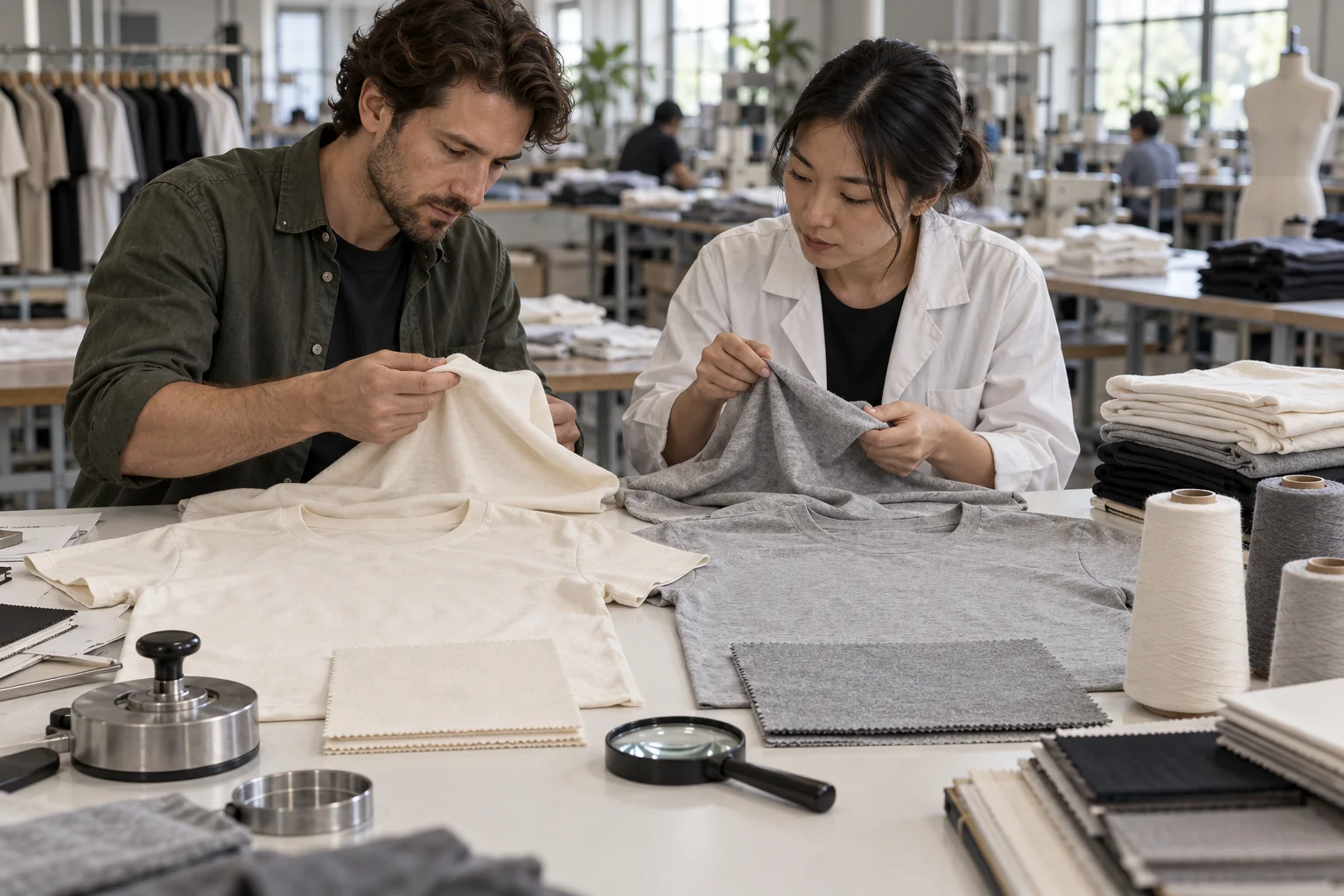
At a glance
Swipe the table sideways to compare both columns →
| Decision | Combed cotton | Carded cotton |
|---|---|---|
| Handfeel and appearance | Generally smoother and cleaner; confirm after the intended finishing process. | May feel more textured or show more surface variation; inspect the actual fabric. |
| Short fibers and neps | Additional combing removes more short fibers and can reduce neps; not a defect-free guarantee. | Retains more short fibers relative to comparable combed stock; visible neps depend on raw cotton and processing. |
| Print surface | Often a useful starting point for fine-detail artwork; approve a production-representative print. | Can work for many graphics; assess surface fuzz, coverage, and detail on a printed sample. |
| GSM planning | Specify finished GSM independently of combing and check weight against the intended fit. | Use the same finished GSM target for a fair comparison; carded does not mean lightweight. |
| Cost and order planning | Usually carries an added processing cost; MOQ 100 pcs and material availability affect feasibility. | Often a lower-cost starting point; MOQ 100 pcs does not eliminate material or setup constraints. |
1. Separate cotton preparation from the rest of the fabric specification
Start by asking your China OEM supplier whether the proposed T-shirt fabric uses combed or carded cotton yarn, then record that answer alongside the yarn count and spinning method. Carding opens and separates fibers, removes some impurities, and forms a workable fiber strand. Combed cotton receives an additional preparation stage that removes more short fibers and improves fiber alignment. This commonly contributes to a cleaner yarn appearance, but the final jersey still reflects raw cotton selection, spinning settings, knitting quality, dyeing, and finishing. Do not approve a fabric solely because its quotation contains the word combed; request a labeled swatch representing the material actually offered.
Treat neps and short fibers as inspection topics rather than automatic pass or fail labels. Neps are small entangled fiber knots that may show as specks or irregularities, while short fibers can contribute to surface hairiness depending on subsequent processing. Combing can reduce these issues, but it does not guarantee a nep-free surface or a particular wear life. Carded cotton can still be suitable for a commercial menswear program when its appearance matches the approved standard. Read the companion guide Ring-Spun vs Open-End Cotton for Tees to separate preparation from spinning: combed and carded describe preparation, while ring-spun and open-end describe different yarn formation routes.
2. Compare handfeel and printing on matched samples
Build a side-by-side comparison using fabrics with the same stated composition, similar yarn count, identical knit construction, and a matched finished GSM target. Assess the face and back under consistent lighting, then handle the swatches without relying only on a supplier's softness description. Combed cotton often presents a smoother touch and more even surface, while carded cotton may retain a more textured character. However, a softener or other finishing treatment can change first impressions substantially. Ask which finishes were applied, and review washed samples using an agreed care procedure before deciding whether the handfeel suits a premium basic, promotional tee, or relaxed casual menswear range.
For printing, send the actual artwork, intended print dimensions, placement, and decoration method before requesting approval samples. A smoother fabric face can help support fine lines and consistent visual detail, but ink selection, pretreatment where applicable, curing, and print shop controls also matter. Carded cotton is not automatically unsuitable for screen printing or other decoration; its acceptability depends on the result your customer expects. Examine small lettering, solid coverage, fabric texture showing through the image, and the feel of the printed area. The companion guide Cotton vs Poly Blend for Tees is useful when composition is also under discussion, because fiber content changes decoration decisions independently of combing.
3. Set finished GSM and compare the complete OEM cost
Specify finished fabric GSM separately from cotton preparation, because neither combed nor carded tells the factory how heavy the T-shirt should be. Start with the intended season, fit, opacity, drape, and selling position, then choose a target weight and agree an acceptable tolerance with the supplier. A lightweight summer tee and a heavier structured menswear basic may both use combed cotton, while carded cotton can also be knitted at different weights. Check the completed garment as well as the swatch, since finishing and garment processing can affect the delivered result. Use the companion guide How to Specify Clothing Fabric GSM when defining measurement conditions and communicating weight requirements.
Request comparable quotations rather than comparing a low-cost carded stock jersey against a custom-developed combed fabric with different weight and finishing. Combing typically adds processing cost and removes some material, but the actual price difference depends on the available yarn, fabric supply route, order quantity, color requirements, and garment specification. Include cutting and sewing, decoration, labels, packaging, and any separately quoted development charges in your review. MOQ is 100 pcs, but confirm how that order can be allocated across colors and sizes before finalizing the assortment. At this quantity, available materials may be more practical than custom yarn or fabric development; ask the factory to identify constraints explicitly.
4. Turn the comparison into an approval and production brief
Submit a brief that names the selected cotton preparation, fiber composition, spinning method where required, knit construction, finished GSM, color reference, size chart, and decoration details. Add your expectations for surface appearance and handfeel through a physical reference or clearly identified approved sample, rather than vague descriptions such as luxury quality. Samples take approximately 7 days once the brief and materials are confirmed. Treat this as a sample development estimate, not an unconditional delivery promise, and confirm whether any material sourcing, revisions, or shipping sits outside that window. If you are still choosing between combed and carded cotton, request clearly labeled alternatives before authorizing the final sample.
Approve the production route only after reviewing fit, fabric appearance, print execution, and the agreed wash assessment on representative samples. If shrinkage, colorfastness, pilling, or other performance characteristics are commercially important, define the required test method, acceptance criteria, and responsibility for testing in the purchase documentation. Do not infer laboratory results, durability guarantees, or environmental certifications from cotton preparation alone. Keep an approved reference and ask the factory to disclose material substitutions before use. Bulk timing depends on quantity, so obtain a production schedule for your confirmed order and requirements. Separate sample approval, bulk manufacturing, and shipping milestones when planning your launch.
Send these details together
- Record combed or carded preparation separately from fiber composition, spinning method, yarn count, knit construction, finished GSM, and finishing so the factory can quote the intended fabric rather than a loosely similar alternative.
- Compare labeled swatches under consistent lighting and handle both before and after an agreed wash procedure; use the approved reference to communicate acceptable surface texture, visible neps, and handfeel.
- Provide production artwork and approve a representative print sample, checking fine detail, coverage, placement, and printed-area handfeel instead of assuming cotton preparation determines decoration quality.
- Confirm MOQ 100 pcs, the proposed size and color allocation, material availability, and all quoted development or decoration charges before deciding whether the apparent fabric saving improves the total order cost.
- Allow approximately 7 days for samples after the brief and materials are confirmed, document approval requirements, and obtain a bulk schedule based on quantity without treating the sample estimate as a bulk deadline.
This buying resource covers combed versus carded cotton preparation for menswear custom T-shirts sourced from China OEM factories. It provides specification and purchasing guidance, not verified performance results or certification assurances for any particular material. Reprint permission is granted with attribution to clothingmanufacturerchina.com and sales@clothingmanufacturerchina.com.
Prepare a quote briefThe RFQ form prepares a WhatsApp message for you to review. For files, email sales@clothingmanufacturerchina.com.
Questions before sampling
Is combed cotton always better than carded cotton for custom T-shirts?
No. Combed cotton is often a better starting point when you want a smoother handfeel and cleaner-looking surface, but the right choice depends on product positioning and the complete fabric specification. A suitable carded jersey may meet a value-focused or textured casualwear brief. Compare matched finished GSM, construction, finishing, and representative samples rather than treating preparation as a universal quality grade.
Does combed cotton guarantee better printing or longer durability?
No. Its generally smoother surface can be helpful for some artwork, but printing also depends on fabric construction, finishing, decoration method, and process controls. Durability depends on several material and manufacturing factors and cannot be established by the word combed. Request representative printed samples and define any required performance testing with agreed methods and acceptance criteria before making product claims.
What are the MOQ and timing requirements for a combed or carded cotton tee order?
MOQ is 100 pcs. Confirm whether your chosen material and proposed color and size split are feasible within that order quantity, especially when requesting custom fabric or dyeing. Samples take approximately 7 days once the brief and materials are confirmed. Bulk timing depends on quantity; request a schedule for the confirmed specification and clarify development revisions and shipping separately.
What are your MOQ, sample time and bulk lead time?
MOQ is 100 pcs. Samples take 7 days. Bulk production lead time depends on order quantity.