Ring-Spun vs Open-End Cotton for Custom T-Shirts
For men's custom T-shirts sourced through a China OEM factory, ring-spun versus open-end cotton is a yarn decision, not a complete fabric specification. Ring-spun cotton often suits programs that prioritize a softer hand and a more refined surface, while open-end, also called rotor-spun cotton, can suit cost-led everyday or promotional tees. Neither name alone establishes opacity, shrinkage, pilling performance, or printing quality. Compare fabrics at matched GSM, construction, color, and finishing wherever possible, then approve a decorated garment sample. MOQ is 100 pcs, samples take approximately 7 days once the brief and materials are confirmed, and bulk timing depends on quantity.
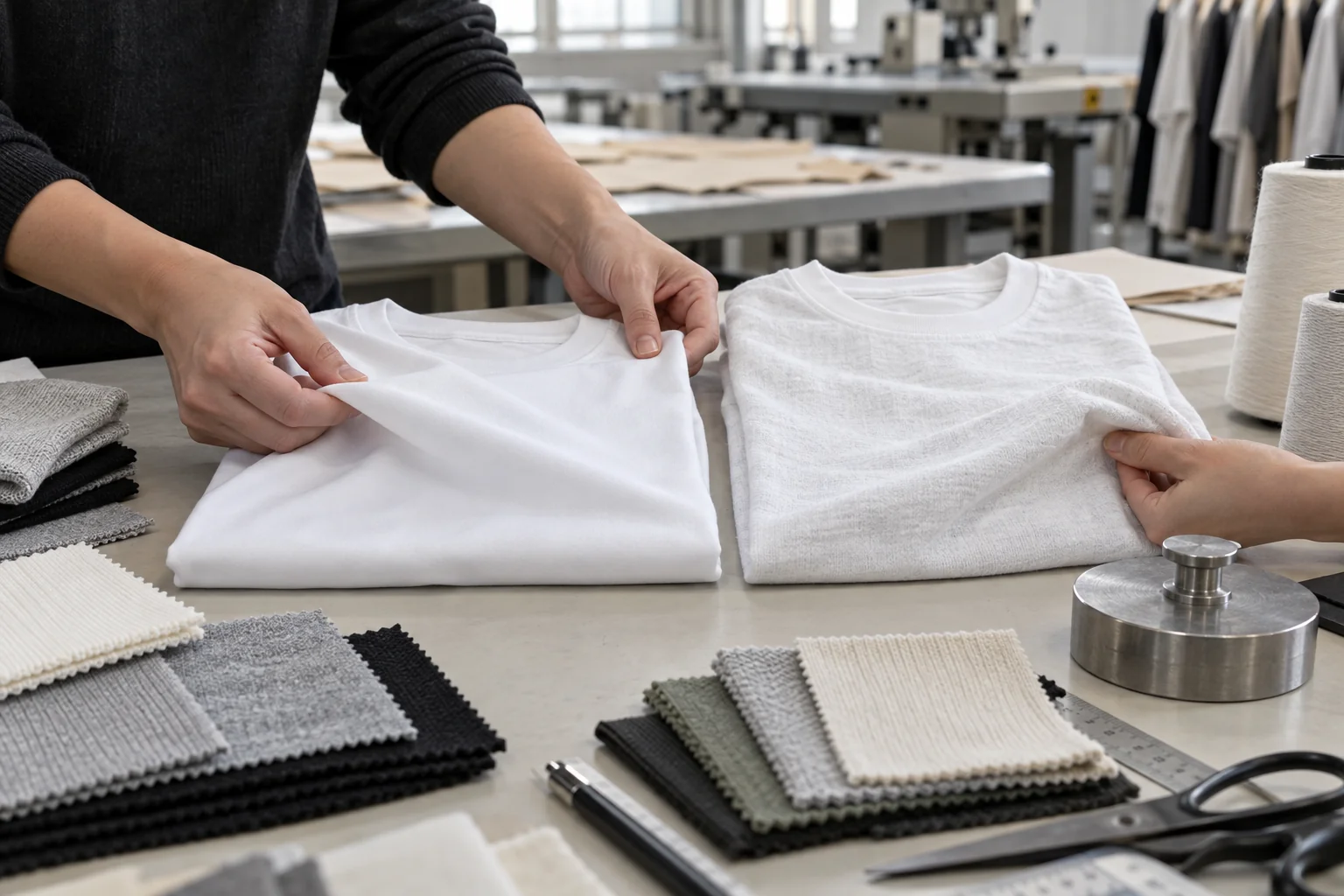
At a glance
Swipe the table sideways to compare both columns →
| Decision | Ring-spun cotton | Open-end cotton |
|---|---|---|
| Handfeel and positioning | Often selected for softer, more refined retail tees; cotton quality and finishing still matter. | Often selected for cost-led everyday tees with a drier or more substantial feel; assess actual swatches. |
| Yarn evenness and pilling | Spinning method alone does not establish evenness or pilling performance; confirm yarn details and inspect samples. | Rotor yarn can offer useful uniformity, but surface character and pilling behavior require fabric-level evaluation. |
| Opacity and GSM | Specify GSM alongside color, knit density, and stretch; ring-spun does not automatically mean opaque. | Specify the same variables; a heavier rotor fabric can be more opaque than a lighter ring-spun alternative. |
| Print surface | Can provide a refined print base when yarn quality, knitting, and finishing support a clean surface. | Can work for screen printing and other decoration, but fine detail and surface texture need sample approval. |
| Cost and order planning | Often carries a yarn premium; quote the finished garment and check available fabrics at MOQ 100 pcs. | Often offers a lower yarn cost, but stock, GSM, finishing, and decoration determine the final quote. |
1. Define a comparable yarn and fabric brief
Start by telling the factory how the men's T-shirt will be sold and worn: a soft retail basic, a structured streetwear style, a uniform, or a promotional garment. Ring spinning draws and twists fibers into yarn, while open-end spinning uses a rotor to form yarn from separated fibers. These processes produce different yarn structures, but neither label specifies cotton fiber quality, combing, yarn count, twist, or finishing. Request those details wherever they are available and ask the supplier to distinguish confirmed specifications from assumptions. Ring-spun does not automatically mean combed cotton, and open-end does not automatically mean recycled cotton or a particular environmental profile.
Build the comparison around two fabrics that are as close as practical in composition, knit construction, finished GSM, color, and treatment. Otherwise, a softer ring-spun swatch may simply have a different finish, or a more opaque open-end option may simply be heavier. Ask the China OEM supplier to label each swatch with its reference and available specifications so your buying team can trace the approved choice. Read Cotton vs Poly Blend for Tees if composition is still undecided, because adding polyester changes the comparison beyond yarn spinning alone. Keep composition selection separate from the ring-spun versus rotor decision until the intended garment performance and decoration method are clear.
2. Evaluate handfeel, evenness, and pilling without assumptions
Evaluate handfeel with physical swatches rather than relying on the words soft, premium, or heavyweight in a quotation. Ring-spun cotton often feels smoother and more supple in comparable T-shirt fabrics, while open-end cotton may feel drier or more textured. However, fiber selection, yarn twist, knitting, and finishing can change that impression substantially. Ask for samples in the intended color and assess the face, reverse, drape, and feel against skin. Compare the samples before and after washing under the proposed care instructions, since an initial soft finish may not represent the garment's ongoing feel. Record a reference sample instead of relying only on subjective descriptions.
Separate yarn evenness from surface smoothness and pilling tendency. Rotor-spun yarn can be quite uniform, and a ring-spun label does not prove that a fabric has fewer visible irregularities. Examine the knit for thick and thin areas, unwanted slubs, streaks, and surface fuzz under consistent lighting. Pilling depends on several interacting factors, including fiber properties, yarn structure, fabric construction, finishing, friction, and laundering, so do not promise that either option will never pill. If pilling is important to the program, agree on a test method and acceptance criteria with the supplier or an independent laboratory. Request results only for relevant tested material, and do not treat unrelated reports as proof for your order.
3. Check opacity, GSM, construction, and print compatibility
Specify opacity as a garment requirement instead of assuming that one spinning method prevents show-through. Finished GSM is useful, but color, yarn count, knit density, construction, and the amount of stretch across the body also affect coverage. A white tee can reveal more than a dark tee at the same nominal weight, and a close men's fit can open the knit across the chest or shoulders. Inspect the sample against a consistent contrasting background and, where practical, on the intended fit model. Use How to Specify Clothing Fabric GSM to define the target weight and an agreed tolerance, rather than choosing an unsupported universal GSM threshold for opacity.
Check the intended print on the actual fabric rather than approving an undecorated swatch alone. Ring-spun cotton can provide a refined base for detailed artwork, but surface hairiness and finishing still influence the result. Open-end cotton can also be suitable for printed tees when its texture fits the artwork and the printer adjusts the process appropriately. Ask for a decoration trial that represents the planned ink coverage, colors, detail, and placement, then inspect edge definition, feel, and appearance after the agreed wash check. Read Jersey vs Interlock T-Shirts when construction remains open, because changing the knit can alter stability, coverage, and the print surface independently of the spinning method.
4. Compare landed specifications and approve production references
Request quotations against the same finished garment brief, including fabric weight, sizes, color, seams, neck rib, decoration, labels, packaging, and delivery terms. Ring-spun yarn often costs more than open-end yarn, but the difference in the final T-shirt price also reflects fabric consumption, finishing, stock availability, and production setup. MOQ is 100 pcs; confirm how the factory applies that minimum across styles, colors, and size breakdowns before issuing a purchase order. At a small quantity, an available ring-spun fabric may be more practical than commissioning a custom open-end fabric. Ask the supplier to identify any separate material or dyeing minimums instead of assuming every fabric option is available at the garment MOQ.
Plan samples at approximately 7 days once the brief and materials are confirmed, and clarify whether that estimate covers the requested decoration and excludes transit. Bulk production timing depends on quantity; obtain an order-specific schedule after material availability, artwork, and sample approvals are settled. Approve a labeled reference sample that records the fabric selection, color, measurements, decoration, and care instructions, then agree on how bulk goods will be compared with that reference. If a supplier proposes a fabric substitution, require review before cutting rather than accepting a generic cotton description. Do not infer durability guarantees, environmental credentials, or certifications from the yarn name; request applicable evidence separately when the buying brief requires it.
Send these details together
- Define the men's T-shirt use case, target handfeel, fit, color, and decoration before choosing ring-spun or open-end cotton.
- Compare labeled swatches at matched composition, construction, finished GSM, and finishing wherever possible; document any differences that could distort the comparison.
- Approve opacity and printed appearance on the intended color and fit, and agree on wash checks or formal testing where the program requires them.
- Request like-for-like quotations at MOQ 100 pcs and confirm color splits, size splits, fabric availability, and any separate material minimums.
- Allow approximately 7 days for samples once the brief and materials are confirmed; agree on quantity-dependent bulk timing and retain an approved production reference.
This BuyingResource covers ring-spun versus open-end cotton yarn selection for men's China OEM custom T-shirts. It provides sourcing and sample-review guidance, not laboratory results, certification claims, or guaranteed performance. Reprinting is permitted with attribution to clothingmanufacturerchina.com and contact credit to sales@clothingmanufacturerchina.com.
Prepare a quote briefThe RFQ form prepares a WhatsApp message for you to review. For files, email sales@clothingmanufacturerchina.com.
Questions before sampling
Is ring-spun cotton always better than open-end cotton for custom T-shirts?
No. Ring-spun cotton is often a good starting point for a soft, refined retail tee, while open-end cotton can fit a cost-led everyday or promotional program. The best choice depends on the actual fabric, intended look, decoration, and budget. Compare finished samples rather than treating yarn names as quality grades. Neither spinning method alone establishes durability, pilling resistance, or wash performance.
Does a higher GSM make either cotton option opaque?
Higher GSM can improve coverage within an otherwise comparable fabric, but it does not guarantee opacity. Color, knit density, yarn count, construction, and garment stretch also matter. Check the intended color on the proposed fit and use consistent lighting for comparisons. Specify both the target GSM and your visual coverage requirement so the factory understands that weight alone is not the approval standard.
Can I order 100 pieces, and how should I plan samples and bulk delivery?
MOQ is 100 pcs, but confirm how that quantity can be divided across styles and colors and whether the selected fabric has a separate minimum. Samples take approximately 7 days once the brief and materials are confirmed. Clarify decoration scope and shipping time separately. Bulk timing depends on quantity, with material readiness and approvals also affecting the schedule, so request a confirmed production plan for your specific order.
What are your MOQ, sample time and bulk lead time?
MOQ is 100 pcs. Samples take 7 days. Bulk production lead time depends on order quantity.