How to Brief Clothing Shoulder Tape
A clothing shoulder tape brief should tell the factory what needs stabilizing, which tape construction to use, where the tape sits, and how the sewn shoulder will be approved. For China OEM menswear knits and wovens, tape selection must follow the fabric, seam construction, fit, and care instructions rather than a universal tape specification. Use a measured sample comparison to assess shoulder stretch-out, seam growth, comfort, and appearance. MOQ is 100 pcs, samples take approximately 7 days once the brief and materials are confirmed, and bulk timing depends on quantity.
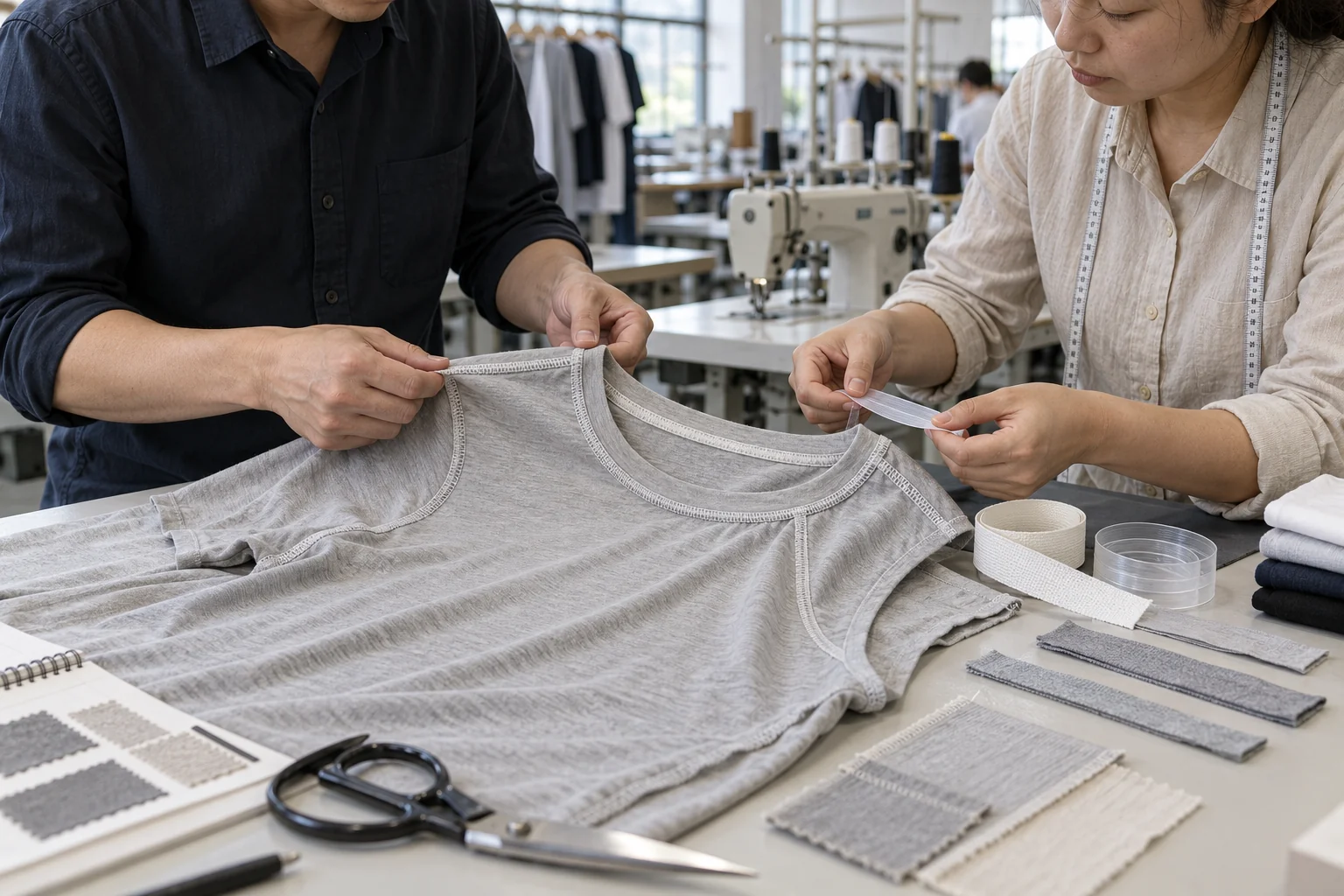
At a glance
Swipe the table sideways to compare both columns →
| Shoulder tape decision | What to specify | Sample check |
|---|---|---|
| Material and construction | Identify fiber composition, woven or knitted construction, finish, color, and approved supplier reference where available. | Check bulk, hand feel, visibility, and compatibility with the actual garment fabric. |
| Finished tape width | State width in millimeters and show its relationship to the seam allowance, needle line, and trimmed edge. | Confirm the tape is consistently secured without protruding, folding, or creating an unwanted ridge. |
| Placement and endpoints | Show which panel receives the tape, its position under the shoulder seam, and where it starts and ends. | Inspect both shoulders, neckline junctions, and armhole junctions against the approved construction sketch. |
| Stretch and feeding | Define the required stabilization, permitted give, and whether the tape is applied neutrally or with agreed controlled tension. | Check for shoulder gathering, restricted movement, waviness, and inconsistent seam length. |
| Wash and approval | Agree on the care method, cycle count, drying method, measurement landmarks, and buyer acceptance limits. | Compare recorded before-and-after measurements, shoulder appearance, tape condition, and seam recovery. |
1. Define what the shoulder tape must control
Start the brief with the garment type, fabric reference, fabric weight, stretch direction, and shoulder seam construction. A menswear jersey T-shirt, a loose knit polo, and a lightweight woven shirt may need different levels of stabilization even when their shoulder lengths look similar. Explain whether the concern is extension during sewing, growth during wear, distortion after washing, or a combination of these issues. Provide a photograph or annotated sketch of the desired shoulder line and identify any existing defect on a reference sample. Ask the factory to assess the actual fabric rather than selecting tape solely from a garment category name.
Set approval criteria before choosing the tape. Identify the exact shoulder measurement landmarks, the sample size, and whether measurements are taken on the seam line or between specified construction points. Record the approved prewash dimensions and agree on acceptable changes after the specified care process; do not substitute an unsupported universal tolerance. Include fit and comfort requirements, because a very rigid shoulder can conflict with a stretch garment's intended movement. The companion guide How to Brief Clothing Collar Neckline Construction is relevant when shoulder stabilization meets the neckline, where tape endpoints, seam allowances, and collar attachment can affect bulk and the finished shape.
2. Specify tape material, width, and stretch compatibility
Describe the proposed stay tape in terms the purchasing and sewing teams can verify: material composition, woven or knitted construction, finished width in millimeters, color, thickness or hand feel reference, and supplier item code if available. If the factory is recommending the tape, request a swatch and a sewn comparison rather than approving only a generic description such as soft shoulder tape. State whether the construction is sew-in or fusible. For a fusible option, require the factory to confirm suitable application conditions with the material supplier and check the actual fabric for marking, stiffness, and adhesion after the agreed care process.
Match tape extensibility to the intended role of the seam, not just to the presence of stretch in the body fabric. A low-stretch tape can stabilize a knit shoulder, but an excessively rigid or bulky choice may produce a hard ridge or restrict the intended fit. A more extensible tape may feel softer yet provide insufficient control if it stretches during sewing. Ask for alternatives when the trade-off is unclear and compare them using the same fabric and seam construction. Specify width in relation to the seam allowance and needle path so the tape is securely caught without unnecessary bulk, protrusion, or inconsistent trimming.
3. Map placement under the shoulder seam and control sewing
Use a section sketch and an inside-garment photograph to show precisely what under the shoulder seam means for your style. Identify whether the tape is attached on the front or back panel side, how it aligns with the stitch line, and which stitches must secure it. Mark the start and finish relative to the neckline and armhole seam lines, including whether each endpoint is captured in the adjoining operation. Do not leave seam-to-seam shoulder stabilization and continuous neck-and-shoulder taping interchangeable in the specification. They are different constructions, and changing between them can affect the inside appearance, bulk, operation sequence, and material consumption.
Tell the factory whether the tape should be fed without intentional stretch or with a specifically approved controlled application. Avoid a vague instruction to pull the tape tight, which can shorten the shoulder, create gathering, or vary between operators. Ask the sample team to review feeding, thread tension, stitch construction, and seam allowance together before attributing every defect to tape quality. Compare left and right shoulders for equal length and appearance, and inspect the garment both flat and on the intended fit reference. How to Control Clothing Side Seam Puckering provides companion reading on fabric handling and seam balance, although a side seam solution should not automatically be copied to the shoulder.
4. Check sewn samples, wash behavior, and production readiness
Approve the tape through a sewn garment sample made with the intended production fabric, not through a loose tape pull alone. Before washing, photograph the shoulder from the outside and inside, measure the agreed landmarks without stretching the garment, and record any ridge, waviness, gathering, or exposed tape. Follow the proposed care instructions using an agreed washing and drying method, then let the garment rest under consistent conditions before remeasurement. Compare shoulder seam length, body dimensions near the shoulder, tape appearance, and the neckline and armhole junctions. Record observations as sample evidence, not as invented laboratory results or a guarantee that every later garment will behave identically.
Use How to Approve Clothing Samples to organize the approval record, including dated photographs, measurement results, tape identification, and any revised construction notes. If the tape or body fabric changes after approval, review whether another sewn and washed sample is needed before bulk release. Our MOQ is 100 pcs, and samples take approximately 7 days once the brief and materials are confirmed; allow additional time for unresolved sourcing, revisions, or agreed wash checks. Bulk timing depends on quantity and should be confirmed with the production plan. Carry the approved tape reference and placement instructions into the work instructions, with checks on early production pieces to catch substitution or feeding differences.
Send these details together
- Identify the menswear style, production fabric reference, stretch direction, shoulder construction, and the specific stretch-out or seam growth problem the tape should address.
- Confirm tape composition, construction, color, finished width, application method, and supplier reference or approved swatch; require approval before any material substitution.
- Attach a placement sketch showing panel side, stitch-line relationship, seam allowance, neckline and armhole endpoints, and the intended tape feeding condition.
- Agree on measurement landmarks, sample size, washing and drying instructions, cycle count, resting conditions, and acceptance limits before reviewing the sample results.
- Keep a signed or otherwise documented sample approval record, confirm MOQ 100 pcs, and obtain quantity-based bulk timing after the construction and materials are settled.
This guide covers briefing and sample approval for shoulder tape in China OEM menswear knits and wovens. It provides production planning guidance, not laboratory verification or certification claims. Reprint permission is granted with attribution to clothingmanufacturerchina.com and sales@clothingmanufacturerchina.com.
Prepare a quote briefThe RFQ form prepares a WhatsApp message for you to review. For files, email sales@clothingmanufacturerchina.com.
Questions before sampling
What width of shoulder tape should a menswear buyer specify?
There is no single width suitable for every shoulder seam. Specify the finished width in millimeters after reviewing the seam allowance, stitch path, fabric thickness, and intended tape position with the factory. The tape must be consistently secured without protruding or creating excessive bulk. If the construction is not settled, request a sewn comparison of practical options and approve the chosen width on the actual garment sample.
Should shoulder tape stretch with a knitted garment?
It depends on the stabilization and fit required at the shoulder. The tape may intentionally allow less extension than the body fabric, but it should not create unwanted gathering, a rigid ridge, or restricted movement. Evaluate the fabric, tape, feeding method, and seam as a combined system. Record whether the tape is applied neutrally or under an approved controlled tension, then assess comfort, appearance, and dimensional change on the sewn sample.
Does a successful sample wash guarantee no shoulder seam growth in bulk?
No. A sample wash check provides evidence for the tested material combination and care procedure, not a universal guarantee. Agree on measurements and acceptance limits, document the result, and keep bulk tape and fabric consistent with the approved references. Review substitutions and inspect early production. MOQ is 100 pcs; samples take approximately 7 days once the brief and materials are confirmed, while bulk timing depends on quantity.
What are your MOQ, sample time and bulk lead time?
MOQ is 100 pcs. Samples take 7 days. Bulk production lead time depends on order quantity.