How to Brief Private Label Garments for OEM
A useful private label garments brief turns a brand concept into instructions that a China menswear OEM factory can quote, sample, and review against agreed requirements. Start with the product family, such as tees, fleece sets, cargos, or light outerwear, then define whether you want a base style or a modified block. Add measurements, fabric direction, labels, hangtags, packing, quantities, and approval responsibilities. MOQ is 100 pcs; confirm how the minimum applies to your proposed style, color, and size breakdown before placing an order. Samples take approximately 7 days once the brief and materials are confirmed, while bulk timing depends on quantity.
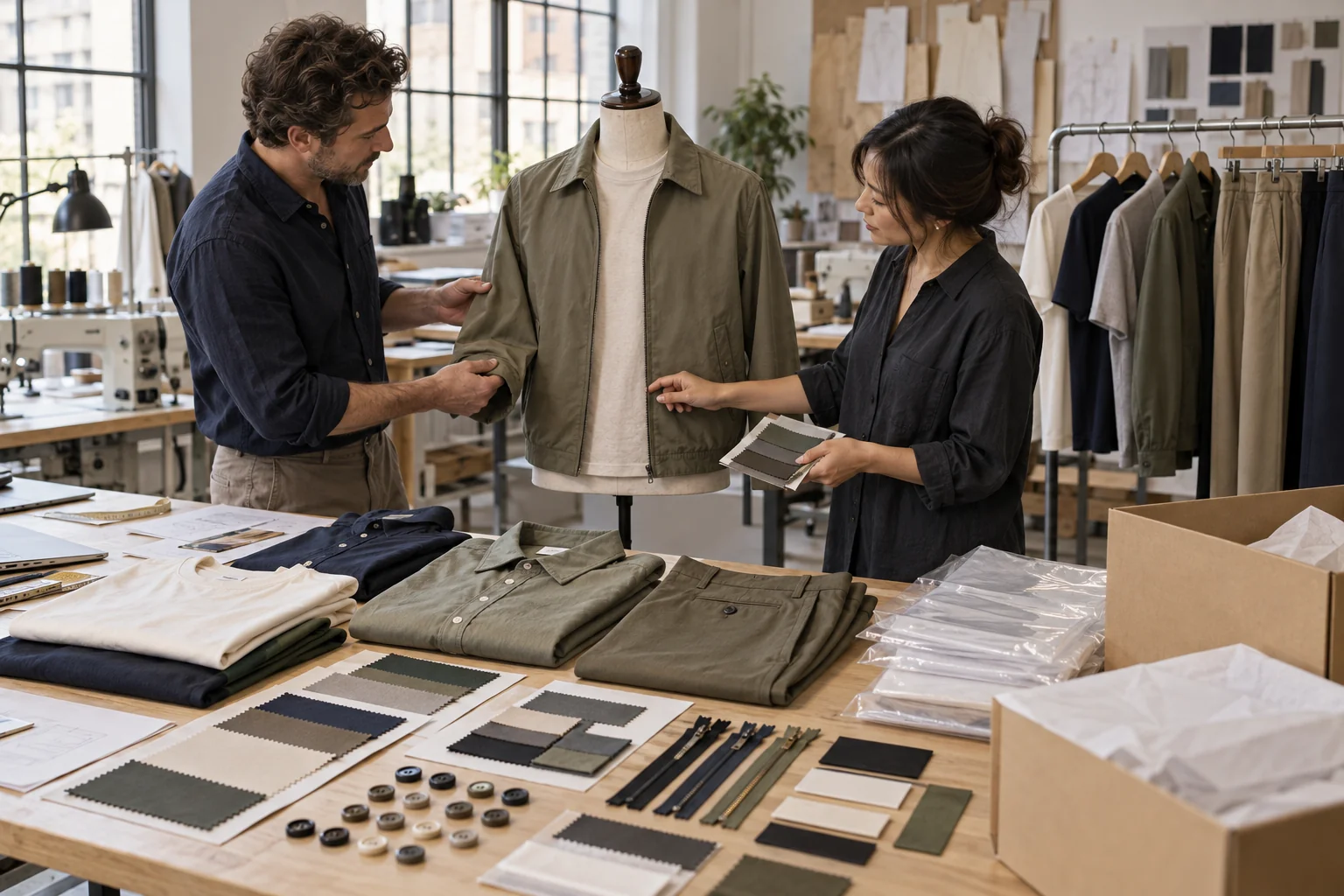
At a glance
Swipe the table sideways to compare both columns →
| Private label decision | What to specify | Sample check |
|---|---|---|
| Base style or modified block | Reference style, intended fit, measurement chart, and any pattern changes | Compare silhouette and agreed measurements against the approved brief |
| Fabric direction | Composition, target weight, construction, handfeel, color reference, and finish | Review material identity, drape, opacity, surface, and agreed wash behavior |
| Labels and hangtags | Artwork versions, dimensions, substrates, attachment methods, and placement | Check wording, legibility, positioning, comfort, and attachment |
| Order allocation | Total quantity, style and color splits, size ratio, and MOQ 100 pcs applicability | Confirm sampled size and whether additional size or color approvals are needed |
| Packing and dispatch preparation | Folding, unit bags, barcode data, carton assortment, and shipping marks | Review a packed unit and proposed carton identification |
1. Choose a base style or define a modified block
Begin by identifying the commercial purpose of each garment and the customer fit you need. A tee for everyday layering, a coordinated fleece set, a cargo trouser, and a lightweight jacket require different decisions even when they belong to the same private label apparel program. State the intended market, sales channel, size range, target order quantity, and requested delivery window. Then choose between an available base style and a modified block. A base style can reduce development decisions, but its measurements and construction still need review. A modified block requires explicit instructions for changes to proportions, seam positions, pockets, openings, or other pattern features.
Give every style a unique code and supply front and back drawings, annotated reference photographs, and a measurement chart with clearly described measuring methods. For a base style, list the elements you accept unchanged and the branding or material changes you request. For a modified block, identify each difference from the reference rather than asking for a vague premium or oversized fit. Separate essential requirements from preferences that can be adjusted after costing. The companion guide Private Label Clothing Manufacturer provides context for discussing supplier scope, while Wholesale vs Private Label Clothing helps buyers distinguish buying existing stock from commissioning a branded production program.
2. Specify fabric direction and measurable sample checks
Describe fabric direction using composition, target weight, knit or woven construction, surface appearance, handfeel, stretch expectations, and intended finish. For tees, explain opacity and collar preferences; for fleece sets, specify whether the inside should be brushed or loopback and how the top and bottom should coordinate. For cargos, identify the desired structure and pocket support. For light outerwear, describe lining needs, layering allowance, closures, and the intended use environment. If you have not selected an exact material, ask for suitable options and state which attributes matter most. A photograph can communicate appearance, but it cannot establish fiber content, weight, or performance.
Define sample checks before development begins so both buyer and factory know what approval means. Include garment measurements, agreed tolerances, seam appearance, fabric drape, trim placement, and any requested wash assessment. Specify the method and acceptance criteria for any performance claim you intend to make, and agree whether independent testing is needed, who arranges it, and who pays. Do not treat a sample's appearance as proof of durability, water resistance, colorfastness, or certification. Request relevant documentation when required for your destination market, and verify its scope and applicability. Record proposed material substitutions as approval items because a fabric change can alter fit, appearance, and cost.
3. Brief labels, hangtags, and packing as production components
Build a branding schedule that lists every label, hangtag, print, embroidery placement, and branded accessory by style code. Supply usable artwork files with version numbers, dimensions, color references, material preferences, and attachment instructions. For neck labels and waistband labels, define the placement reference point and identify any comfort concerns. For hangtags, specify stock, finish, hole position, string or fastener, and the required information on each side. Keep decorative branding separate from composition, care, origin, and other labeling content that may be required in the destination market. The buyer should confirm applicable wording and legal requirements rather than assume a generic label layout is suitable everywhere.
Packing belongs in the initial brief because unit presentation and assortment affect sourcing, handling, and quotation accuracy. State how garments should be folded, whether sets are packed together or separately, and which unit bags, stickers, inserts, or protective materials are needed. Define barcode ownership and provide final data before artwork approval; placeholder numbers should not become production instructions. Specify carton assortment, identification marks, and any retailer requirements you actually have. Request a packed sample or packing mockup when presentation is important. Use the companion guide How to Brief Clothing Labels and Trims for a more detailed review of artwork handoff, component specifications, and placement instructions.
4. Confirm MOQ, sampling readiness, and bulk approval
Submit an order matrix showing quantities by style, color, and size instead of providing only a total program volume. MOQ is 100 pcs, and the buyer should confirm how that minimum applies to the proposed allocation before assuming several styles or colors can share it. Ask the factory to flag material or trim purchasing constraints separately, particularly for custom colors or branded components. Include a target cost if available, but explain whether it refers to the garment alone or includes labels, packing, testing, and other requested work. Ask for quotation assumptions and exclusions in writing so price comparisons reflect equivalent specifications rather than different interpretations of the brief.
Samples take approximately 7 days once the brief and materials are confirmed. Treat that as an approximate sample preparation period, not a promise that includes every earlier sourcing decision, buyer revision, or shipment transit. Ask the factory to confirm sample readiness, dispatch expectations, and outstanding dependencies. On receipt, return one consolidated comment sheet using the style code, sample version, photographs, and prioritized corrections. Approve the final specification, artwork, materials, and packing before bulk authorization, and retain an identified approval reference. Bulk timing depends on quantity; request a production schedule based on the confirmed order and material availability rather than extending the sample estimate into a bulk delivery commitment.
Send these details together
- Assign each style a code and specify whether it uses a base style or modified block, with drawings, measurement methods, size range, and a clear list of requested changes.
- Provide fabric composition and weight direction, construction, color references, finish preferences, and sample acceptance criteria; identify any testing or documentation that needs separate agreement.
- Submit version-controlled label and hangtag artwork, placement dimensions, approved wording, attachment details, barcode data, and unit packing requirements.
- Confirm the MOQ 100 pcs allocation with the factory, supply quantities by style, color, and size, and request a quotation that identifies assumptions, inclusions, and exclusions.
- Confirm that the brief and materials are ready before starting the approximately 7-day sample expectation, then document approval and request bulk timing based on the confirmed quantity.
This guide covers briefing China menswear OEM private label garments, including tees, fleece sets, cargos, and light outerwear. It provides planning guidance, not legal advice, laboratory findings, or certification guarantees. Reprint permission is granted with attribution to clothingmanufacturerchina.com and sales@clothingmanufacturerchina.com.
Prepare a quote briefThe RFQ form prepares a WhatsApp message for you to review. For files, email sales@clothingmanufacturerchina.com.
Questions before sampling
What should I send first to request a private label garments quotation?
Send a style list, reference drawings or photographs, your base style versus modified block decision, fabric direction, size range, quantity breakdown, branding requirements, and packing expectations. Include a measurement chart where available and mark any unresolved choices. The factory can then identify missing information and explain quotation assumptions. A reference image alone leaves too much uncertainty about materials, fit, construction, and finishing to support a reliable like-for-like price comparison.
Does MOQ 100 pcs mean I can divide the order across any styles and colors?
No unrestricted allocation should be assumed. MOQ is 100 pcs, but you need written confirmation of how it applies to your specific styles, colors, and size breakdown. Fabric purchasing and custom trims may introduce additional constraints that should be discussed before sampling or ordering. Send the complete allocation matrix and ask which combinations are feasible, which need adjustment, and whether any proposed option changes pricing or material availability.
How long do samples and bulk private label apparel production take?
Samples take approximately 7 days once the brief and materials are confirmed. Clarify whether your schedule also needs to allow for sourcing, artwork corrections, further sample rounds, and transport, since these should not be silently included in that estimate. Bulk timing depends on quantity. Request a schedule after the order specification, material plan, approvals, and quantity are confirmed, and distinguish production completion from dispatch and arrival dates.
What are your MOQ, sample time and bulk lead time?
MOQ is 100 pcs. Samples take 7 days. Bulk production lead time depends on order quantity.