How to Plan Clothing QC Inspection Before Shipment
A clothing QC inspection plan turns your approved menswear sample and purchase requirements into checks that can support a shipment release decision. For China OEM production, define the inspection reference, lot boundaries, sampling method, measurement tolerances, defect classifications, packaging requirements, and corrective-action process before bulk production starts. MOQ is 100 pcs, samples take approximately 7 days once the brief and materials are confirmed, and bulk timing depends on quantity. Inspection is a verification step rather than a substitute for a complete specification or production controls.
At a glance
Swipe the table sideways to compare both columns →
| QC checkpoint | What to define | Failure if skipped |
|---|---|---|
| Approved reference and measurements | Approved sample version, size chart, points of measure, tolerances, and size coverage. | Inspectors may compare garments against the wrong fit, construction, or measurement method. |
| Sampling and acceptance | Lot boundaries, random selection method, inspection quantities, defect classes, and acceptance rules. | Results may not represent the shipment, and buyers and factories may disagree about release. |
| Workmanship and decoration | Seam quality, functional checks, appearance limits, artwork version, and placement tolerances. | Visible defects, weak construction, or misplaced branding may reach customers. |
| Labels and unit packing | Approved label content, placement, SKU mapping, folding, bag requirements, and assortment. | Incorrect identity, destination information, or packing can create rework and receiving problems. |
| Cartons and release records | Carton marks, counts, dimensions where specified, report evidence, corrective actions, and release authority. | Shipment discrepancies or unresolved defects may remain hidden until warehouse receipt. |
1. Establish the approved reference and inspection scope
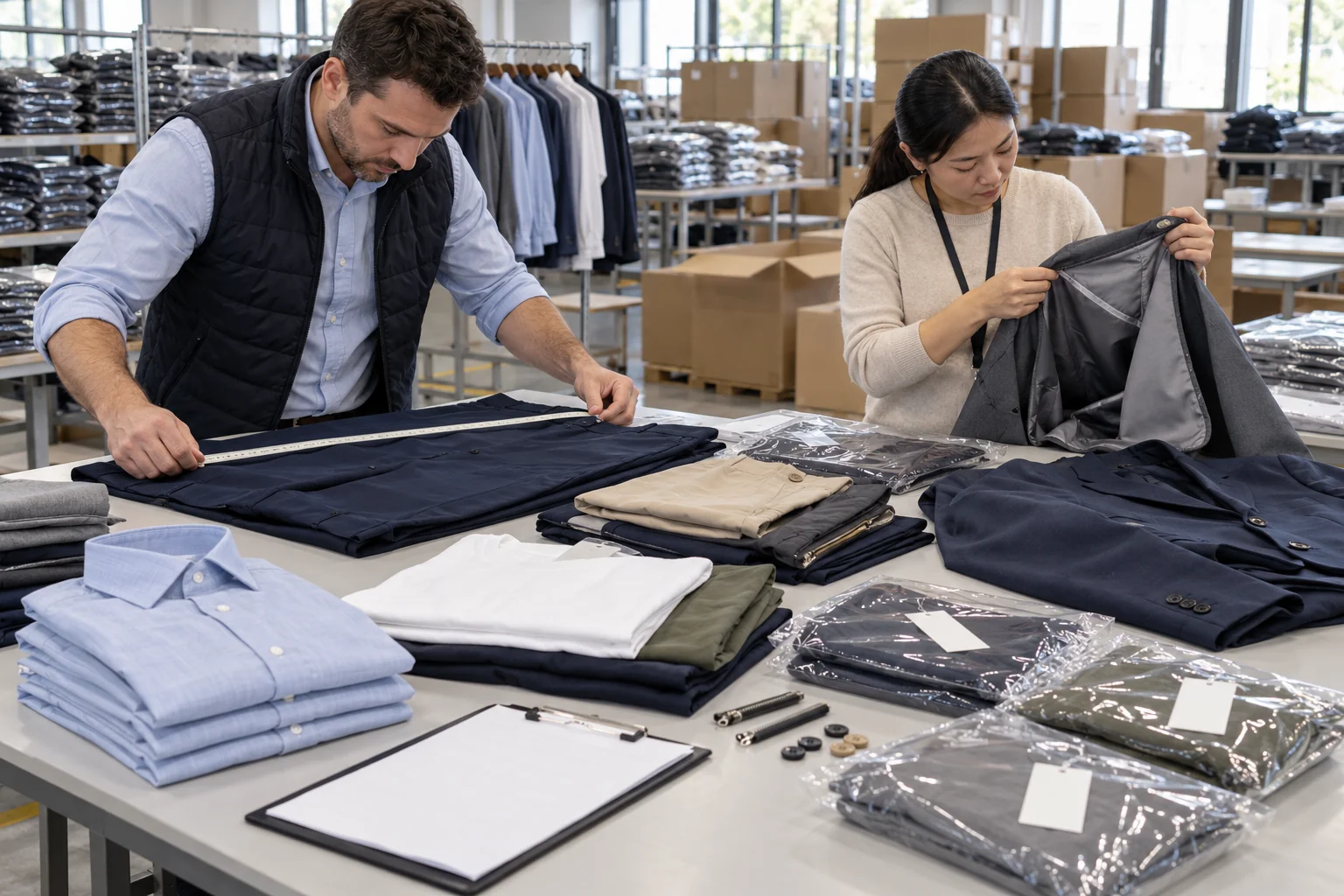
Start by creating one controlled inspection pack for the menswear order. Include the approved pre-production sample reference, current technical pack, graded measurement chart, bill of materials, color references, artwork files, label layouts, and packaging instructions. Record approval dates and revision identifiers so the factory, buyer, and inspector work from the same information. A physical sample is useful for judging hand feel, construction, and overall appearance, but it cannot define every size or every written requirement. Specify which document takes priority if the sample and specification conflict, and resolve any known differences before the inspection appointment. Companion reading: How to Approve Clothing Pre-Production Samples.
Define the inspection scope by style, fabric, color, size range, purchase order, and shipment lot. For a menswear program, shirts, trousers, jackets, and knit tops may need different checkpoints even when they share branding. Identify who provides the approved reference, who makes cartons accessible, and who has authority to hold or release goods. MOQ is 100 pcs; confirm whether any intended style, color, or size split is feasible when placing the order. Samples take approximately 7 days once the brief and materials are confirmed, while bulk timing depends on quantity. Build the QC plan into that schedule rather than assuming a sample turnaround also applies to production.
2. Define sampling, measurement methods, and acceptance rules
Choose a sampling approach before goods are presented for inspection. If the buyer requires an AQL-based plan, name the agreed sampling standard and edition, lot size, inspection level, plan type, defect classes, and AQL values used to determine the sample size and acceptance or rejection numbers. Do not describe AQL as a promise that the shipment contains no more than a fixed percentage of defects. If using a custom sampling plan instead, state the inspection quantity, selection method, coverage, and acceptance rules explicitly. Require random selection from accessible finished stock across the relevant cartons and variants, rather than allowing only factory-selected garments to represent the shipment.
Treat measurement checking as a defined inspection activity with its own coverage. Specify points of measure, garment condition, measuring surface, tool, and method, including whether a waistband is measured relaxed or stretched and where chest width is taken. Assign a tolerance to each relevant point and size; do not apply one blanket tolerance to every dimension without considering fit and construction. State how many garments will be measured by size and color, and how out-of-tolerance findings affect the lot decision. A defect sampling quantity does not automatically define a sufficient measurement sample. Record actual readings rather than only pass or fail, and agree how repeated fit-related deviations will trigger expanded checks or corrective action.
3. Check workmanship, functionality, and decoration
Build a workmanship checklist around the garment's construction and intended use. For menswear shirts, this may include collar symmetry, placket alignment, button attachment, buttonhole finishing, and seam appearance. For trousers, check waistband construction, fly function, pocket attachment, hem finish, and left-to-right balance. Across styles, inspect for open seams, skipped stitches, fabric damage, stains, shade variation, and untrimmed threads against agreed appearance criteria. Define critical, major, and minor defect examples with the buyer instead of treating every issue as equally serious. Any safety-related concern needs an explicit escalation rule, and a zero-acceptance rule for observed critical defects must not be presented as proof that none exist elsewhere in the lot.
Check decoration against the approved artwork and sample, including logo version, print or embroidery dimensions, orientation, color reference, and placement relative to named garment landmarks. Define whether placement is fixed or graded across sizes, and give measurable tolerances rather than instructions such as center it nicely. Inspect for visible print smearing, incomplete coverage, embroidery puckering, loose threads, and damage around the decorated area. Specify any requested functional or durability checks separately, with a method and acceptance criterion approved in advance. A visual pre-shipment inspection does not establish wash durability or chemical compliance. If laboratory testing is required, agree on the test scope, sample identity, timing, and responsible party without assuming results or certifications.
4. Verify labeling, packing, carton marks, and shipment release
Verify labels and packing against approved destination-specific instructions. Check brand labels, size labels, care information, fiber content wording, country-of-origin information, and other required content against buyer-approved artwork and applicable requirements; do not rely on the inspector to create legal labeling advice at the loading stage. Confirm that garment size, hangtag, barcode, bag identification, and carton assortment agree. Review folding, protective materials, bag dimensions, closures, and warnings where required. For cartons, define shipping marks, purchase order references, style and color codes, size breakdown, carton numbering, and unit counts, plus weight or dimension requirements where specified. Companion reading: How to Brief Clothing Packaging explains how to turn these requirements into a usable supplier brief.
Set the inspection date when the agreed quantity is complete and the required packing status has been reached, with sufficient access for selection and checking. Leave time before dispatch for repairs, sorting, repacking, and reinspection if needed; bulk timing depends on quantity, so confirm realistic dates with the factory and logistics team. The report should identify the inspected lot, sampling basis, measured results, defect counts, photographs, packing discrepancies, and any inspection limitations. Define whether release requires a pass, documented buyer concession, or successful reinspection after correction. Do not let a shipping booking override an unresolved quality hold. Companion reading: How to Plan Clothing Lead Times helps buyers reserve a practical correction window before shipment.
Send these details together
- Issue one approved inspection pack with sample identification, technical specifications, artwork, label layouts, packing instructions, and a clear revision priority.
- Agree on lot boundaries, random sampling, variant coverage, defect classifications, acceptance rules, and a separate measurement coverage plan.
- Define garment-specific workmanship checks, functional checks, decoration placement tolerances, and escalation rules for serious or repeated findings.
- Cross-check garment labels, hangtags, barcodes, individual packing, carton assortments, shipping marks, and quantities against the purchase order.
- Reserve correction time and identify the person authorized to release shipment, approve a documented concession, or require reinspection.
This buying resource covers planning menswear China OEM pre-shipment inspections, not laboratory test results, certification, or legal advice. MOQ is 100 pcs; samples take approximately 7 days once the brief and materials are confirmed; bulk timing depends on quantity. Reprint permission: You may reprint this article with attribution to clothingmanufacturerchina.com and sales@clothingmanufacturerchina.com.
Prepare a quote briefThe RFQ form prepares a WhatsApp message for you to review. For files, email sales@clothingmanufacturerchina.com.
Questions before sampling
What AQL should a buyer use for a menswear shipment?
There is no single AQL appropriate for every menswear order. The buyer should agree on defect classifications and acceptance values based on product risk, customer expectations, and contractual requirements. An executable plan also needs a named sampling standard and edition, inspection level, lot size, plan type, and the resulting acceptance and rejection numbers. For a custom plan, document equivalent selection and decision rules. Avoid choosing a percentage alone and calling it a complete inspection plan.
Should every garment be measured before shipment?
Not necessarily. Define measurement coverage according to the order structure, fit sensitivity, production history, and consequences of an incorrect size. Sampling should cover the relevant sizes and variants, while repeat deviations may justify expanded measurement or complete screening of affected stock. A 100 pcs order still needs an explicit checking plan; MOQ does not determine the inspection sample size. If the buyer requires every unit to be checked, confirm the method, records, cost, and schedule before production.
What happens if the clothing fails pre-shipment inspection?
Hold shipment under the agreed release procedure and ask the factory for a corrective-action proposal tied to the reported defects. Identify the affected stock, decide whether sorting, repair, replacement, or repacking is appropriate, and define how corrected goods will be verified. Reinspection should reference the original failure and confirm the condition of the presented lot rather than relying only on repair photographs. Any buyer concession should be explicit and documented. Update dispatch timing because correction work may affect the shipment schedule.
What are your MOQ, sample time and bulk lead time?
MOQ is 100 pcs. Samples take 7 days. Bulk production lead time depends on order quantity.