First Clothing Production Brief: What to Send a Factory
Send a concise, version-controlled brief that lets a China clothing manufacturer assess feasibility, clarify the order minimum, quote against consistent specifications, and plan sampling. Include product references, construction details, material requirements, quantities, sizing, delivery expectations, and the questions that still need answering.
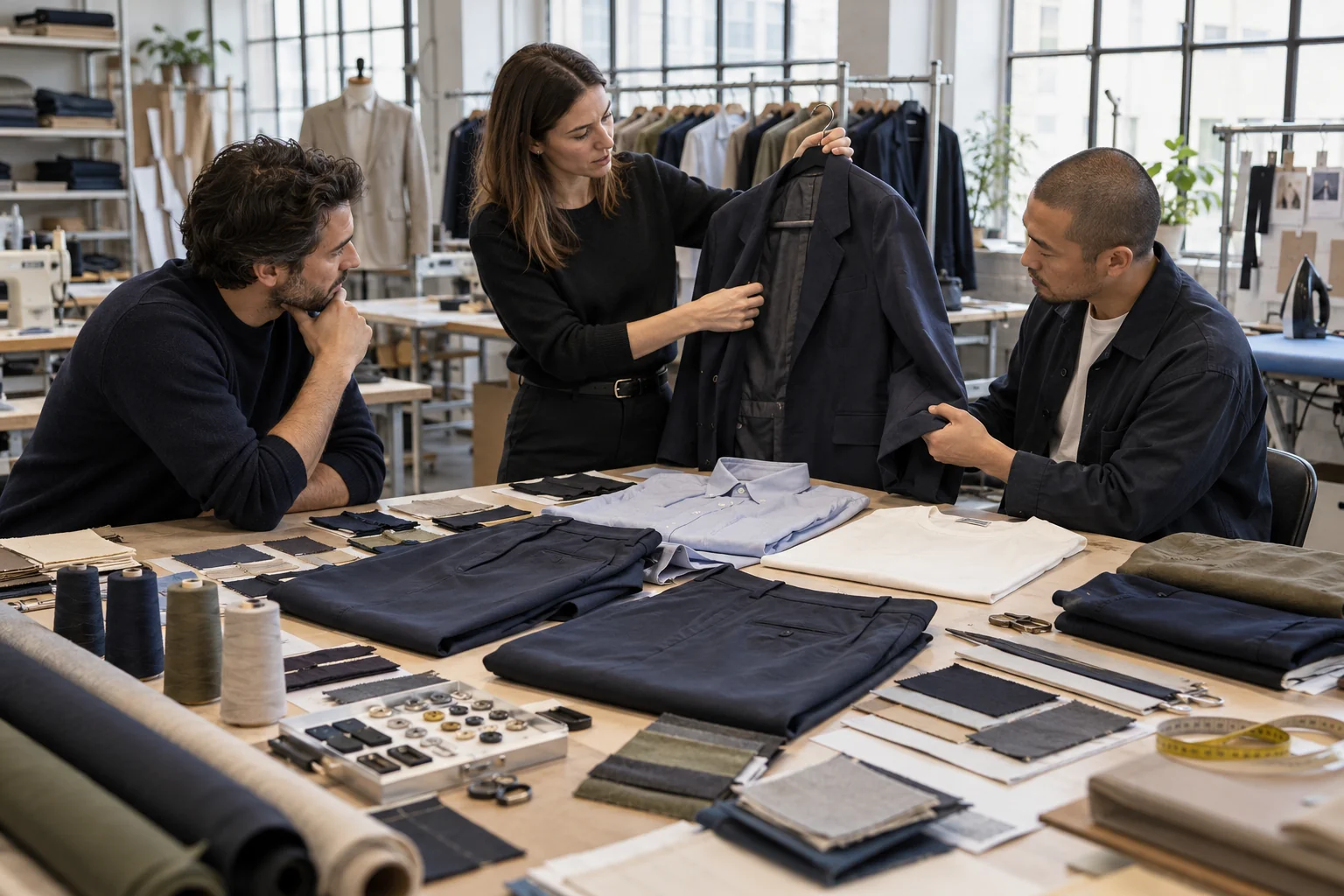
At a glance
Swipe the table sideways to compare both columns →
| Step | Include | Why it matters |
|---|---|---|
| 1. Define the product | Style name, garment category, intended customer, reference images, and annotated front and back views. | Gives the factory a shared starting point and prevents reference images from being treated as complete specifications. |
| 2. Specify materials and construction | Fabric composition, weight, finish, trims, seam details, artwork, and acceptable substitutions. | Makes material sourcing and construction assumptions visible before pricing or sampling. |
| 3. State quantities and sizing | Proposed order of at least 100 pieces, quantities by style and color, size range, and measurement chart. | Lets the factory confirm whether the MOQ applies per order, style, color, or fabric and assess the production mix. |
| 4. Set the sample and delivery plan | Sample size, approval process, destination, target dates, and required shipping basis. | Supports a realistic schedule: samples typically take 7 days after confirmation, while bulk timing depends on quantity. |
| 5. Request a structured quotation | Unit price, sample fees, material assumptions, packaging, testing, payment terms, exclusions, and quote validity. | Allows meaningful comparisons and exposes missing costs or conditions before commitment. |
Make the product understandable before asking for a price
Your first message should tell the factory what you want to make, who will wear it, and which details define the product. Introduce your brand briefly, then name each style and describe its intended use, fit, and quality level. Attach clear front and back drawings or photographs with annotations rather than relying on a mood board alone. Identify the features that must be reproduced, such as pocket placement, neckline shape, sleeve length, or closure type. If a reference image is only inspiration, say which elements are relevant and which are not. Ask the manufacturer to confirm experience with comparable garments and flag any construction details that need clarification before it prepares a quotation or starts a sample. Organize the attachments into a small, readable package with one style identifier and revision date used consistently across the email, drawings, measurement chart, and artwork files. A simple PDF overview is useful for first review, with editable artwork or spreadsheets supplied where needed.
State whether you already have a complete technical pack, a physical reference garment, or only an early concept. Do not describe an incomplete brief as production ready. Instead, list the decisions you need the factory to help resolve and ask whether development support carries a separate charge. End the introduction with a specific request: confirm feasibility, explain missing information, and provide a quotation based on the stated assumptions rather than silently filling in important gaps.
Describe materials, construction, and fit in measurable terms
Describe the main fabric using composition, knit or woven construction, target weight, color reference, and required finish wherever those details are known. For example, a request for cotton jersey is more actionable when it also identifies weight, stretch expectations, opacity, and whether a washed appearance is required. Include lining, rib, interlining, thread, buttons, zippers, labels, and any other components that affect appearance or performance. Distinguish fixed specifications from preferences so the factory knows when an alternative is acceptable. If you need sourcing recommendations, request options with prices and availability instead of leaving materials unrestricted. Ask whether fabric minimums or dyeing minimums could exceed the garment MOQ, particularly when you require custom colors or specially developed materials for this order. Provide a size chart with clearly defined points of measurement, the sample size, and the intended fit. Explain how each key measurement is taken, especially where different measuring methods could produce different results.
If you have not developed grading across sizes, ask whether the factory can propose it for your review and what that service costs. Identify critical construction details, seam finishes, print or embroidery dimensions, and artwork placement using measurements rather than visual estimates alone. Specify relevant quality expectations, such as shrinkage limits or colorfastness requirements, only where you can define the acceptance criteria. A photograph cannot establish these standards. Ask the factory to highlight any specification that conflicts with the chosen fabric, price target, or intended production method.
Clarify the 100-piece MOQ and request comparable pricing
State your proposed order quantity clearly and use 100 pieces as the starting MOQ for this brief, not as an assumption that every combination will qualify. Ask the manufacturer to confirm whether its minimum applies to the entire order, each style, each color, or each fabric. An order of 100 pieces divided across several designs may not meet the same conditions as 100 pieces of one design. Show your preferred quantity breakdown by style, color, and size, even if it is provisional. Ask which changes would make the order easier to produce without compromising your core requirements. If custom fabric, trims, or packaging introduce separate minimums, request those thresholds and any associated surcharges before selecting the final product configuration. Request an itemized quotation that states the currency, unit price, order quantity, material assumptions, and exactly what is included. Ask for sample charges, development fees, artwork setup costs, labels, packaging, and any requested testing to be identified separately when they are not included in the garment price.
Include your delivery destination and ask the factory to specify the shipping basis, including a named place and applicable Incoterms rule where relevant. Do not compare an ex-factory price with a delivered price as if they cover the same services. Request payment terms, quotation validity, and the circumstances that could trigger repricing. If you share a target budget, explain whether it covers garments only or also freight, duties, taxes, and other landed costs.
Agree on sample readiness, approvals, and bulk timing
Samples typically take 7 days once the brief and materials are confirmed, so establish what confirmation means before treating that estimate as a deadline. Ask whether the quoted period covers sample making only and whether it is measured in calendar or working days. Material sourcing, custom dyeing, print development, courier transit, and revision rounds may require additional time. Specify the sample size, color, fabric, branding, and purpose, such as checking fit or reviewing workmanship. If substitute materials will be used, document them and identify which decisions cannot be approved from that sample. Agree on sample fees, shipping responsibility, and how comments will be submitted. Use one consolidated feedback document with annotated photographs and measurements to reduce contradictory instructions during revisions. Bulk production timing depends on quantity, but the order size is not the only scheduling factor. Fabric availability, the number of colors, decoration complexity, factory capacity, approval speed, and holiday closures can all affect the plan.
Give the manufacturer your desired arrival date and destination, then ask for separate estimates for material preparation, production, inspection, dispatch, and transport. Clarify which approvals and payments are required before each stage begins. Do not authorize bulk cutting simply because a first sample has arrived; confirm the agreed approval process and any required preproduction sample. Record the final specifications and approved changes in a dated document. Ask how delays, quality issues, and proposed material substitutions will be communicated before committing to a production schedule.
Send these details together
- Attach a dated product overview with style identifiers, annotated references, and clearly marked unresolved decisions.
- Include fabric and trim specifications, artwork requirements, a measurement chart, and the intended sample size.
- Provide the quantity breakdown and confirm how the 100-piece MOQ applies to styles, colors, sizes, and materials.
- Confirm the starting conditions for the typical 7-day sample period and request a quantity-specific bulk schedule.
- Request an itemized quote, shipping basis, payment terms, approval milestones, and written confirmation of all assumptions.
This resource is a first-contact planning guide, not a supplier offer, contract, or confirm. The 100-piece MOQ is the planning baseline for this brief and must be confirmed with the selected manufacturer. Samples typically take 7 days after the brief and materials are confirmed; sourcing, revisions, and shipping may add time. Bulk timing depends on quantity and agreed production conditions. Buyers should verify supplier capabilities, destination-market compliance, testing needs, and commercial terms independently.
Prepare a quote briefThe RFQ form prepares a WhatsApp message for you to review. For files, email sales@clothingmanufacturerchina.com.
Questions before sampling
Can I split the 100-piece MOQ across multiple styles or colors?
Only if the manufacturer agrees. Ask whether the minimum applies per order, style, color, or fabric, and send your proposed size and color breakdown. Custom materials, trims, or packaging may have separate minimums even when the garment quantity qualifies.
Does the typical 7-day sample timeline start when I send my first email?
No. It typically starts once the brief and materials are confirmed. Ask the factory to identify the start date, whether it counts calendar or working days, and whether sourcing, revisions, and courier transit are excluded.
What should I send if I do not have a complete technical pack?
Send annotated reference images, a product description, intended fit, known material requirements, sample size, target quantities, and a list of unresolved specifications. Ask whether the factory offers technical development, pattern making, and grading, with separate fees and approval steps. Treat initial pricing as provisional until the specifications are agreed.
What are your MOQ, sample time and bulk lead time?
MOQ is 100 pcs. Samples take 7 days. Bulk production lead time depends on order quantity.