Peached vs Non-Peached Finish for Custom T-Shirts
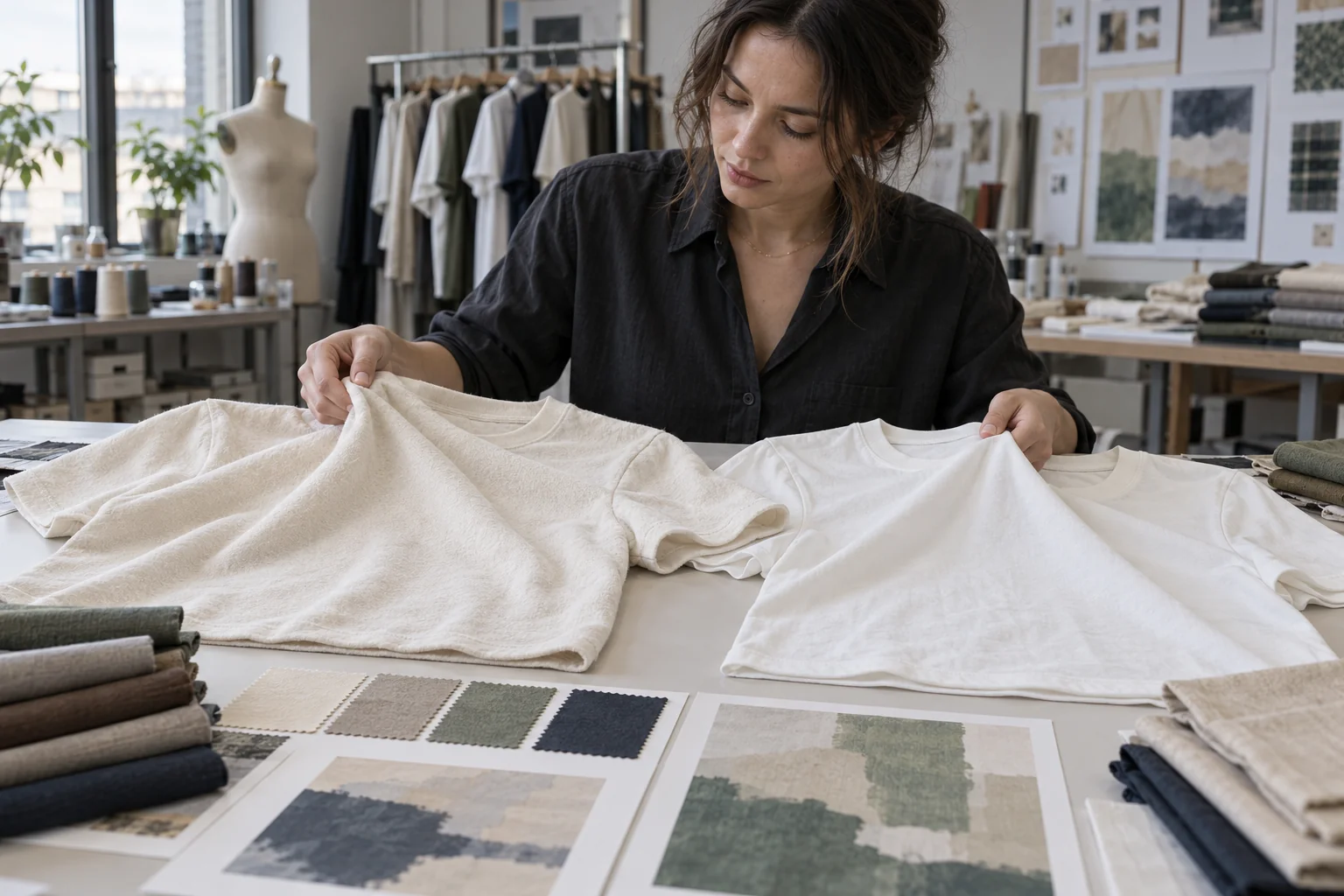
For menswear China OEM T-shirts, peached fabric offers a deliberately raised, soft surface, while standard non-peached jersey or interlock retains a comparatively cleaner knit face. Neither finish is automatically better: the buying decision depends on your target handfeel, decoration method, color presentation, fabric weight, and acceptable appearance after washing. Compare samples made from closely matched base fabrics, document the finishing route, and approve the decorated garment rather than relying on a fabric swatch alone. MOQ is 100 pcs; samples take approximately 7 days once the brief and materials are confirmed, and bulk production timing depends on quantity.
At a glance
Swipe the table sideways to compare both columns →
| Decision | Peached finish | Non-peached finish |
|---|---|---|
| Target handfeel | Soft, peach-skin surface; specify the approved level of surface raising. | Comparatively clean knit face; softness still depends on yarn, construction, and finishing. |
| Surface appearance | Visible surface fuzz may create a matte or softened visual effect. | Typically clearer knit definition, depending on the base fabric and other treatments. |
| Decoration approval | Sample the actual artwork and process; raised fibers can affect edge definition and surface coverage. | Often a simpler starting point for crisp graphics, but adhesion still requires sample evaluation. |
| Wash appearance | Check fuzz changes and pilling on the actual garment; do not assume a fixed performance level. | Check pilling and surface changes here too; absence of peaching is not a no-pilling guarantee. |
| GSM specification | Record finished GSM and compare drape, opacity, and recovery separately from perceived plushness. | Use the same finished GSM basis; weight alone does not establish equivalent quality or handfeel. |
1. Define the Base Fabric and Surface Finish Separately
Start the factory brief by separating fabric construction from surface treatment. Peached is a finish description, not a fiber composition or a substitute for jersey or interlock. A mill commonly creates the peach-skin effect through controlled mechanical surface abrasion or raising, although suppliers may use the term differently. Ask the factory to identify the intended process and provide a physical reference showing how much surface fuzz is acceptable. Specify cotton or blend composition, knit construction, target finished GSM, and garment use independently. For a menswear program, also describe whether the goal is a lightweight layering tee, an everyday regular-fit style, or a structured oversized silhouette.
Request peached and non-peached comparison swatches from the same base fabric wherever practical. A heavier interlock compared with a lighter single jersey will not isolate the effect of peaching, even when both are described as soft cotton. Yarn characteristics, knit density, softeners, and other finishing steps can influence the result. Label each sample with its construction, composition, finished GSM, color, and finishing route, then retain the approved reference for production. The companion guide How to Specify Clothing Fabric GSM explains how to make weight requirements clearer. Use that guidance to avoid approving a plush-feeling sample that misses your intended fabric weight, drape, or opacity.
2. Compare Handfeel, Color Appearance, and GSM Together
Evaluate handfeel with a repeatable buyer review rather than a single descriptive word such as premium. Compare face and reverse surfaces, skin contact, drape, stretch recovery, and how the fabric behaves when folded or lightly rubbed. Peaching can create a soft, velvety touch, but excessive surface raising may not suit a clean, compact menswear aesthetic. Non-peached jersey can still feel soft through fiber selection, yarn quality, and suitable finishing, while interlock can provide a smoother, more substantial impression without a peach-skin surface. Review both options in the intended garment weight because GSM influences body and drape, but does not measure softness or prove durability.
Judge color on physical samples under agreed lighting conditions, including the environment where the collection will be sold or photographed. Raised fibers scatter light differently, so a peached surface may appear more muted, matte, or lighter from some angles than a cleaner face in a similar shade. That perception is not proof of poorer dyeing or lower colorfastness. Ask for shade approval on fabric with the intended final finish, not on an unfinished reference that will later change appearance. Read Garment Dyed vs Piece Dyed T-Shirts alongside this comparison when choosing the coloration route, because dyeing sequence and finishing sequence are separate decisions that should be recorded together.
3. Evaluate Decoration and Wash Appearance on Actual Samples
Treat print compatibility as a sampling question, not a blanket claim that one finish always holds ink better. Raised surface fibers can influence print edge definition, coverage, texture, and the way a graphic looks after handling or washing. A non-peached face may offer a cleaner starting surface, but it does not guarantee adhesion. Fiber composition, residual finishing chemicals, ink or transfer system, pretreatment, and curing conditions can all matter. Send the actual artwork, placement, dimensions, and decoration method to the factory. Review fine lettering, solid coverage areas, and any stretch-sensitive details on a decorated garment made with the proposed production fabric and finish.
Agree on a wash review that reflects the proposed care instructions and the end customer's likely use. Record the washing and drying settings and the number of cycles used for the comparison, then examine both garments under the same conditions. Check surface fuzz changes, localized pilling, shade appearance, shrinkage, twisting, and decoration edges. Distinguish the intentional soft nap of peached fabric from pills that form as fibers entangle into small balls. Both peached and non-peached fabrics can pill depending on fiber, yarn, construction, and use. These sample observations are not invented laboratory results or a durability guarantee; request an agreed testing protocol if your buying program needs formal evidence.
4. Lock the Sample Standard Before Placing the Bulk Order
Build the sample request around a decision-ready specification rather than asking only for a soft tee. Include the tech pack, size measurements, fiber composition, knit construction, finished GSM target and tolerance, shade reference, surface finish reference, artwork, labels, and packing needs. Identify which details are fixed and which the factory may propose alternatives for. MOQ is 100 pcs, so confirm how sizes, colors, and finish options can be allocated within the quoted order before treating that minimum as applicable to every possible combination. Samples take approximately 7 days once the brief and materials are confirmed. Clarify whether any requested testing, shipping, or revision round sits outside that sample preparation estimate.
Use How to Approve Clothing Samples as companion reading when turning the preferred sample into a bulk approval standard. Sign off the whole garment, including handfeel, visible fuzz, shade, fit, decoration, and agreed wash observations, and keep matching labeled references with the buyer and factory. Record approval conditions in writing, especially where a finish is acceptable only at a specific surface intensity or GSM. Ask how the factory will compare bulk fabric and finished garments against that reference, without assuming inspection eliminates all variation. Bulk production timing depends on quantity; request a schedule for the actual order after confirming fabric availability, decoration requirements, and approval milestones.
Send these details together
- Specify fiber composition, jersey or interlock construction, finished GSM and tolerance, and the intended peaching level separately. Attach a labeled physical reference instead of relying only on descriptions such as extra soft.
- Compare closely matched peached and non-peached fabrics in the intended color and garment weight. Review handfeel, drape, opacity, knit definition, and visible surface fuzz before selecting the finish.
- Approve actual artwork on the proposed finished fabric using the intended decoration process. Document print coverage, edge clarity, surface texture, and observations after the agreed washing routine.
- Confirm MOQ 100 pcs and the permitted size, color, and finish allocation in the quotation. Plan for samples in approximately 7 days after brief and materials confirmation, with bulk timing dependent on quantity.
- Retain the approved garment and written specification with matching factory references. Record care instructions, wash review conditions, acceptable appearance, and any formal testing requirements before authorizing bulk production.
This buying resource covers peached and non-peached jersey or interlock for menswear China OEM custom T-shirts. It provides specification and sample-review guidance, not laboratory findings, certification claims, or guaranteed performance. Reprint permission is granted with attribution to clothingmanufacturerchina.com and sales@clothingmanufacturerchina.com.
Prepare a quote briefThe RFQ form prepares a WhatsApp message for you to review. For files, email sales@clothingmanufacturerchina.com.
Questions before sampling
Is peached fabric better than non-peached fabric for menswear T-shirts?
Not universally. Peached fabric is useful when the brief calls for a soft, lightly fuzzy surface, while non-peached fabric suits a comparatively cleaner knit appearance. Compare the same composition, construction, and finished GSM where possible. The better option is the one that meets your approved handfeel, fit, color, decoration, and wash appearance requirements at the agreed cost.
Can peached T-shirts be screen printed or decorated with transfers?
They may be suitable, but the finish name alone cannot establish compatibility. Raised fibers and other finishing treatments can affect the decoration surface, and the result also depends on the ink or transfer system and processing conditions. Request a decorated sample with your actual artwork, then review clarity, coverage, flexibility, and wash appearance. Non-peached fabric also requires approval; it is not an adhesion guarantee.
What are the MOQ and sample timing for a peached versus non-peached comparison?
MOQ is 100 pcs. Confirm how the quoted minimum applies to your requested colors, sizes, and finish options rather than assuming every combination is available at that quantity. Samples take approximately 7 days once the brief and materials are confirmed. Ask whether both comparison fabrics are available and whether shipping or additional review work requires extra time. Bulk timing depends on quantity and should be confirmed for the actual order.
What are your MOQ, sample time and bulk lead time?
MOQ is 100 pcs. Samples take 7 days. Bulk production lead time depends on order quantity.