How to Brief a Custom Jogger Pants Manufacturer
Briefing a custom jogger pants manufacturer starts with defining the finished silhouette and how the knit fabric should behave in wear. Specify tapered or relaxed proportions, fleece, French terry, or jersey, then connect waistband tension, cuff opening, pocket construction, and decoration placement to measurable requirements. Confirm MOQ 100 pcs per color per design separately from fabric, rib, drawcord, and decoration minimums. Samples take approximately 7 days once the brief and materials are confirmed; allow additional time for shipping and revisions. Bulk timing depends on quantity, material readiness, capacity, and approvals. Release production against an approved garment, graded measurements, and documented component references.
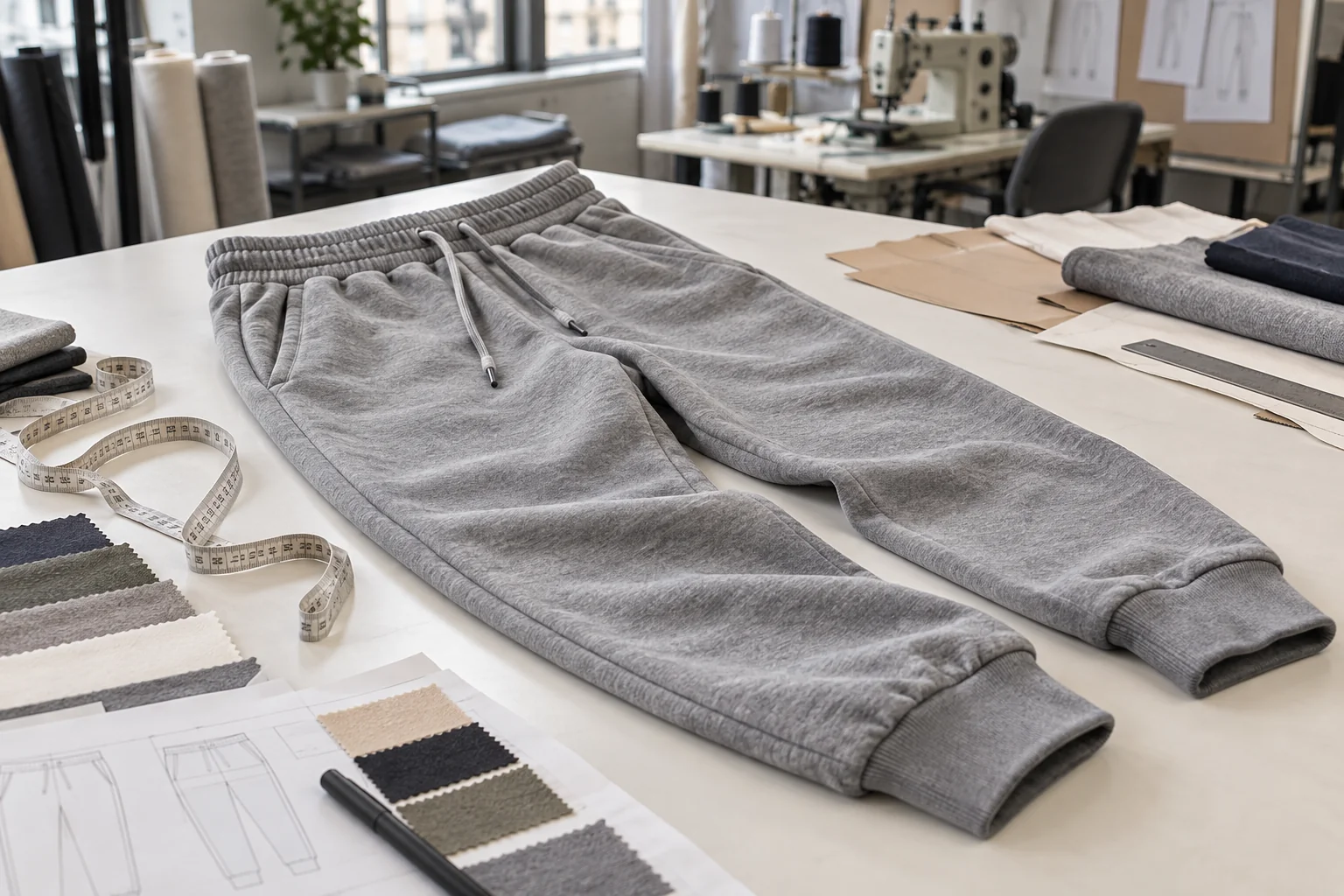
At a glance
Swipe the table sideways to compare both columns →
| Briefing point | Evidence to request | Decision or control |
|---|---|---|
| Silhouette and size range | Measurement diagram, base-size sample, and proposed grade rules | Approve taper, rise, ease, and cuff position across the intended sizes |
| Body fabric and rib | Identified articles, weight, composition, finishing condition, and care findings | Qualify the actual material combination rather than matching appearance alone |
| Waistband and cuffs | Elastic specification, drawcord route, cuff construction, and stretch assessment | Define relaxed dimensions and functional extension separately |
| Pockets and decoration | Pocket cross-sections, reinforcement details, placement diagrams, and decorated sample | Check usability, interior comfort, and clearance from seams and hardware |
| Production release | Approved sample, size-set findings, bill of materials, and inspection plan | Close revisions and confirm quantity allocation before authorizing bulk |
1. Give the custom jogger pants manufacturer a measurable silhouette
Start with the intended wearer, use, and silhouette rather than a collection of unrelated reference photographs. State whether the jogger is tapered, relaxed through the leg, or roomy at the seat with a sharper reduction below the knee. Identify the intended waist position, rise, crotch depth, inseam, and where the cuff should sit on the wearer. Supply front, back, and side references with annotations explaining which features matter and which should not be copied. A relaxed upper leg does not automatically mean a dropped crotch, and a narrow cuff does not establish the full taper. Give the OEM a base size and a measurement diagram showing the exact locations for waist, hip, thigh, knee, leg opening, and inseam. Identify whether the measurements describe a finished garment before or after the agreed care procedure.
Translate the desired appearance into a fit review that the buyer and factory can repeat. Specify the intended body measurements or fit model information, preferred ease, and the footwear relationship if cuff stacking is part of the design. Ask the pattern maker to flag conflicts between the references and the measurement table before cutting. For example, a short rise, deep pocket bag, and low pocket opening may compete for the same space. Review the first sample standing, sitting, and bending, recording waistband movement, crotch restriction, knee tightness, and pocket flare separately. Do not resolve every issue by adding width throughout the garment. Mark the affected pattern area, the proposed correction, and any measurements that should remain unchanged. Keep one dated comment sheet so that later samples do not reintroduce rejected proportions or mix instructions from different reviewers.
2. Specify fleece, French terry, or jersey as an identified material
Choose the fabric route according to the required structure, surface, and wearing conditions. Fleece, French terry, and jersey describe broad constructions, not interchangeable performance levels. Record the supplier article, fiber composition, weight in GSM, usable width, face appearance, reverse construction, and finishing condition. For fleece, describe the required brushed surface and acceptable appearance after care. For French terry, identify the loop-back character and whether the reverse will be visible anywhere. For jersey, ask the OEM to assess opacity, seam stability, and whether the proposed weight supports the intended pockets and waistband. Include stretch direction and an agreed assessment of extension and recovery where relevant. Request actual fabric references rather than approving a name such as heavyweight cotton. A similar stated weight can still produce a different drape, bulk at seams, or tendency for the knees to lose shape.
Have the factory make development samples in the proposed bulk fabric whenever possible, with substitutions clearly identified. Request dimensional-change findings under an agreed care procedure and check leg twisting, surface change, color transfer risk, and recovery as appropriate to the product. Agree evaluation methods and acceptance criteria rather than treating an unspecified test result as approval. Link the fabric behavior to pattern allowances, seam choices, and garment measurements after finishing. Qualify rib, pocketing, and waistband materials alongside the body cloth because different shrinkage or shade behavior can become visible only after assembly and care. For each color, approve a physical color reference and the method for comparing body fabric, rib, thread, and cord. Confirm stock availability or production minimums before reserving the sample schedule. Record who must approve a new article, finish, or dye lot and which changes require another garment sample.
3. Define waistband tension, drawcord routing, and cuff construction
Describe the waistband with a construction sketch showing finished height, layers, elastic location, stitch rows, and drawcord channel. Identify whether elastic is enclosed, attached to the body, or secured by stitching that limits rolling or twisting. Give a relaxed waist measurement and agree how usable extension and recovery will be assessed; a maximum stretch measurement alone does not establish comfortable wearing tension. Request the elastic reference, width, and sample feel before approving a replacement. Specify an internal or external drawcord, its material and shape, exit locations, end treatment, and finished exposed length under a stated waistband condition. Confirm whether cord ends are knotted, folded, or fitted with components, and review attachment security and wearer contact. Ask the factory to explain how cord routing avoids catching in stitch rows and how the waistband seam is finished against the skin.
Choose rib, self-fabric, or elasticated cuffs deliberately, then define the finished height and opening for each size. Rib cuffs need a material reference, direction, seam placement, and an agreed relationship between cuff circumference and the leg panel. Self-fabric cuffs may offer less recovery, so check foot passage and whether the opening stays close enough to the ankle after wear. An elasticated hem needs its own casing, elastic, and stitching details rather than being treated as a simple substitute for rib. Inspect bulk where the inseam joins the cuff and whether the seam allowance creates a pressure point. Evaluate the cuff with the intended inseam because a tight opening can cause stacking while a loose opening may hang lower. Review waistband and cuff behavior after care, and document any pattern or component changes needed before approving the final construction.
4. Resolve pocket usability, reinforcement, and interior finish
Specify every pocket by type, opening location, opening length, bag dimensions, and material. For side-entry pockets, show the opening angle and its relationship to the waistband, side seam, and hip measurement. State the intended carrying use so the factory can assess depth and support without assuming that all buyers need the same pocket volume. Request a sketch or construction sample showing how the pocket bag is anchored and how its edge is finished. Lightweight pocketing can reduce bulk, but it still needs suitable strength, opacity, and compatibility with the body fabric. Self-fabric bags may create a visible outline or heavy layer over the thigh. Check whether the bag falls below the intended decoration zone or catches at the knee when seated. Review pocket gaping on the wearer rather than relying only on a flat garment photograph.
For zippered, welt, patch, or back pockets, identify the closure, reinforcement, seam allowances, and interior coverage required. Confirm zipper length, tape appearance, puller shape, and whether any exposed edges could rub the wearer. A zippered opening in a soft knit may need stabilization, but the reinforcement should not create an unwanted rigid patch. Locate bar tacks or other reinforcement on the drawing and review their appearance on the actual fabric. Ask the OEM to flag operations that could stretch the opening or distort the surrounding panel. Inspect both inside and outside, including loose pocket corners, caught seams, and contact between hardware and skin. Evaluate the finished pockets with representative contents during fitting, without assuming that this replaces agreed durability checks. Retain the approved pocket construction in the technical pack so a later cost revision does not silently change usability.
5. Approve decoration placement with construction clearance
Provide production-ready artwork with dimensions, colors, orientation, and the requested decoration method, while allowing the factory to identify technical conflicts. Locate each graphic from named garment landmarks rather than describing it as left thigh or near the pocket. State whether placement is measured on a flat, relaxed garment and whether the dimensions apply before or after finishing. Show the distance from pocket openings, bag edges, side seams, cuff joins, and waistband stitching. Ask the decoration supplier to confirm the clearance it needs for frames, platens, pressing, and handling; there is no single clearance suitable for every process. Identify any design that intentionally crosses a seam as a separate development requirement. A position that looks available on a flat front panel may be obstructed by pocket construction or difficult to access after the garment is sewn.
Agree whether decoration occurs on cut panels or assembled garments and document the consequences for alignment, rework, and inspection. Panel decoration can provide access, but the sewing process must preserve its final position. Garment decoration reflects the assembled shape but may be affected by seam bulk and internal layers. Review embroidery backing, print deposits, or transfer edges against comfort and fabric movement, especially where the wearer bends at the hip or knee. Approve an application on the actual fabric and color, then assess appearance after the intended care procedure using agreed criteria. Define whether artwork size stays constant across sizes or changes at specified size breaks, with placement instructions for each case. Keep an approved decorated garment or clearly linked application reference, and require review when artwork, substrate, application settings, or production sequence changes materially.
6. Close fit grading, sample approval, and bulk release gates
Ask for a graded measurement table with measurement methods and tolerances before treating base-size approval as full size-range approval. Review how waist, hip, rise, thigh, knee, inseam, and cuff opening change together. Proportional growth is not necessarily a suitable grading rule for every measurement, particularly where relaxed fit and a controlled ankle opening are combined. Check pocket reach, bag depth, drawcord length, and artwork position at the smaller and larger ends of the range. Agree which sizes need physical samples based on fit risk and the breadth of the range; do not assume a single middle size proves every size. Record each size-set correction against the pattern version and update the technical pack. Separate measurement tolerance from grade increments so production variation is not used to excuse a deliberate size-to-size change that was never approved.
Confirm MOQ 100 pcs per color per design and submit the size allocation, keeping fabric, custom rib, drawcord, and decoration minimums separate. Samples take approximately 7 days once the brief and materials are confirmed; clarify which sample stage that estimate covers and allow additional time for shipping, testing, and revisions. Bulk timing depends on quantity, materials, capacity, and approval dates, so request a schedule tied to named release gates rather than an unsupported delivery promise. Before cutting, approve the final sample, bill of materials, graded table, colors, decoration, labels, and packing instructions. Agree an inspection plan covering measurements, workmanship, component function, shade grouping, and any required performance checks. Define who may authorize rework or substitutions. Require written closure of outstanding comments, with an updated reference where necessary, so approval of one detail cannot be mistaken for permission to start the entire order.
Send these details together
- Define tapered or relaxed proportions with a base size, measurement diagram, wearer information, and fit-review movements.
- Identify body fabric, rib, and pocketing articles, including composition, GSM, finishing condition, shade references, and care evaluation.
- Specify waistband construction, elastic behavior, drawcord routing, cuff type, and finished openings across sizes.
- Approve pocket depth, attachment, reinforcement, hardware contact, and interior finish on a wearable sample.
- Confirm decoration method, production sequence, size rules, and clearance from pockets, seams, and waistband components.
- Close size-set comments and approve the production references, inspection plan, and quantity allocation before bulk release.
This guide covers buyer-side planning for knit custom jogger pants with a China menswear OEM, including fabric selection, fit, components, decoration, grading, and production approvals. MOQ 100 pcs per color per design is the starting garment requirement; confirm size allocation and separate material or process minimums for the proposed order. Samples take approximately 7 days once the brief and materials are confirmed, with additional time where development, shipping, or revisions are needed. Bulk timing depends on quantity, material readiness, capacity, and approvals. Destination-specific labeling and product requirements need separate confirmation. Reprint attribution: clothingmanufacturerchina.com.
Prepare a quote briefThe RFQ form prepares a WhatsApp message for you to review. For files, email sales@clothingmanufacturerchina.com.
Questions before sampling
What should I send with an initial custom jogger pants inquiry?
Send annotated silhouette references, a base-size measurement table, intended size range, fabric requirements, color allocation, and construction details for the waistband, cuffs, and pockets. Include artwork dimensions and placement if decoration is required. Identify which details are fixed and which need development advice. This allows the OEM to flag missing inputs and quote against a defined garment rather than a general photograph.
Can I use the same pattern for fleece, French terry, and jersey joggers?
Treat the existing pattern as a starting point, not an automatic approval. Changes in stretch, recovery, thickness, drape, and dimensional change can affect ease, cuff behavior, waistband bulk, and pocket appearance. Ask the factory to review the proposed fabric and make an actual-material sample. Keep any revised pattern linked to its fabric article so later orders do not mix incompatible approvals.
Does MOQ 100 pcs per color per design include custom components?
That is the starting garment requirement, not confirmation that every material or process is available at the same minimum. Custom-dyed rib, special drawcords, hardware, and decoration may create separate commitments. Request those quantities and any surplus ownership terms in the quotation. Confirm the proposed size split and component availability before relying on the minimum for a purchasing decision.
What needs approval after the first jogger sample?
Close fit and construction comments, then verify the relevant size grading, actual materials, decoration, and care behavior. Depending on development risk, this may require a revised sample, selected size-set samples, or a final preproduction reference. Approximately 7 days applies once the brief and materials are confirmed, not necessarily to the complete approval cycle. Agree the required stages before scheduling bulk.
What are your MOQ, sample time and bulk lead time?
MOQ is 100 pcs. Samples take 7 days. Bulk production lead time depends on order quantity.