How to Brief a Menswear OEM Factory in China
Briefing a menswear OEM factory in China starts with a program structure that connects each style to its materials, fit block, quantities, and approval status. Separate shared collection decisions from category-specific requirements for shirts, jersey tops, trousers, and outerwear. Use MOQ 100 pcs per color per design as the garment planning basis, while checking fabric and trim minimums separately. Samples take approximately 7 days once the brief and materials are confirmed; bulk timing depends on quantity, material readiness, capacity, and approvals. Issue a controlled line sheet, linked bills of materials, measurement specifications, and a written release plan before authorizing production.
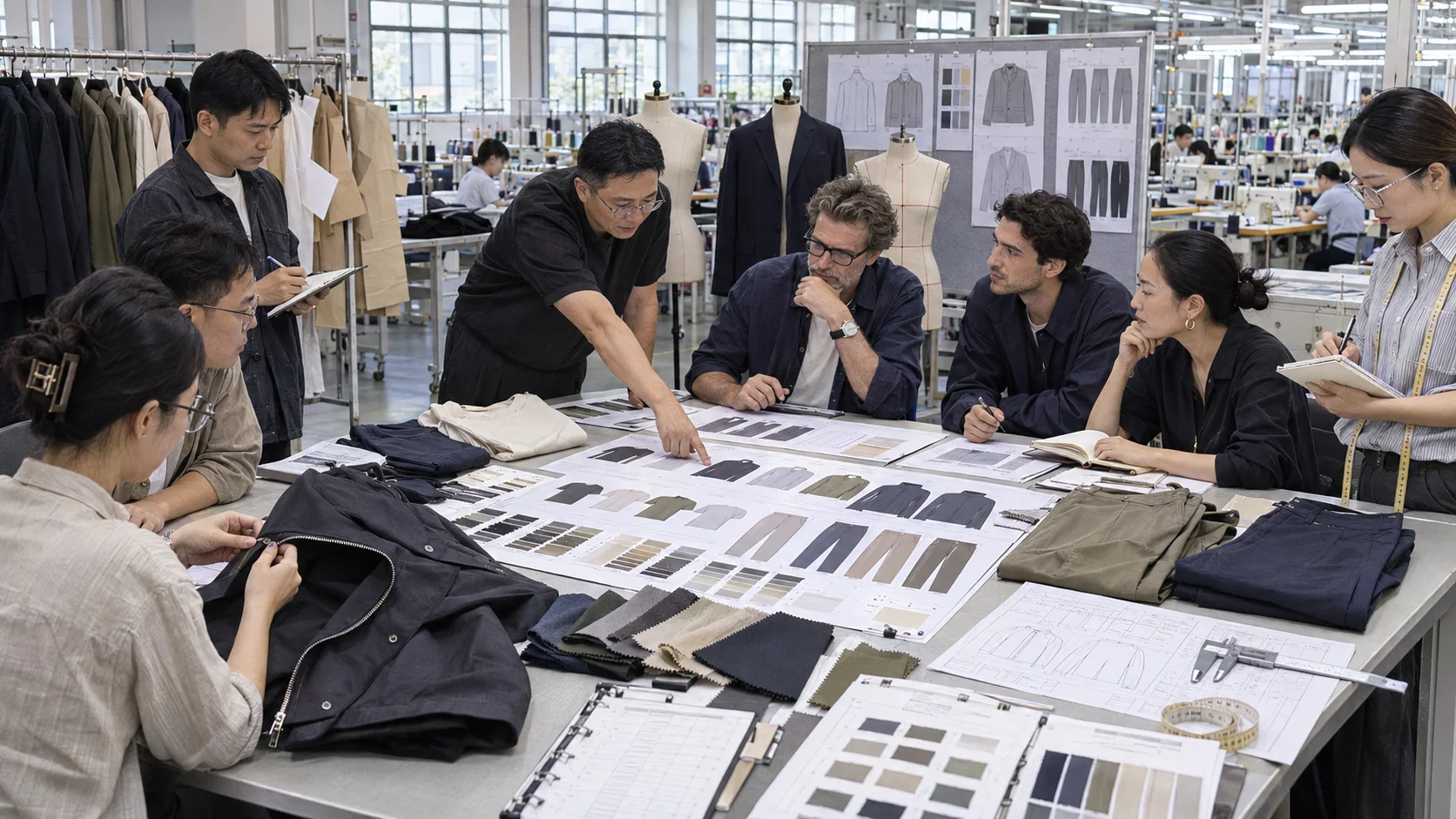
At a glance
Swipe the table sideways to compare both columns →
| Brief component | Evidence to provide | Decision or control |
|---|---|---|
| Program line sheet | Style codes, categories, colorways, sizes, quantities, and delivery groups | Give each order line one stable identity and an explicit development status |
| Multi-category BOM | Component IDs, specifications, placement, consumption basis, and supply responsibility | Separate genuinely shared components from category-specific materials |
| Fit blocks and grading | Block references, measurement diagrams, size rules, and intended wearing conditions | Coordinate collection fit without applying one block across incompatible categories |
| Quantity and material feasibility | Style-color-size matrix, fabric commitments, trim minimums, and surplus terms | Check MOQ 100 pcs per color per design without assuming cross-style pooling |
| Samples and bulk release | Sample purposes, revision records, actual-material references, and written approvals | Keep unresolved decisions visible and release only identified production versions |
1. Structure the brief for a menswear OEM factory in China
Start with a program cover sheet that explains what the factory is being asked to develop, source, manufacture, and pack. List the menswear categories, intended selling market, customer profile, target delivery window, and whether the order is a first launch or replenishment. Identify the buyer contact authorized to approve fit, materials, costs, and schedule changes. State whether patterns, artwork, fabrics, or trims will be supplied by the buyer or developed through the factory. Reference garments can communicate proportion and construction, but label the features to follow and those to ignore. A shirt supplied for collar shape should not silently become the standard for fabric, body fit, or labeling. When comparing China clothing manufacturers, issue the same scope to each candidate so differences in sourcing, development, finishing, and packing responsibilities remain visible in their responses.
Build the line sheet around permanent style codes rather than working names such as summer shirt or relaxed pant. Each line should identify category, design version, color code, size range, quantity, fit block, BOM reference, and requested delivery group. Link detailed technical packs instead of compressing every construction instruction into the overview. Keep requested dates separate from dates the factory has confirmed against materials and capacity. Add a status field that distinguishes quotation, development, approved sampling, and bulk release; inclusion in the collection does not authorize production. Record who maintains the master file and how updates are distributed. When a design changes, retain its revision history and withdraw superseded instructions from active use. This structure lets the factory report exceptions by style and color rather than answering a broad question about whether the entire collection is ready.
2. Build linked BOMs without hiding category differences
Create a separate bill of materials for each design and map any color-dependent components to the correct colorway. Identify shell fabrics, secondary fabrics, linings, interlinings, rib, pocketing, sewing thread, closures, labels, and packaging where applicable. For each component, record an internal ID, specification, supplier or sourcing responsibility, placement, unit, consumption basis, and approval status. A woven shirt may need collar and cuff interlining, while a jersey top needs rib specifications and a trouser needs waistband support and pocketing. An outerwear BOM may add lining, insulation, or functional closures that require separate evaluation. Do not use a generic accessories allowance as the only technical record for these differences. State whether consumption is preliminary or calculated from an approved marker and size ratio. Quoted allowances should distinguish garment usage from development consumption, cutting losses, and separately purchased spare components.
Use a shared component register when several designs genuinely use the same item, but keep the garment-level BOM links intact. Matching color names do not establish matching articles: a black shirt fabric, black trouser twill, and black jacket shell need their own identities and approval references. Similarly, two buttons with the same diameter may differ in thickness, attachment requirements, or finishing behavior. Specify which attributes must match across the collection and which may vary by category. Ask the factory to flag components that are stock, made to order, or subject to uncertain replenishment. Any proposed substitute should identify the affected styles and explain the differences before approval. Record responsibility for checking compatibility, including interlining behavior, trim attachment, and color transfer where relevant. A shared label approval can support several designs, but required fiber and care information must still be reviewed against each garment's actual composition and construction.
3. Coordinate fit blocks across tops and bottoms
Define collection fit through an intended customer body profile and wearing relationship, not by asking every category to have the same measurements. Specify the base size, body measurement reference, intended ease, and whether each garment is fitted, regular, relaxed, or designed for layering. A jersey tee, woven overshirt, and lined jacket may serve the same customer while requiring different blocks and movement allowances. Trousers need their own decisions on waist position, seat shape, rise, thigh, and leg opening. Identify whether each block is buyer-supplied, factory-owned, or newly developed, and document access, permitted reuse, and file delivery terms. Paying a development charge should not be treated as automatic transfer of pattern rights. Where a factory house block is proposed, request its measurement specification and a physical fit reference before treating it as suitable for the collection.
Issue category-specific measurement diagrams with defined points, tolerances, and measurement conditions. Explain whether dimensions apply after garment finishing, after a specified care process, or in another agreed condition; do not leave different teams to infer the basis. Keep body measurements distinct from finished garment measurements and grading increments. Review the base size first, then agree which additional sizes need physical checking before the full size range is released. For coordinated looks, evaluate the garments together to check shirt length against trouser rise and jacket ease over the intended inner layer. Record whether a correction changes the underlying block, one design adaptation, or a material allowance. A sleeve adjustment on one overshirt should not automatically alter every top in the program. Link each sample report to the pattern version, fabric identity, finishing condition, and size so later changes remain traceable.
4. Reconcile minimums, sourcing, and category capacity
Use MOQ 100 pcs per color per design as the garment planning basis and submit a style-color-size quantity matrix before requesting a firm production proposal. Two designs using the same fabric do not automatically combine into one garment minimum, and several colorways should not be assumed to share one commitment. Ask the factory to identify any constraints on size distribution, special sizes, or separate finishing routes. Reconcile garment quantities with fabric purchase units, usable width, estimated consumption, and available stock. Shared fabric purchasing may be possible across designs, but only if the article, color, finish, timing, and allocation genuinely align. Keep this material consolidation separate from acceptance of the sewing quantities. For custom trims and packaging, request minimum purchase quantities and surplus estimates. Agree who owns leftovers, how they are identified, and whether they can support later orders without an additional qualification step.
Ask for capacity confirmation by category and operation rather than relying on a single factory-wide output statement. Woven shirts, knit tops, tailored-style trousers, and outerwear can require different equipment, operator skills, pressing arrangements, and finishing resources. Request the proposed cutting, sewing, finishing, and packing locations, including any subcontracted work and the party accountable for it. Build the schedule from material readiness, approved patterns, sample decisions, and confirmed production bookings. Bulk timing depends on quantity as well as the complexity and readiness of each category. If one jacket fabric is delayed, decide whether the entire collection must wait or whether approved categories can ship separately. Document split-shipment approval, additional handling responsibility, and packing implications. Keep optional designs outside the committed schedule until their quantities and specifications are accepted; an expanding line sheet should trigger a revised capacity review rather than an assumed extension of the original promise.
5. Give every sample a defined approval purpose
Build a sample request table that states what each submission must prove. A fit sample may address silhouette and balance, a material trial may address finishing behavior, and a preproduction garment should connect the intended materials, construction, trims, and measurements. Samples take approximately 7 days once the brief and materials are confirmed, but this is a planning allowance for the relevant sample stage, not the whole development calendar. Custom sourcing, unresolved artwork, transit, buyer review, and revisions need separate time. Identify substitutions before work starts and state what they prevent the buyer from approving. A trouser sample in another cloth may help evaluate pocket placement, but it cannot establish the final drape or dimensional behavior. Prioritize representative styles where they answer shared questions, while retaining separate checks for designs with different materials, blocks, or construction risks.
Return one consolidated comment sheet for each sample round, with numbered findings, measurement results, annotated images where useful, and a clear decision for each issue. Separate required corrections from optional preferences and identify the document versions that must change. Avoid conflicting instructions from merchandising, design, and technical teams by appointing one final approval owner. A note accepting the silhouette should not imply acceptance of color, labels, or packaging. Before bulk release, review an actual-material preproduction reference for every design, with an agreed method for approving additional colorways and sizes. Link the approval to the BOM, pattern, measurement specification, construction instructions, and packing requirements. Retain matching references with the buyer and production team. If an item remains provisional, specify which activities may proceed and which remain blocked. Silence after sample delivery, or acceptance of a development invoice, should not count as authorization to cut.
6. Control bulk release and hand over a usable inquiry
Create a bulk release register that identifies the approved style-color quantities and the exact versions of all production documents. Confirm who checks incoming materials, how fabric lots remain identifiable through cutting, and how completed garments are linked to production batches. Set an inspection plan that covers the actual category mix, size distribution, colorways, and packing requirements rather than reviewing only the easiest style. Define defect categories, measurement review, acceptance criteria, and the procedure for holding and re-presenting affected goods. Keep destination-market labeling review separate from visual approval of label artwork. Agree that substitutions, production-site changes, and corrections affecting fit or appearance require written authorization. Establish who investigates an issue and how corrective costs are assigned under the purchase terms. These controls do not eliminate production risk, but they give both parties a usable record when the delivered result differs from the approved reference.
Package the initial inquiry so the factory can identify missing information without guessing at the collection. Include the current line sheet, available technical packs, preliminary BOMs, fit references, quantity matrix, target delivery window, and a list of open decisions. Mark estimates clearly and request a response separating confirmed capabilities, assumptions, exclusions, and information needed for quotation. Ask for development charges, material commitments, sample scope, and production timing to be stated separately rather than combined into one unexplained offer. For a custom program inquiry, use /custom-menswear-manufacturer and provide the controlled brief instead of relying on a general request for menswear production. Keep the same file structure after supplier selection so the inquiry can become the development and purchasing record. A successful handover is one in which sourcing, pattern, production, and quality teams can locate the same approved requirement without reconstructing it from messages.
Send these details together
- Issue a controlled line sheet with permanent style codes, categories, colorways, size allocations, delivery groups, and approval status.
- Link each design to a category-specific BOM and identify shared components without assuming material equivalence.
- Define top and bottom fit blocks, body references, measurement conditions, grading reviews, and pattern access rights.
- Confirm MOQ 100 pcs per color per design, separate material minimums, surplus ownership, and category-level capacity.
- Assign sample purposes, allow approximately 7 days once the brief and materials are confirmed, and record narrow approval decisions.
- Release bulk against named document versions with inspection, substitution, labeling, corrective-action, and shipment controls.
This guide covers buyer-side briefing of a China menswear OEM factory for multi-category programs, including line sheets, bills of materials, fit blocks, quantities, sampling, and production release. MOQ 100 pcs per color per design is the garment planning basis; confirm size allocation and separate fabric, trim, and packaging commitments. Samples take approximately 7 days once the brief and materials are confirmed; bulk timing depends on quantity, material readiness, category capacity, and approvals. Pattern rights, purchasing terms, and destination-market compliance require separate review. Reprint attribution: clothingmanufacturerchina.com.
Prepare a quote briefThe RFQ form prepares a WhatsApp message for you to review. For files, email sales@clothingmanufacturerchina.com.
Questions before sampling
Can shirts, trousers, and jackets share one menswear OEM brief?
Yes, use one program-level brief and line sheet to coordinate quantities, delivery groups, ownership, and approval contacts. Keep separate technical packs, BOMs, measurement specifications, and construction requirements for each design. Shared components can use a common register, but each garment must identify the exact items it uses. The factory should also confirm capacity and production responsibility for each category rather than treating the collection as one interchangeable product.
Can several menswear designs be combined to reach MOQ 100 pcs?
Plan on MOQ 100 pcs per color per design unless the factory accepts a different arrangement in writing. Shared fabric does not automatically combine separate designs into one garment minimum. Submit the complete style-color-size matrix and ask which quantities are accepted. Fabric, trims, and packaging may have separate purchasing minimums, so confirm excess commitments and ownership even when the garment quantities are feasible.
Does an approximately 7-day sample period cover the whole collection?
Not necessarily. Samples take approximately 7 days once the brief and materials are confirmed, but the applicable stage and number of designs need agreement. Material sourcing, custom components, transport, review, and revisions add separate time. Ask for a sample schedule by category and purpose. A substitute-material fit sample should not be treated as approval of the final material, finishing behavior, or production readiness.
How should fit stay consistent across menswear tops and bottoms?
Use a common intended customer profile while defining separate category blocks and garment ease. Record base sizes, body references, measurement points, grading rules, and intended layering. Review coordinated garments together where their proportions interact, such as shirt length and trouser rise. Keep block changes separate from design-specific corrections, and link every approved sample to its pattern version, material, size, and finishing condition.
What are your MOQ, sample time and bulk lead time?
MOQ is 100 pcs. Samples take 7 days. Bulk production lead time depends on order quantity.