How to Build Private Label Clothing Cost Breakdown
Learning how to build private label clothing cost breakdown worksheets starts with separating garment inputs, conversion work, development charges, and buyer-managed logistics. Give every line a quantity basis, supporting evidence, inclusion boundary, and approval status instead of requesting one unexplained garment total. Plan around MOQ 100 pcs per color per design while checking material and component minimums separately. Samples take approximately 7 days once the brief and materials are confirmed; bulk timing depends on quantity, material readiness, capacity, and approvals. Keep freight, duties, and other destination costs as buyer fields until the responsible provider confirms the applicable scope and assumptions.
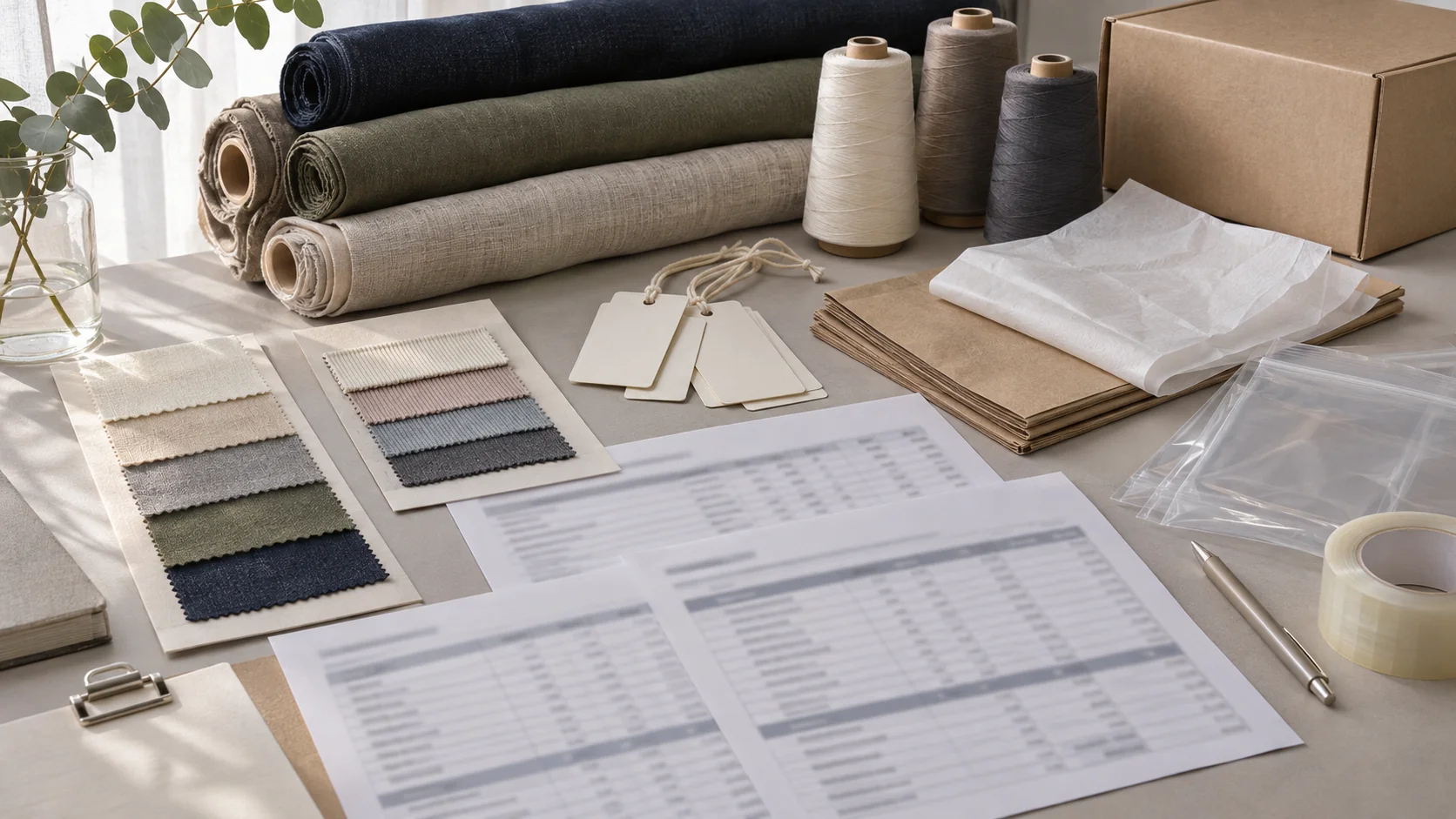
At a glance
Swipe the table sideways to compare both columns →
| Worksheet line | Evidence to request | Buyer entry or control |
|---|---|---|
| Fabric | Article specification, usable width, consumption basis, loss allowance, and purchase minimum | Separate garment consumption from excess purchased material |
| Trims and branding | Component bill of materials, usage per garment, supplier minimums, and tooling scope | Record unit basis, setup charges, and ownership of surplus |
| CMT and wash or print | Operation scope, finishing route, placement details, and subcontractor boundaries | Identify bundled operations before adding separate charges |
| Packaging | Packing specification, component quantities, carton plan, and assembly scope | Separate individual garment packaging from shipment packaging |
| Development and logistics | Sample scope, revision terms, delivery term, named place, and freight assumptions | Keep one-time charges and unconfirmed buyer costs outside the recurring garment subtotal |
1. How to build private label clothing cost breakdown worksheets
Start with a worksheet that distinguishes the order header from the cost lines. The header should identify the style, specification revision, fabric article, color, size allocation, requested quantity, destination, and quotation validity. Record the quoted currency, payment assumptions, delivery term, and named place without treating any of them as permanent conditions. Under that header, give each line an identifier, description, charging unit, required quantity, quoted rate, extended amount, evidence reference, and status. Add separate fields for included, excluded, provisional, and buyer supplied so that an empty cell cannot silently mean zero. Use distinct groups for recurring garment inputs, conversion services, development charges, surplus purchases, and buyer-managed logistics. This structure makes the worksheet useful even when a factory will provide only some underlying rates. Unavailable information should remain visible as an unresolved entry rather than being replaced by a guessed allocation.
Define the worksheet's purpose before sending the RFQ: it is a record of scope and purchasing assumptions, not a demand for the supplier's confidential payroll or profit calculation. A factory may quote bundled CMT or a finished garment amount while still explaining inclusions, consumption assumptions, and extra charges. Allow a bundled line when its boundaries are documented, and mark its child lines as included rather than adding them again. Maintain one version for each approved specification and quantity scenario. Log who entered each change, its supporting document, and whether the supplier confirmed it. Use the [cost factors guide](/resources/clothing-manufacturing-cost-factors) to identify subjects needing investigation, but keep this worksheet focused on actual entries and evidence. The resulting record should show which amounts can support a purchase decision and which still depend on material selection, sampling, or an outside service quotation.
2. Give fabric and trims auditable quantity bases
Create a separate fabric line for each shell, lining, rib, pocketing, or other textile article that carries a different purchasing basis. Record composition, weight and measurement condition, usable width, finish, color reference, and whether the material is stock or made to order. Ask for consumption supported by the intended size mix and marker assumptions, identifying whether the stated allowance already includes cutting loss, shrinkage, and material defects. Do not add a general waste allowance on top of consumption that already includes those items. Where a rate uses length or weight, keep that purchasing unit visible and request the conversion basis before translating it into garment cost. Separate material needed for approved production from samples, trials, and surplus caused by purchase minimums. Request an article-specific quotation or supplier confirmation; a generic fabric description cannot support a repeatable material cost entry.
Build trim lines from the bill of materials rather than a single accessories allowance. List buttons, zippers, elastic, drawcords, labels, patches, and other components only where the design requires them. Each entry needs an approved reference, quantity per garment, charging unit, color or size variants, purchase minimum, and supply responsibility. Clarify whether thread and interlining sit inside CMT or appear separately. Keep artwork preparation, molds, screens, and other setup commitments outside the recurring component rate unless the quotation explicitly amortizes them. For any amortized charge, record the quantity assumption and ask how a repeat order will be treated. Identify buyer-owned surplus and its storage or disposal terms instead of charging the same purchased stock again without reconciliation. Connect these entries to the [tech pack checklist](/resources/private-label-clothing-tech-pack-checklist), because incomplete component specifications leave the supplier pricing an assumption rather than the intended garment.
3. Separate CMT from wash, print, and other finishing
Use the CMT line to define the factory's conversion scope, not merely to collect a sewing number. Ask what cutting, making, and trim-related work includes in this quotation, since commercial usage can differ between suppliers. Record whether pattern adjustment, spreading, cutting, sewing, pressing, thread trimming, routine inspection, and packing labor are included or charged elsewhere. Identify construction features that change the work content, such as lining, reinforced pockets, concealed closures, or matched panels, and reference the applicable tech pack revision. Request an operation summary or written inclusion statement rather than assuming the supplier will disclose detailed labor calculations. If the factory quotes a full-package garment, show CMT as included when it cannot be separated reliably. Do not subtract estimated material costs from the total and label the remainder labor; that remainder may also contain overhead, margin, inspection, and commercial risk.
Add wash, dye, print, embroidery, or other decoration lines only for specified processes, with a clear distinction between setup and production. Record the treatment reference, artwork revision, placement, dimensions, color requirements, and application sequence where relevant. Request the charging basis, minimum batch commitment, trial requirements, and responsibility for rejected work. A print charged per placement cannot be treated as a garment-wide rate unless the quotation says so. Ask whether finishing includes handling between sites, drying, pressing, inspection, or any necessary repacking. Identify the accountable production party even when an outside processor performs the work. Keep reprocessing outside the planned cost unless it is an expressly agreed production step; a contingency is not permission to repair or rewash without approval. When a sample changes the finishing route, revise both the cost line and the supporting specification before using the worksheet to authorize production.
4. Keep packaging explicit and freight provisional
Separate retail presentation from transit protection when creating packaging lines. Depending on the brief, entries may include hangtags, attachment materials, garment bags, tissue, size stickers, inserts, cartons, and carton markings. Specify dimensions, material, artwork revision, and quantity basis rather than accepting a packaging allowance with no contents. Ask whether folding, tag attachment, bagging, assortment packing, and carton sealing are already included in CMT or another service line. Record carton purchasing minimums and any extra requirements for mixed sizes, individual barcodes, or buyer distribution instructions. Request a preliminary carton plan, but label packed dimensions and gross weight as estimates until the packing configuration is established. Any change from flat packing to a different presentation should trigger review of both packaging and transport assumptions. Avoid treating a visually approved packaging sample as confirmation that labeling wording meets destination-market requirements; that needs its own review.
Reserve buyer fields for freight, cargo insurance, customs brokerage, duties, taxes, destination handling, and onward delivery where applicable. These are placeholders, not charges to invent so the worksheet appears complete. Record the responsible provider, route, transport mode, shipment basis, quoted validity, and exclusions beside each entry. Tie the factory delivery term to a named place and check where the buyer's logistics responsibility begins. Ask the forwarder or broker to confirm applicable assumptions using the intended shipment and destination information; do not infer a duty treatment from the product name alone. Preserve unconfirmed entries as pending and label any subtotal that excludes them accordingly. If the factory offers transport, identify whether that amount replaces or overlaps another logistics line. A garment subtotal and a shipment budget serve different decisions, so keep them separate until quantities, packing data, and service boundaries can be reconciled.
5. Show MOQ commitments and sample charges separately
Use MOQ 100 pcs per color per design as the garment planning basis and attach a style, color, and size matrix to the worksheet. Do not assume that several colors can be pooled to satisfy one commitment or that every size distribution has identical consumption. Add fields for the quoted order quantity, material purchase quantity, component purchase quantity, and expected unused balance. These quantities answer different questions and should not be forced into one garment count. When a minimum creates surplus, show the full purchasing commitment separately from the recurring production basis and state how the supplier bills it. Record whether the buyer receives, stores, or leaves that surplus with the factory, including conditions for future use. Use the [MOQ tiers guide](/resources/how-to-negotiate-private-label-clothing-moq-tiers) when requesting alternative quantity scenarios, and preserve the assumptions behind each scenario instead of applying an unsupported discount across every line.
Create a development group for pattern work, samples, material trials, artwork preparation, tooling, courier charges, and revisions where they apply. Record each charge as one-time, repeatable, refundable, or creditable only when the supplier confirms that treatment. State the conditions for any credit, including the qualifying order and whether it affects the invoice or a later payment. Samples take approximately 7 days once the brief and materials are confirmed, but this planning allowance does not include every sourcing delay, shipping leg, or revision cycle. Ask which sample stage the quotation covers and whether substitute materials are proposed. A fit sample using substitute cloth cannot validate final fabric consumption or finishing behavior. Keep development costs visible even if the buyer allocates them internally across the opening order. That allocation should not transform a one-time charge into an assumed recurring factory rate for replenishment.
6. Validate the worksheet before purchasing
Before approval, review the worksheet for missing quantities, inconsistent units, duplicated inclusions, expired quotations, and unresolved specification references. Ask the supplier to confirm the recurring garment subtotal, separate purchase commitments, development charges, and exclusions in writing. If the factory's total differs from your reconstruction, request a reconciliation rather than adjusting an unexplained balancing line. Differences may arise from bundled services, rounding, minimum purchases, or a misunderstood charging basis. Retain the explanation with the worksheet. Use the [quote comparison guide](/resources/how-to-compare-clothing-oem-quotes) only after this line structure is stable, so offers can be reviewed on aligned assumptions. Also consult the [private label clothing factory evaluation guide](/resources/how-to-evaluate-private-label-clothing-factories) when checking whether the quoted production scope matches the proposed sites and responsibilities. A detailed worksheet establishes commercial visibility, but it does not independently verify available capacity, workmanship, material identity, or the supplier's ability to execute the approved specification.
Freeze a dated cost record alongside the approved bill of materials, sample references, quantity matrix, and purchase terms. Define which changes require repricing and who can authorize them, including material substitution, artwork revision, size redistribution, packing changes, and delivery changes. Bulk timing depends on quantity, material readiness, capacity, and approvals, so keep schedule dependencies beside the relevant commitments rather than treating the price sheet as a production calendar. Track actual invoices and unused inventory against the original entries after purchasing; this creates a useful basis for the next RFQ without assuming every opening-order charge will recur. When the worksheet is ready for supplier review, submit the specification and outstanding fields through the [private label clothing manufacturer page]([private label clothing manufacturer](/private-label-clothing-manufacturer)). Request confirmation of scope and evidence, not a guaranteed currency outcome. Keep authorization to buy materials, start development, and release bulk production as distinct written decisions.
Send these details together
- Create an order header with specification revision, quantity matrix, currency, quotation validity, delivery term, and named place.
- Give fabric and trim lines identifiable articles, charging units, consumption evidence, minimums, and surplus ownership fields.
- Define CMT inclusions and separate wash, print, decoration, setup, and subcontracted service boundaries.
- Specify packaging components and labor, then leave unconfirmed freight and destination charges as buyer-managed placeholders.
- Record MOQ 100 pcs per color per design, separate purchasing commitments, and sample charges with their timing and credit conditions.
- Reconcile totals, remove duplicate charges, resolve pending entries, and freeze the approved worksheet with purchasing and change-control records.
This guide covers buyer-built cost breakdown worksheets for private label menswear RFQs with a China OEM factory. It addresses line-item structure, supporting evidence, inclusions, purchasing minimums, development charges, and buyer-managed logistics placeholders rather than offering price benchmarks or currency guarantees. MOQ 100 pcs per color per design is the garment planning basis; confirm separate material and component commitments. Samples take approximately 7 days once the brief and materials are confirmed; bulk timing depends on quantity, material readiness, capacity, and approvals. Destination charges and labeling requirements require separate review by the responsible parties. Reprint attribution: clothingmanufacturerchina.com.
Prepare a quote briefThe RFQ form prepares a WhatsApp message for you to review. For files, email sales@clothingmanufacturerchina.com.
Questions before sampling
What if the factory will not disclose separate fabric and CMT rates?
Keep the quoted full-package amount as a bundled line and request written inclusions, material references, quantity assumptions, and exclusions. Mark covered child lines as included, not as additional charges. You can still document separate development fees, minimum purchases, and logistics boundaries. Do not manufacture a fabric or labor allocation from guessed percentages simply to fill every worksheet cell.
How should excess fabric or trims appear in the breakdown?
Show the purchasing commitment and expected unused balance separately from the quantity consumed by production. Ask whether surplus is billed upfront, included in the garment amount, or handled through another agreed arrangement. Record ownership, storage conditions, and repeat-order treatment. The worksheet should make cash commitments visible without counting the same material in both a garment line and a separate surplus charge.
Should sample charges be divided across the opening order?
The buyer may allocate development spending internally, but retain the original charges in a separate worksheet group. Identify what each payment covers and whether any credit depends on a later order. If you display an allocated opening-order cost, label its quantity basis clearly. Do not present that internal allocation as a recurring supplier rate or assume the same development charges apply to replenishment.
Can freight be included before packing details are confirmed?
It can appear as a provisional buyer field supported by a provider's stated assumptions. Record the route, mode, estimated packing data, delivery boundary, validity, and exclusions. Keep it distinct from confirmed production charges and refresh it when shipment details are available. An unconfirmed freight entry should remain pending rather than being treated as zero or presented as a guaranteed delivered cost.
What are your MOQ, sample time and bulk lead time?
MOQ is 100 pcs. Samples take 7 days. Bulk production lead time depends on order quantity.