How to Brief a Thermal Long Sleeve Manufacturer
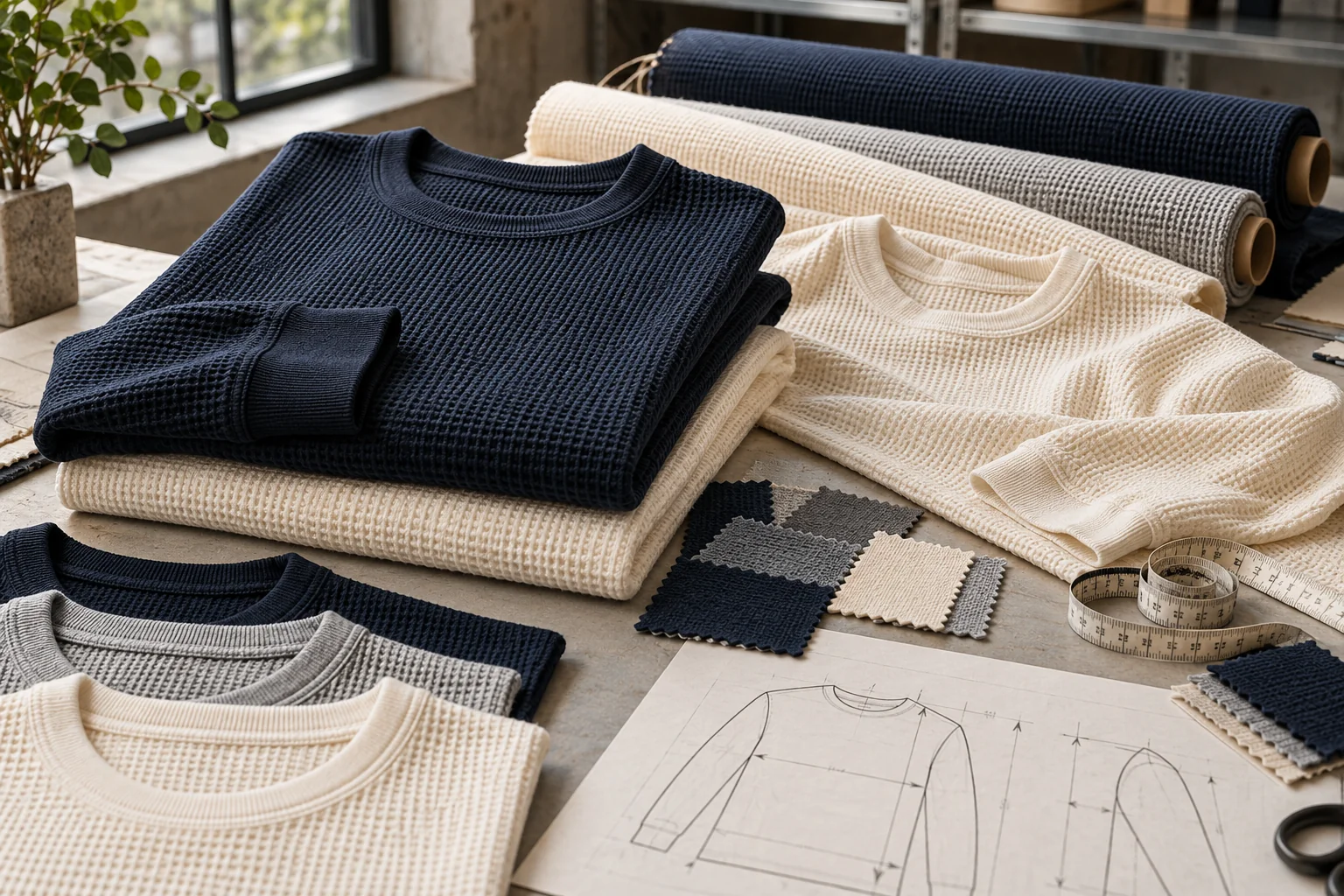
Briefing a thermal long sleeve manufacturer starts with the intended wearing condition, not simply a waffle fabric reference. Define structure, GSM, stretch recovery, opacity, fit, neckline, cuffs, and hem before comparing quotations. Identify how decoration and garment care may change the surface, dimensions, or shade. Plan around MOQ 100 pcs per color per design, with fabric, rib, and branding minimums checked separately. Samples take approximately 7 days once the brief and materials are confirmed; bulk timing depends on quantity, material readiness, capacity, and approvals. Use actual-material samples and documented care checks to connect the approved garment to bulk production.
At a glance
Swipe the table sideways to compare both columns →
| Briefing point | Evidence to request | Decision or control |
|---|---|---|
| Structure and GSM | Identified waffle or rib article, composition, finished weight, width, and finishing route | Approve a traceable fabric rather than a generic thermal description |
| Recovery and opacity | Actual-material wear review and documented extension, recovery, and opacity checks | Evaluate the intended fit and each relevant color |
| Neckline, cuffs, and hem | Construction drawings, component specifications, and measurements before and after care | Separate fabric relaxation from pattern and sewing corrections |
| Decoration and shade | Placement trials, care results, color submissions, and body-to-trim comparisons | Approve the application method and complete garment color relationship |
| Minimums and sample release | Quantity matrix, component minimums, sample reports, and written approval record | Confirm feasibility at 100 pcs per color per design before bulk authorization |
1. Give your thermal long sleeve manufacturer a wearing brief
Start with how the garment will be worn: against the skin under another layer, as a fitted standalone top, or as a relaxed layering piece. These uses create different requirements for ease, opacity, seam bulk, surface feel, and neckline coverage. Specify the target wearer, size range, intended silhouette, and the garments likely to be worn over or under it. Include front and back drawings, reference measurements, sleeve length, body length, and any thumb openings or extended cuffs. Describe what the buyer means by thermal rather than allowing the word to stand in for a performance specification. A textured knit can be marketed as a thermal style without establishing a particular insulation level. If warmth or moisture-related claims are planned, identify the evidence needed separately and agree who will arrange and review that evidence before claims are approved.
Build the quotation brief around a controlled bill of materials and a responsibility list. Identify who sources the body fabric, matching rib, sewing thread, neck tape, labels, decoration materials, and packaging. State whether the order uses available fabric, a custom knitted article, a custom dye lot, or a garment-dyed route. Each route changes development work, minimum commitments, and the point at which color can be evaluated. Ask the supplier to identify the cutting and sewing site and any outside knitting, dyeing, finishing, or decoration operations. Record which party owns the specification and approves substitutions. Include the intended selling markets so label wording and any required product reviews can be planned. A reference garment is useful for communicating direction, but it should not replace written decisions about materials, construction, care, and the deliverables included in the quotation.
2. Specify waffle or rib structure beyond the fabric name
Waffle and rib describe different knit structures, not interchangeable grades of thermal fabric. Waffle structures create a recessed or cellular surface, while rib structures generally show alternating vertical columns and often provide substantial crosswise extension. Actual behavior depends on yarn, stitch construction, composition, density, and finishing, so do not infer warmth or recovery from the name alone. Request labeled swatches showing both faces, the fabric article, fiber composition, yarn details where available, usable width, and finished GSM with the measurement condition stated. Specify the acceptable scale and depth of the waffle or the visible rib arrangement using a retained physical reference. Photographs can obscure texture and thickness, particularly when lighting differs. Ask whether the proposed article is regularly stocked or must be knitted for the order, and whether the sample and bulk will use the same finishing route.
Set a target GSM and an agreed tolerance, but evaluate weight alongside thickness, drape, surface definition, and intended fit. Two fabrics at the same GSM may differ in coverage and extension because their yarns and constructions differ. Ask for weight checks on conditioned finished fabric rather than relying only on a knitting-stage estimate. Record whether softening, compacting, brushing, or another finish is part of the approved article, because changes can affect handfeel, dimensions, and decoration behavior. Have the supplier assess consumption using the actual usable width and expected cutting losses from texture direction or defects. Require approval before replacing an article with a supposedly equivalent fabric. For replenishment, retain the article specification and a physical swatch, then compare new lots against both. An article name alone does not establish that later material has unchanged construction or finishing.
3. Check recovery, opacity, and fit under realistic extension
Define stretch and recovery as separate checks. A fabric may extend easily yet retain growth at the elbows, cuffs, or torso after wear. Ask the supplier to document the direction of testing, specimen condition, applied extension or load, hold time, rest period, and calculation method so results can be compared between submissions. Agree acceptance limits appropriate to the garment instead of accepting a generic statement that the fabric has good stretch. Include checks after the proposed care process where relevant, since finishing effects may not persist unchanged. Review a complete sample on the intended size wearer or fit form, observing sleeve bending, pulling across the chest, and return at openings. For fitted base layers, excess negative ease can distort texture and expose skin even when the relaxed fabric looks adequate. Do not treat elastane content alone as evidence of satisfactory recovery.
Evaluate opacity in the garment's intended wearing condition, not only by holding an unstretched swatch against a desk. Agree a repeatable review setup covering lighting, background contrast, fabric extension, and whether an undergarment is present. Check pale colors and other shades that may behave differently rather than approving every color from one dark sample. Inspect the chest, shoulders, elbows, and other areas where the chosen fit opens the structure. If the product is intended only as an underlayer, document the acceptable coverage instead of implying standalone opacity. Review base size and selected additional sizes to see whether grading changes local tension. Record chest, shoulder, armhole, bicep, sleeve, and body measurements with clear measuring instructions. Correct the cause of a problem: increasing GSM, changing structure, or adding ease can have different effects on handfeel, cost, and the approved silhouette.
4. Connect neckline, cuff, and hem construction to care checks
Draw the neckline, cuff, and hem constructions rather than leaving them to a sample maker's default. Specify self-fabric or separate rib, finished band widths, attachment seams, seam allowances, reinforcement, and visible stitching. Neck opening dimensions and band attachment tension should support both the intended appearance and passage over the head. Cuffs need enough extension for dressing without remaining loose afterward, while their length and bulk should suit layering. Identify whether the hem is straight, curved, bound, or turned, and show any side vents or drop-tail proportions. Ask for sewing trials on the actual fabric to examine skipped stitches, seam opening, tunneling, waviness, and damage around needle penetrations. A textured body and smooth rib can respond differently during feeding and pressing. Review their relationship as an assembled garment, not as two separately acceptable swatches placed beside one another.
Agree a care-check plan before finalizing the measurement specification. State the wash and drying conditions, number of cycles, conditioning or rest period, measuring points, and acceptance limits for dimensional change and appearance. Base the proposed care instructions on the intended product and supporting checks, rather than choosing wording solely to avoid a known construction problem. Measure samples before and after care for body length, chest, sleeve length, neckline, and cuffs, and inspect twisting, seam distortion, pilling, texture flattening, and differential shrinkage between body and trim. Keep the results linked to fabric lot, pattern version, and finishing route. Require the factory to explain whether a correction changes the pattern, fabric finish, or sewing method. Excessive pressing can temporarily disguise instability, so define the condition in which approval measurements are taken and repeat the care review after significant revisions.
5. Approve decoration on texture and color as a garment system
Submit decoration artwork with dimensions, placement coordinates, color references, and the intended application method. Waffle valleys and raised ribs can interrupt print coverage, while a large transfer may bridge texture and change drape or stretch. Embroidery can introduce stiffness, puckering, and an uncomfortable reverse surface on a next-to-skin garment. Ask the decoration operator to trial the actual fabric, including backing or stabilizer and the proposed application settings where relevant. Examine the result relaxed, stretched to expected wearing conditions, and after care. Check adhesion, cracking, distortion, edge lifting, surface flattening, and reverse-side comfort according to the selected method. Approve placement on the garment rather than relying only on a flat strike-off. Keep artwork away from seams or high-extension areas unless the sample demonstrates an acceptable result. Do not assume a method approved on smooth jersey will work unchanged on thermal texture.
Set a color target and define how body fabric, cuffs, neckband, thread, labels, and decoration should relate. Matching fiber content does not ensure a visual match when structures, surface reflection, or dyeing routes differ. Review available-stock cuttings or custom color submissions as appropriate, followed by actual production material under agreed viewing conditions. If different components are intended to match, evaluate them together before assembly and again on a finished sample. Record approved tolerances or physical shade limits without treating normal variation as permission for visibly mismatched panels. Ask how rolls and dye lots will be separated through cutting and sewing, and how later replenishment lots will be compared. Include color change and staining checks under the intended care conditions. For garment dyeing, confirm component suitability and review the complete route because stitching, trims, dimensions, and decoration may respond differently.
6. Reconcile minimums and use explicit sample release gates
Plan around MOQ 100 pcs per color per design and submit a quantity matrix showing each style, color, and size allocation. Ask whether neckline variants, different decorations, or alternative cuff constructions count as separate designs rather than assuming they can share the minimum. Check fabric, custom dyeing, matching rib, labels, and packaging minimums separately from sewing quantities. Request visibility on purchased quantities, sample consumption, expected surplus, and responsibility for unused material or branded components. Where stock fabric makes a small order possible, identify the reserved article and color lots and document substitution rules. Ask for a schedule connecting material confirmation, sample review, cutting, sewing, decoration, inspection, and packing. Bulk timing depends on quantity as well as material readiness, capacity, and approvals. Compare quotations against the same scope and delivery assumptions, including any development work that remains outside the garment price.
Samples take approximately 7 days once the brief and materials are confirmed, but custom knitting, dye development, unavailable trims, transport, and revisions need separate allowances. Define whether each submission is a fit sample, fabric trial, decoration trial, or actual-material preproduction garment. A substitute-fabric sample may support silhouette review without approving shrinkage, opacity, or recovery. Before bulk release, connect the approved garment to the bill of materials, pattern version, color references, construction instructions, care results, and packaging requirements. Record accepted deviations and identify any operations that remain blocked by provisional components. Retain matching references with the buyer and production team. Set inspection coverage across colors, sizes, and material lots, together with procedures for holding and correcting affected goods. Require renewed review for changes that could affect fit, appearance, or performance; delivery of a sample without written objections should not be interpreted as authorization to cut.
Send these details together
- Define intended use, silhouette, size range, wearing conditions, and the evidence needed for any thermal performance claims.
- Identify waffle or rib structure, fabric article, composition, finished GSM, usable width, finishing route, and substitution controls.
- Agree recovery and opacity checks using realistic extension, relevant colors, and selected garment sizes.
- Specify neckline, cuff, and hem construction and document measurements and appearance before and after the proposed care process.
- Approve decoration on actual fabric and establish body-to-trim color relationships, lot separation, and retained references.
- Confirm MOQ 100 pcs per color per design, separate component minimums, sample purposes, written bulk release, and inspection responsibilities.
This guide covers buyer-side briefing of China OEM thermal and waffle long-sleeve menswear, including fabric structure, fit, recovery, opacity, construction, decoration, color, and care checks. MOQ 100 pcs per color per design is the garment planning basis; confirm size allocation and separate material and component minimums. Samples take approximately 7 days once the brief and materials are confirmed; bulk timing depends on quantity, material readiness, capacity, and approvals. Thermal performance claims and destination-market labeling requirements need separate evidence and compliance review. Reprint attribution: clothingmanufacturerchina.com.
Prepare a quote briefThe RFQ form prepares a WhatsApp message for you to review. For files, email sales@clothingmanufacturerchina.com.
Questions before sampling
Is waffle fabric warmer than rib thermal fabric?
Neither structure name establishes which finished garment will be warmer. Yarn, composition, thickness, density, fit, finishing, and the surrounding clothing layers all affect the wearing result. Use waffle or rib references to specify construction and appearance, then define any required performance evidence separately. Do not approve a warmth claim solely because the supplier calls an article thermal.
What GSM should a buyer specify for a thermal long sleeve?
Choose GSM alongside intended use, structure, opacity, drape, and fit rather than treating it as a universal quality rating. Request actual finished swatches and compare them in the proposed garment. Record the weight condition and tolerance, then verify recovery and dimensions after care. A higher weight does not automatically resolve transparency under stretch or prevent garment growth.
Can several colors share MOQ 100 pcs?
Plan on MOQ 100 pcs per color per design, not 100 pieces divided across multiple colors. Submit the complete style, color, and size matrix for written confirmation. Fabric dyeing, matching rib, and branded components can create additional minimum commitments. If available stock is proposed, confirm the reserved quantities, lot identity, and permitted replacements before approving the order.
Does an approximately 7-day sample approve bulk production?
No. Approximately 7 days is a sample planning allowance once the brief and materials are confirmed, not an automatic approval or a complete development schedule. Record what the submission proves and which details remain provisional. Bulk release should follow review of actual materials, fit, construction, decoration, shade, and agreed care results, with written approval tied to current production documents.
What are your MOQ, sample time and bulk lead time?
MOQ is 100 pcs. Samples take 7 days. Bulk production lead time depends on order quantity.