Small Batch Clothing: Build a Workable First Order
A small-batch clothing order works best when its complexity is visible. Total quantity is only one part of the brief: colors, sizes, materials, trims and decoration also divide the work. Start with the variants you can justify and ask the supplier to assess the complete breakdown before approving development.
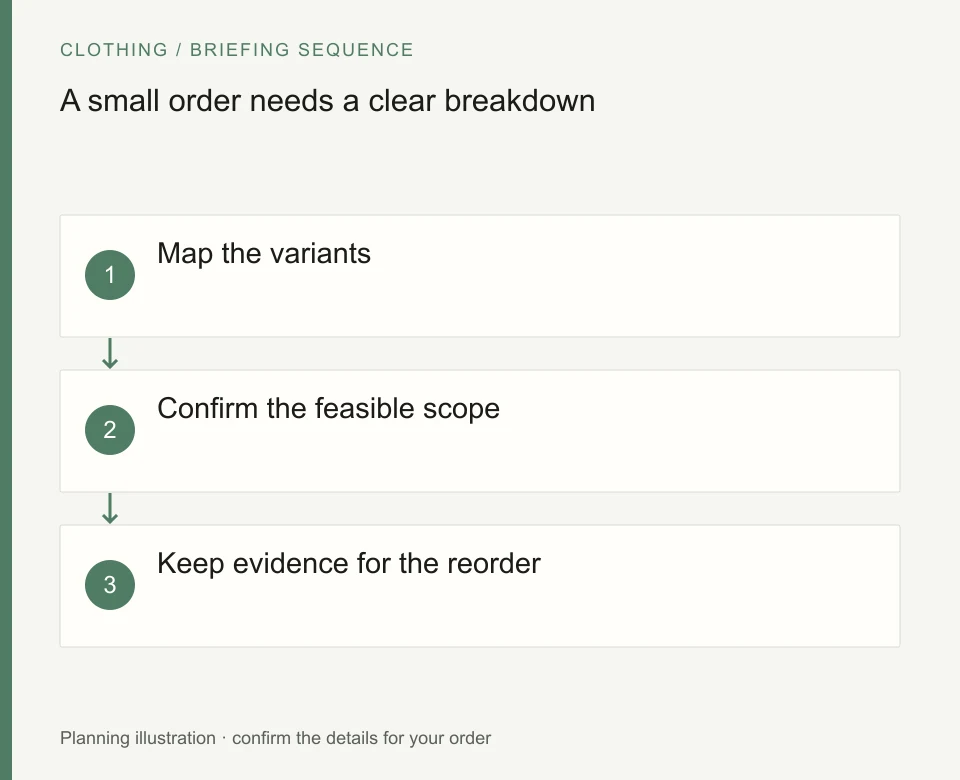
At a glance
Swipe the table sideways to compare both columns →
| Decision | What to specify | What to verify |
|---|---|---|
| Variant matrix | List style, color, size and artwork versions. | Reconcile the row totals with the order total. |
| Development scope | Protect the essential product feature. | Review optional changes and their approval needs. |
| Reorder evidence | Retain samples and record SKU-level feedback. | Separate demand decisions from specification corrections. |
Count variants before counting garments
Build a matrix with style, color and size as separate fields. Add different artwork or trim versions when they create distinct products. This exposes how a seemingly simple order spreads across several variants. Keep a total check in the sheet and distinguish the quantity you want to sample from the quantity you intend to buy in bulk.
Use actual audience or sales information where you have it to propose a size mix. If you do not have that evidence, mark the mix as an assumption rather than presenting a universal best-selling ratio. The factory can review production feasibility, but it cannot infer demand for your brand from a generic size chart or a competitor's catalog.
Reduce unnecessary development branches
Identify the feature that makes the garment worth launching and protect it. Then review optional variations that add separate sampling decisions without changing the product's purpose. A second wash, a different zipper and a unique label set can each create another approval path. Simplifying a first order is a commercial choice, not a reason to skip checks on the chosen product.
Ask which materials and processes are proposed for the actual order, and clarify any quantity conditions before committing. Do not assume a fabric is available because its name appears in a reference. If alternatives are suggested, compare their effect on fit, appearance and repeatability. Record the chosen version so the bulk quote does not silently drift away from the sample brief.
Make the first order useful for the next one
Approve the base fit and the agreed size-set scope, then retain the accepted material, decoration and trim references. Define how the garments will be identified and packed before production starts. A small order can still become difficult to receive if similar colors or sizes have inconsistent labels. Simple, accurate identification helps both warehouse handling and later customer feedback.
Keep order results by SKU after delivery: actual sales, returns and fit comments can inform the next quantity plan. Distinguish customer preference from a production issue before changing the specification. For a reorder, ask the supplier to reconfirm material and process details against the archived sample. A successful first order establishes a reference; it does not guarantee identical availability next season.
Send these details together
- Proposed quantity matrix with checked totals
- Priority style and essential design features
- Material and process feasibility questions
- Approved sample and clear SKU packing plan
- A record structure for first-order feedback
Use this checklist to prepare your own order brief. Materials, processes, acceptance criteria and any applicable product requirements need order-specific confirmation; this guide is not a test report or availability guarantee.
Prepare a quote briefThe RFQ form prepares a WhatsApp message for you to review. For files, email sales@clothingmanufacturerchina.com.
Questions before sampling
What are your MOQ, sample time and bulk lead time?
MOQ is 100 pcs. Samples take 7 days. Bulk production lead time depends on order quantity.